Stephen Hicks

COUNTER-ENLIGHTENMENT: DAVID HUME and JEAN-JACQUES ROUSSEAU. Lecture 5 of Modern Philosophy [Peterson Academy course]

“Nothing but the most determined scepticism, along with a great degree of indolence, can justify this aversion to metaphysics.” Lecture Five: Counter-Enlightenment. David Hume and Jean-Jacques Rousseau Themes: Skepticism, Passions, Fideism. Critiquing the Enlightenment. French Revolution. Lafayette. Voltaire. de Gouges. Robespierre. Texts: Hume: A Treatise on Human Nature. Rousseau: Discourse on Inequality. About the Instructor […]

COUNTER-ENLIGHTENMENT: DAVID HUME and JEAN-JACQUES ROUSSEAU. Lecture 5 of Modern Philosophy [Peterson Academy course] Read More »

“The RADICAL GREEKS, from HOMER to ARISTOTLE.” Lecture 1 of *Philosophy of Education*

Lecture One: Why Philosophy of Education? The Radical Greeks, from Homer to Aristotle Themes: “Philosophy” of “Education.” Your ideal school. The radical Greeks. Parents as first teachers: bedtime stories. Homer as educator. Contrast to Ramayana and Gilgamesh. Arachne and Athena. Core issues: Religion. Questioning. Human-centered. Method: Socratic (e.g., conversational, discussions after story). Content: Aristotle on

“The RADICAL GREEKS, from HOMER to ARISTOTLE.” Lecture 1 of *Philosophy of Education* Read More »

Una coalición contra Occidente (A coalition against the West)—interviewed for *Tras la Identidad*.

The original interview is Spanish is published at Tras la Identidad. Below is a translation into English. A COALITION AGAINST THE WESTStephen RC Hicks, philosopher and professor, October 1, 2025 Stephen RC Hicks is a philosopher and author of, among others, texts such as “Explaining Postmodernism: Skepticism and Socialism from Rousseau to Foucault”, a book

Una coalición contra Occidente (A coalition against the West)—interviewed for *Tras la Identidad*. Read More »

THE PROMISE OF INDIVIDUAL EMPIRICISM: JOHN LOCKE. Lecture 3 of Modern Philosophy

“I esteem it above all things necessary to distinguish exactly the business of civil government from that of religion and to settle the just bounds that lie between the one and the other.” Lecture Three: The Promise of Individual Empiricism. John Locke Themes: Empiricism. Tabula rasa. Individualism. Liberalism. Toleration. Church and State. Henry VIII. Shakespeare.

THE PROMISE OF INDIVIDUAL EMPIRICISM: JOHN LOCKE. Lecture 3 of Modern Philosophy Read More »

THE PHILOSOPHES and THE FRENCH ENLIGHTENMENT: VOLTAIRE. Lecture 4 of Modern Philosophy [Peterson Academy course]

“Who was the greatest man, Caesar, Alexander, Tamerlane, Cromwell, &c.?Somebody answered that Sir Isaac Newton excelled them all.” Lecture Four: The Philosophes and the French Enlightenment. Voltaire Themes: Deism. Toleration. Anti-superstition. Anti-torture. Irreverence. Who are the greatest humans ever? Augustine. Montaigne. Montesquieu. Diderot. de Gouges. Condorcet. The new “trinity”: Bacon, Locke, Newton. Text: Voltaire: Letters

THE PHILOSOPHES and THE FRENCH ENLIGHTENMENT: VOLTAIRE. Lecture 4 of Modern Philosophy [Peterson Academy course] Read More »

From Kant to Foucault in Two Easy Steps

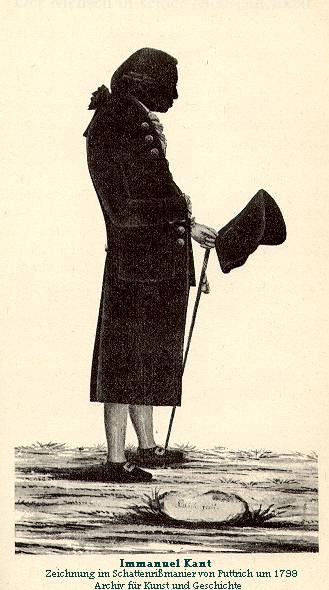
Immanuel Kant (1724-1804): “I had to deny knowledge in order to make room for faith.” And: “All human reason is wholly incompetent to explain this [morality], and it is a waste of trouble and labour to try. … According to my account of the supreme principles of morality, reason can’t render comprehensible the absolute necessity of an unconditional

From Kant to Foucault in Two Easy Steps Read More »

PRAGMATIC DEMOCRACY. William JAMES & John DEWEY. Lecture 5 of *The Philosophy of Politics: From the French Revolution to World War II*

James: “We should all feel conscious of our work as an obligatory service to the state. We should be owned, as soldiers are by the army.” And: Dewey: “A democracy is more than a form of government; it is primarily a mode of associated living, of conjoint communicated experience.” About the Course In this eight-lecture

PRAGMATIC DEMOCRACY. William JAMES & John DEWEY. Lecture 5 of *The Philosophy of Politics: From the French Revolution to World War II* Read More »