In my Intro. course, we read Descartes’ Meditations, in part using it to introduce the complicated and important set of issues known as the mind-body problem.
The most ancient account of the mind-body relation is dualism, the view that the mind and the body are two different types of stuff that are temporarily joined. The broadest contrast competitor account is physicalism, the view that the mind and the body are both ultimately physical, the mind being a set of dependent capacities that emerge from or are reducible to physical capacities.
On the traditional dualist account (especially traditional religious dualist accounts), human beings are a microcosm of a dualist macrocosm: Reality for dualists is divided into a physical natural world and a non-physical supernatural world. We humans have a metaphysical foot in each camp, so to speak — a physical body attached to the natural world and a temporarily-housed spirit that wants (or should want) to be reunited with the supernatural.

Martin Luther is representative, here writing in 1520: “Man has a twofold nature, a spiritual one and a bodily one. According to the spiritual nature, which men refer to as the soul, he is called a spiritual, inner, or new man. According to the bodily nature, which men refer to as flesh, he is called a carnal, outward, or old man, of whom the Apostle writes in 2 Cor. 4 [:16], ‘Though our outer nature is wasting away, our inner nature is being renewed every day.’ Because of this diversity of nature the Scriptures assert contradictory things concerning the same man, since these two men in the same man contradict each other, ‘for the desires of the flesh are against the spirit, and the desires of the Spirit are against the flesh,’ according to Gal. 5 [:17].”
Descartes (1596-1650) is a dualist, defending it against the rising number of physicalists who want to explain human beings without appealing to immaterial souls, spirits, or substances. Thomas Hobbes (1588-1679) is a contemporary-to-Descartes example:

“For seeing life is but a motion of limbs, the beginning whereof is in some principal part within; why may we not say, that all automata (engines that move themselves by springs and wheels as doth a watch) have an artificial life? For what is the heart, but a spring; and the nerves, but so many strings; and the joints, but so many wheels, giving motion to the whole body … ?” (Leviathan, 1651)
The debate is many-dimensional, and for many dualists the primary issue is not so much whether physicalism is an adequate explanation for the human psyche but rather the value implications. If physicalism is true, won’t that mean that when our bodies die, that’s it, and doesn’t that make life depressingly pointless? If physicalism is true, then doesn’t that undermine our human dignity and reduce us to level of the other beasts? And wouldn’t that mean that there’s no soul to check our lower, animalistic desires for sex, food, and drink? If there’s no soul, then doesn’t that mean that there’s no afterlife to look forward to?
Of course, the value implications also cut the other way. If dualism is true, then doesn’t that divorce love from sex, as in dualistic Platonic love? Doesn’t dualism separate the higher moral realm from practical, real-life concerns? Doesn’t dualism pit the mind against the body rather than expecting that they can and should work together harmoniously? Doesn’t dualism encourage people to waste their lives waiting for an afterlife rather than pursuing the good life here in the natural world? And on the issue of human dignity, my favorite response here comes from Raymond Smullyan:
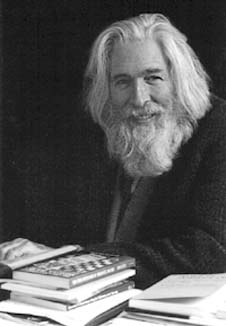
“Recently I was with a group of mathematicians and philosophers. One philosopher asked me whether I believed man was a machine. I replied, ‘Do you really think it makes any difference?’ He most earnestly replied, ‘Of course! To me it is the most important question in philosophy.’ I had the following afterthoughts: I imagine that if my friend had finally come to the conclusion that he were a machine, he would be infinitely crestfallen. I think he would think: ‘My God! How horrible! I am only a machine!’ But if I should find out I were a machine, my attitude would be totally different. I would say: ‘How amazing! I never before realized that machines could be so marvelous!’”
[Autobiographical sideline: Raymond Smullyan was one of my professors in graduate school at Indiana University. Indiana’s philosophy department was then heavily focused on logic, epistemology, and analytic metaphysics, and across the quad the university had a strong and separate History and Philosophy of Science department. Douglas Hofstadter was also at Indiana then, having been lured back from Michigan to head Indiana’s Center for Research on Concepts and Cognition. Intellectually exciting times. Coincidentally and unknown to me at the time, Jimmy Wales was then at Indiana pursuing a Ph.D. in business, and Elinor Ostrom, 2009 Nobel Prize winner in economics, was also there in the political science department.]
Related: Descartes’s Meditations, in the Philosophers, Explained series.
Nice summary. Its interesting the way that you show that dualism can be a reaction to the idea that we are ‘machines’. My own view is that dualism and materialism are two sides of the same coin – both dualists and materialists argue on the basis of simple materialist cosmology to explain physical events. See Materialists should read this first
N.B. Before reading the following Glossary entry, it is absolutely imperative to understand that the term “mind” is being used according to the definition provided by the ancient Indian philosophical paradigm (in which it is called “manaḥ”, in Sanskrit), and NOT according to the manner in which the term is used in most all other systems (that is, as a broad synonym for “consciousness” – e.g. “The mind-body problem”).
mind:
Although the meaning of “mind” has already been provided in Chapter 05 of “A Final Instruction Sheet for Humanity”, it shall prove beneficial to further clarify that definition, here in the Glossary. It is NOT implied that mind is the sum of the actual thoughts, the sensations, the memories, and the abstract images that inhabit the mental element (or the “space”) that those phenomena occupy, but the faculty itself. This mental space has two phases: the potential state (traditionally referred to as the “unconscious mind”), where there are no mental objects present (such as in deep sleep or during profound meditation), and the actualized state (usually referred to as the “conscious mind”), where the aforementioned abstract objects occupy one’s cognition (such as feelings of pain).
Likewise, the intellect and the pseudo-ego are the containers (or the “receptacles”) that hold conceptual thoughts and the sense of self, respectively. It is important to understand that the aforementioned three subsets of consciousness (mind, intellect, and false-ego) are NOT gross, tangible objects. Rather, they are subtle, intangible objects, that is, objects that can be perceived solely by an observant subject. The three subsets of consciousness transpire from certain areas of the brain (a phenomenon known as “strong emergence”), yet, as stated above, are not themselves composed of gross matter. Only a handful of mammal species possess intelligence (that is, abstract, conceptual thought processes), whilst human beings alone have acquired the pseudo-ego (the I- thought, which develops in infancy, following the id stage). Cf. “matter, gross”, “matter, subtle”, “subject”, and “object”.
In the ancient Indian systems of metaphysics known as “Vedānta” and “Sāṃkhya”, mind is considered the sixth sense, although the five so-called “EXTERNAL” senses are, nonetheless, nominally distinguished from the mind, which is called an “INTERNAL” sense. This seems to be quite logical, because, just as the five “outer” senses involve a triad of experience (the perceived, the perception, and the perceiver), so too does the mind comprise a triad of cognition (the known, the knowing, and the knower). See also Chapter 06.
Nota Bene: There is much confusion (to put it EXTREMELY mildly) in both Western philosophy and in the so-called “Eastern” philosophical traditions, between the faculty of mind (“manaḥ”, in Sanskrit) and the intellect (“buddhiḥ”, in Sanskrit). Therefore, the following example of this distinction ought to help one to understand the difference between the two subtle material elements:
When one observes a movie or television show on the screen of a device that one is holding in one’s hands, one is experiencing auditory, textural, and visual percepts, originating from external objects, which “penetrate” the senses of the body, just as is the case with any other mammal. This is the component of consciousness known as “mind” (at least according to the philosophical terminology of this treatise, which is founded on Vedānta, according to widely-accepted English translations of the Sanskrit terms). However, due to our intelligence, it is possible for we humans (and possibly a couple of other species of mammals, although to a far less-sophisticated degree) to construct conceptual thoughts on top of the purely sensory percepts. E.g. “Hey – look at that silly guy playing in the swimming pool!”, “I wonder what will happen next?”, or “I hate that the murderer has escaped from his prison cell!”. So, although a cat or a dog may be viewing the same movie on the screen of our electronic device, due to its relatively low level of intelligence, it is unable to conceptualize the audio-visual experience in the same manner as a primate, such as we humans.
To provide an even more organic illustration of how the faculty of mind “blends” into the faculty of the intellect, consider the following example: When the feeling of hunger (or to be more precise, appetite) appears in one’s consciousness, that feeling is in the mind. When we have the thought, “I’m hungry”, that is a conceptual idea that is a manifestation of the intellect. So, as a general rule, as animals evolve, they develop an intellectual faculty, in which there is an increasingly greater perception of, or KNOWLEDGE of, the external world (and in the case of at least one species, knowledge of the inner world). In addition to these two faculties of mind and intellect, we humans possess the false-ego (“ahaṃkāraḥ”, in Sanskrit). See Chapter 10 of “F.I.S.H” regarding the notion of egoity.