Those of us in the democratic-republican West often find it impossible to understand how the world could go to war so often in the 20th century. We were raised in a culture that had internalized Locke, Jefferson, Mill, and others—for whom the goal of peace and respect for others’ rights to life, liberty, and property were fundamental. We (still) have little-to-no grasp of an alien modern ideology that makes conflict and waging war fundamental to its cultural health.
For the German National Socialists and the Italian Fascists, for example, war was natural, normal, and essential to a nation’s progress. How did they come to believe that?
Part of the story is intellectual: National Socialists and Fascists admired Nietzsche’s positive philosophy, for example — this earlier post collects several quotations from Nietzsche on the necessity and desirability of war. And between Nietzsche (who was no longer functioning intellectually after 1889) and the Nazis (who assumed power in 1933) were many prominent German intellectuals—historians, sociologists, political theorists, jurists — including Werner Sombart, Moeller van den Bruck, Ernst Junger, Oswald Spengler, Carl Schmitt—whose advocacy of the authoritarian state shaped a generation’s thinking.
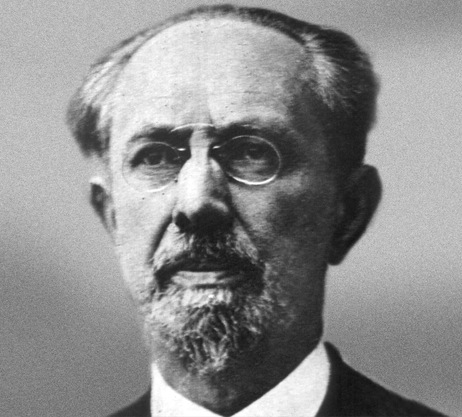
Werner Sombart’s 1915 Händler und Helden (Merchants and Heroes) is representative. Sombart was early an admirer of Karl Marx, though he drifted to the right after repeatedly being disappointed when the communist revolution failed to materialize. Merchants and Heroes contrasts two types—the merchant (represented in his era by the English) and the hero (represented by the Germans). Merchants are of a lower order: they are calculating, interested in profit, money, and the physical comforts of life. Heroes, by contrast, are of higher historical significance, motivated by the ideal of the great deed and sacrifice for a noble calling. Early in Händler und Helden Sombart explains his purpose:
“At issue in this war are the merchant and the hero, the mercantile and heroic Weltanschauung, and the culture that pertains to each. The reason why I am trying, by means of these terms, to isolate a profound and comprehensive antagonism between world-views and experiences of the world is the subject of the following analysis.”
Here is Rohan d’O. Butler’s 1942 summary of Sombart’s views: “Before 1914 all the true German ideals of heroic life were in deadly danger before the continuous advance of English commercial ideals, English comfort, and English sport. The English people had not only themselves become completely corrupted, every trade-unionist being sunk in the ‘morass of comfort,’ but they had begun to infect all other peoples. Only the war had helped the Germans to remember that they were really a people of warriors, a people among whom all activities and particularly all economic activities were subordinated to military ends. Sombart knew that the Germans were held in contempt by other people because they regard war as sacred—but he glories in it. To regard war as inhuman and senseless is a product of commercial views. There is a life higher than the individual life, the life of the people and the life of the state, and it is the purpose of the individual to sacrifice himself for the higher life. War is to Sombart the consummation of the heroic view of life, and the war against England is the war against the opposite ideal, the commercial ideal of individual freedom and of English comfort, which in his eyes finds its most contemptible expression in—the safety razors found in the English trenches.”
Sombart has in mind Englishmen such as Richard Cobden and John Stuart Mill. Here is Cobden in 1835: “The middle and industrious classes of England can have no interest apart from the preservation of peace. The honours, the fame, the emoluments of war belong not to them; the battle-plain is the harvest-field of the aristocracy, watered with the blood of the people.”
And here is Mill: “It is commerce which is rapidly rendering war obsolete, by strengthening and multiplying the personal interests which are in natural opposition to it.”
Mill again: “Finally, commerce first taught nations to see with good will the wealth and prosperity of one another. Before, the patriot, unless sufficiently advanced in culture to feel the world his country, wished all countries weak, poor, and ill-governed, but his own: he now sees in their wealth and progress a direct source of wealth and progress to his own country. It is commerce which is rapidly rendering war obsolete, by strengthening and multiplying the personal interests which are in natural opposition to it. And it may be said without exaggeration that the great extent and rapid increase of international trade, in being the principal guarantee of the peace of the world, is the great permanent security for the uninterrupted progress of the ideas, the institutions, and the character of the human race” (Principles of Political Economy, Book III, Chapter XVII, Section 14).
Despicable, Sombart believed. The German way of war will cleanse humanity and raise it to a sacred height.
Source:
Rohan d’O. Butler, The Roots of National Socialism, E. P. Dutton & Co., Inc. (1942), pp. 170-171.
Related:
Sombart is part of the story told in “The Crisis of Socialism” [pdf] which is Chapter 5 of Explaining Postmodernism: Skepticism and Socialism from Rousseau to Foucault.
Quotations on German Militarism, which is Appendix 4 to Nietzsche and the Nazis.
Update:
See also this 2005 article by Stephen Davies, “Warriors and Merchants.”
Sombart didn’t pull his theories out of thin air. He was just continuing a line of German thought that began over a century earlier.
First, Kant:
“The primary problem that nature presents to humanity’s reason is “the inherent antagonism among them in society”. It is this social antagonism, often expressed as war, that fuels the dispersion and perfection of humanity.
Hence it is war that serves as the primary means for civilization to progress. War perfects humanity’s reason and makes capable the installation of pure rationality in the form of perpetual peace. How exactly does nature use war to advance humanity toward perpetual peace? First, nature willed that humanity would be instilled with a social antagonism. Kant explains that when nature wills something it does not accomplish its desire by obligating humanity to do it for “her”, but instead does it her self: “When I say of nature that she wills that this or that happen, that does not mean that she sets it out as a duty that we do it (because only practical reason, which is free of constraint, can do that); rather, she does it herself, whether or not we will it.” Through war nature dispersed humanity to enable them to form rationally governed civil societies. Humanity’s application of rationality resulted in individuals fleeing from antagonism into a law-governed society. “The state of peace among men living in close proximity is not the natural state; instead the natural state is a one of war, which does not just consist in open hostilities, but also in the constant and enduring threat of them”.”
Next, Hegel:
” While Hegel agrees with Kant’s position that war catalyzes the development of humanity he offers a critique of Kant’s aspirations of perpetual peace. For Hegel war is a byproduct of the state and will always exist. War serves the function of revitalizing the state. Further, Hegel believed that if perpetual peace were to be accomplished it would only lead to the state becoming “rigid and ossified” ultimately leading to its death.
The state is of primary importance for Hegel because it is the highest expression of rationality. The state is the harmonious construction of rational thought applied to questions of the right and ethics…
If the formation of the military estate is a necessary consequence of the state, is the creation of an enemy also inevitable? Hegel argues yes. Addressing Kant’s prescription for perpetual peace, Hegel argues that “the state is an individual, and negation is an essential component of individuality. Thus, even if a number of states join together as a family, this league, in its individuality, must generate opposition and create an enemy”.
The inevitability of war plays a positive role in the development of the state because it acts to revitalize thought and society. While Kant held the position that peace was something imposed through rational thought, Hegel argues that this imposition would lead to stagnation:
‘ In peace, the bounds of civil life are extended, all its spheres become firmly established, and in the long run, people become stuck in their ways. Their particular characteristics become increasingly rigid and ossified. But the unity of the body is essential to the health, and if its parts grow internally hard, the result is death.’ ”
http://www.why-war.com/commentary/2004/12/kant_hegel_deleuze_war.html
I think the many of the roots of this stupid lust for war can be traced to the brutal traditional “poisonous pedagogy” Alice Miller spotlighted. Studying educational methods at the beginning of the 20th century Maria Montessori observed that children were “not disciplined, but annihilated.”
The fragile structures of their souls so horribly and so early mutilated by the sanctimonious violence unleashed against them would tend to lead to acting out.
Since violence is the resonating theme of their psyches, identifying with it as meaningful is natural. Violence is the tragic and overwhelming meaning of their lives. Peace on other hand, its extremely demanding requirements, processes, products, and the supreme values it is capable of yielding are alien to them.
Military historian John Keegan said of democracies that their enemies think they are soft. “And of course they are soft most of the time. But when they get aroused they are far more resolute and harsher than an authoritarian system.”
Dr. Hicks, I read every word you write. But that’s the problem. It’s so hard to do with the white text on a black background. My eyes can’t read for more than a few minutes. If and when you redesign your site, please use a more conventional color choice.
Thanks for the feedback, Nick. Over the years two other people have mentioned the readability issue of white-on-black. I will keep that in mind for the next re-design.
In the meantime, is a possible solution to press Ctrl, Shift, and + at the same time to enlarge the font? Not perfect, I know.
Of course more than psychology is required to explain the German glorification of militarism. European including English pedagogy was often brutal too.
Ironically a factor that contributed to English liberalism was it’s strong, relatively independent aristocracy which served to contain and ultimately fragment monarchical power, beginning with Magna Carta.
But it’s ghastly that Hegel sees peace as stagnation, implying that the violent sociopath is the highest type of human. This weltanschauung turned Germans into hellish neighbors. I hardly see the enormous, exuberant, inexhaustibly inventive productivity of America that produced the airplane, automobile, computers, Apollo 11 and the New York skyline as stagnant.
While conjuring up a facade of strength and capable of much short-term damage – often by massive short-term mobilizations utilizing ideas, knowledge and technologies produced by more liberal societies (see for example Anthony C. Sutton’s scholarly three volume series ‘Western Technology and Soviet Economic Development’) – autocracies are ultimately at a profound power disadvantage to them in the long run because of their hostility to the source of their power, the untrammeled reasoning mind. Think the brutish marauding hordes under Attila confronting a modern American scientist with an H-bomb.
Kant and Hegel’s views seem to suggest that because conflict is it must be an ingredient of human social development, akin to suggesting that because cancer is it must be an ingredient of human biological development.
Remember a reporter relate an exchange with a farmer at some newsworthy event that occurred out in the country (forget what). The farmer stood there chewing his cud. The reporter turned to him and remarked, “It takes all kinds.” The farmer drawled, “It doesn’t take all kinds, we just got all kinds.”
NIck: Mac and Windows both have controls to invert colors and black and white. In Mac they’re under Universal Access in System Preferences, in Windows under Magnifier. Google for specific instructions.
Whatever one thinks about Germans or their “militarism” (more Prussian than Bavarian, ahem) Werner Sombart is considered one of the finest German historians from his Roman Catholic perspective. His work on the emergence of capitalism and his history of the Jews is exemplary. On that latter note, Sombart’s history was recommended to me by several rabbis when I was looking for an objective history of the Jews written by a Gentile. Something easier said than done! As for all things “German’ or idealistic, Kantian, Nietzschean, Hegelian…UND SO WEITER…one should learn a little German, go to Germany and enjoy their foodstuffs (from which additives, hormones, and antibiotics are verboten) and understand that they are a unique European people, differing more from the French, Italian, Greeks, Romanians, Slavs…UND SO WEITER…than these people differ from one another. They are foremost soldiers and the culture is male-dominated, German women quite FEMININE as you will hopefully discover. All of Europe, philosophers and fools alike, were swept up in the 20th century explosion of “ideology” but worse, mass produced weaponry. [If one is in Kansas City, there is the one and only WWI Museum — a must see if you want to understand how modern war came to be] One might also speculate that, Germans being the largest component of Americana, that Americans are “Germans who live like Englishmen.”
Hmmm…
Dear sir,
Dear sir,
Do you happen to know whether this picture you posted of Werner Sombart is in the public domain? Or if not, do you know where the rights reside? Thank you in advance,
Tineke Wolting
Yes, from Wikipedia/Wikimedia.
A its German militarism that should be brought into focus so people get the impression that WW1 happened because of that. Funny then when you find out that Getmany was the last of the mayor combatants to mobilize. They wanted to play cool I guess.
Yet the “merchants” fueled a century of constant war that still remains with us. Me thinks both sides desire constant war, one was just honest about it.
Yes, but this “German Sonderweg” cannot be understood in a vacuum. It is also an overreaction to the French Revolution and the catastrophic Napoleonic wars that destroyed Europe. The fons et origo of all these evils was Democracy -general conscription- and its evil twins, Nationalism and Socialism.