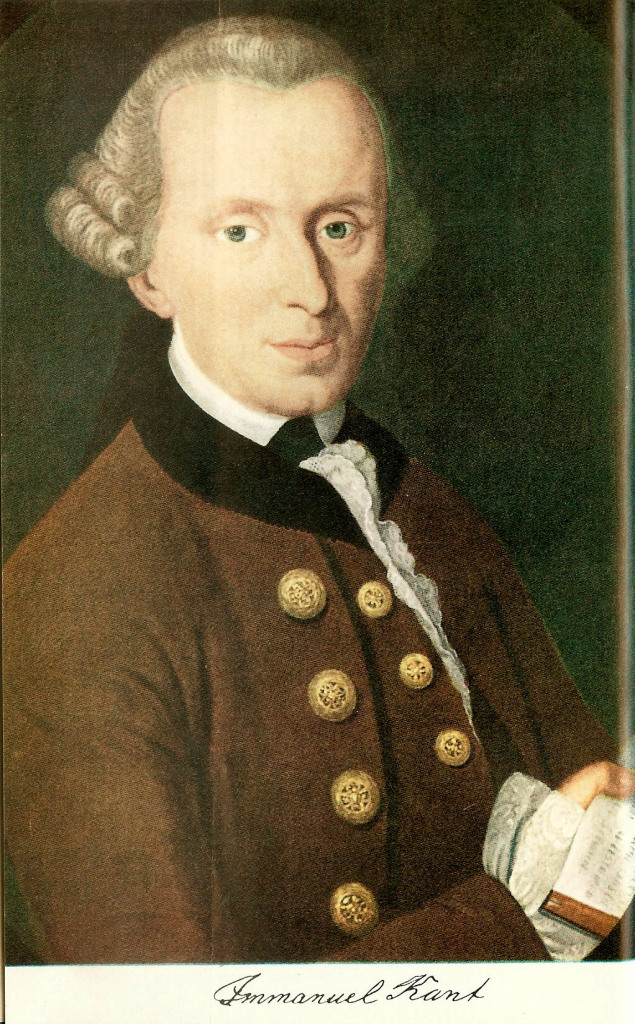
Immanuel Kant

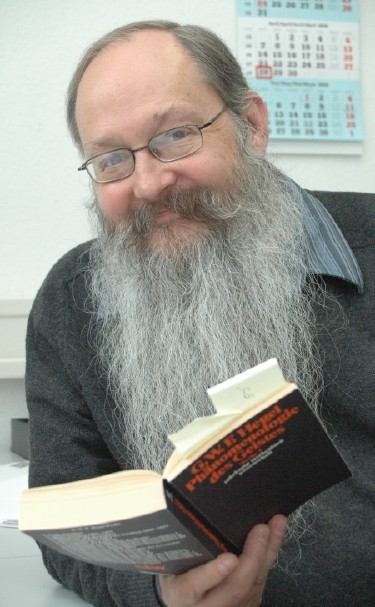
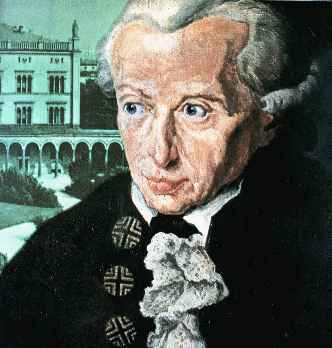
Robert Brandom: Kant as “the great grey mother of us all”

University of Pittsburgh philosophy professor Robert Brandom: “I want to start going back and looking at the roots of American pragmatism in the German Idealist tradition. I think developments over the last four decades have secured Immanuel Kant’s status as being for contemporary philosophers what the sea was for the poet Swinburne: ‘the great grey

Robert Brandom: Kant as “the great grey mother of us all” Read More »

Kant on sex, marriage, concubines, prostitutes, and incest [text]

[From lecture notes for Immanuel Kant’s 1775-1780 courses as published in Lectures on Ethics [1775-1780], translated by Louis Infield, New York: Harper and Row, 1963, pp. 162-168. The text is below and here as PDF.] Duties towards the Body in Respect of Sexual Impulse Amongst our inclinations there is one which is directed towards other

Kant on sex, marriage, concubines, prostitutes, and incest [text] Read More »

Long on Kant and liberal politics [Cato Unbound Series]

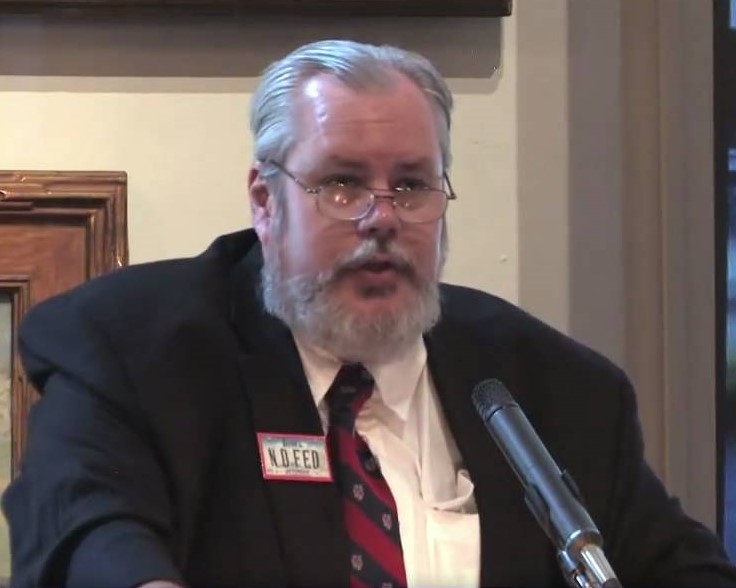
Professor Roderick T. Long has published his essay, “Kant: Liberal, Illiberal, or Both?”, in the Cato Unbound discussion series. Here is the abstract of his essay: Roderick Long offers a complex view of Immanuel Kant, who emerges as more often liberal in principle than in practice. Kant approved of taxation, a welfare state, and even

Long on Kant and liberal politics [Cato Unbound Series] Read More »

Kant’s non-defense of classical liberalism — my article for Cato Unbound

In the Cato Unbound series, my article “Does Kant Have a Place in Classical Liberalism?” is now up. Here, courtesy of editor Jason Kuznicki, is an abstract: Stephen R. C. Hicks argues that if our case for liberty comes from a mysterious other realm, then perhaps we have no case at all. He describes how

Kant’s non-defense of classical liberalism — my article for Cato Unbound Read More »

Michael Newberry on the sublime in art

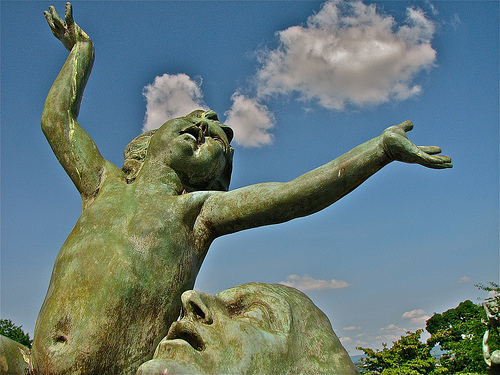
In this article, Newberry discusses Kant’s theory of the sublime and contrasts it to Aristotle’s and Rand’s aesthetic theories, along the way using modernists and postmodernists such as Duchamp, Manzoni, Hatoum, and Creed as examples, and then giving an extended review of Start Mark Feldman’s The Future in Our Hands sculpture group. Pandora’s Box: The

Michael Newberry on the sublime in art Read More »