An amusing quotation from William J. Bernstein’s Masters of the Word: How Media Shaped History.
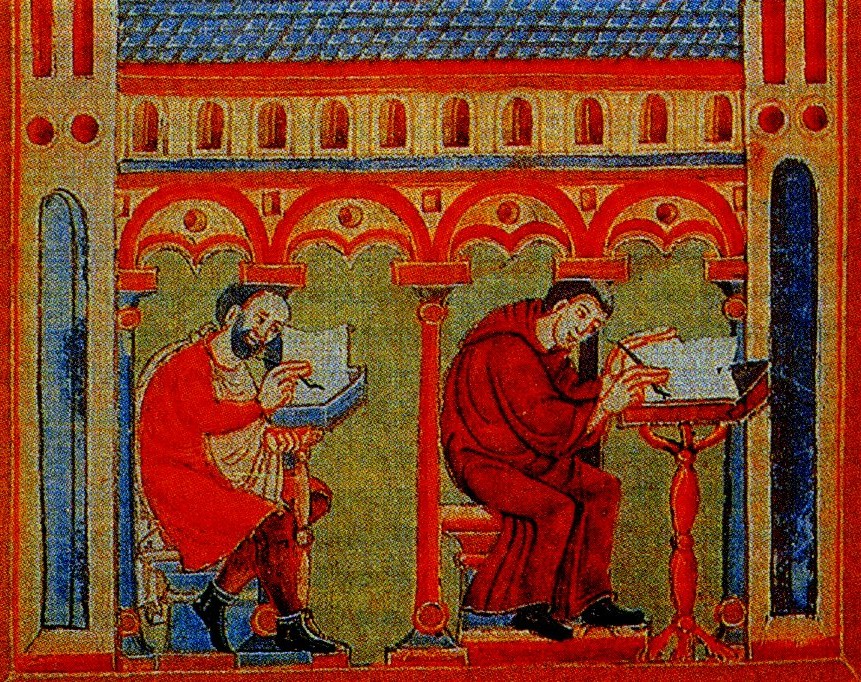
Gutenberg (1395–1468) had invented an efficient way to mass produce moveable type, leading to larger quantities and lower costs for printed materials. Before Gutenberg, the Benedictines made good money from hand-copying materials and were able to exert some control over what reading materials were produced. So they were unhappy with the Gutenberg press and lobbied the authorities to control it.
Here’s their core argument in their petition to the authorities against the cheap printers:
“They shamelessly print, at negligible cost, material which may, alas, inflame impressionable youths, while a true writer dies of hunger [and] a young girl reads Ovid to learn sinfulness … . Writing indeed, which brings gold for us, should be respected and held to be nobler than all goods, unless she has suffered degradation in the brothel of the printing presses.”
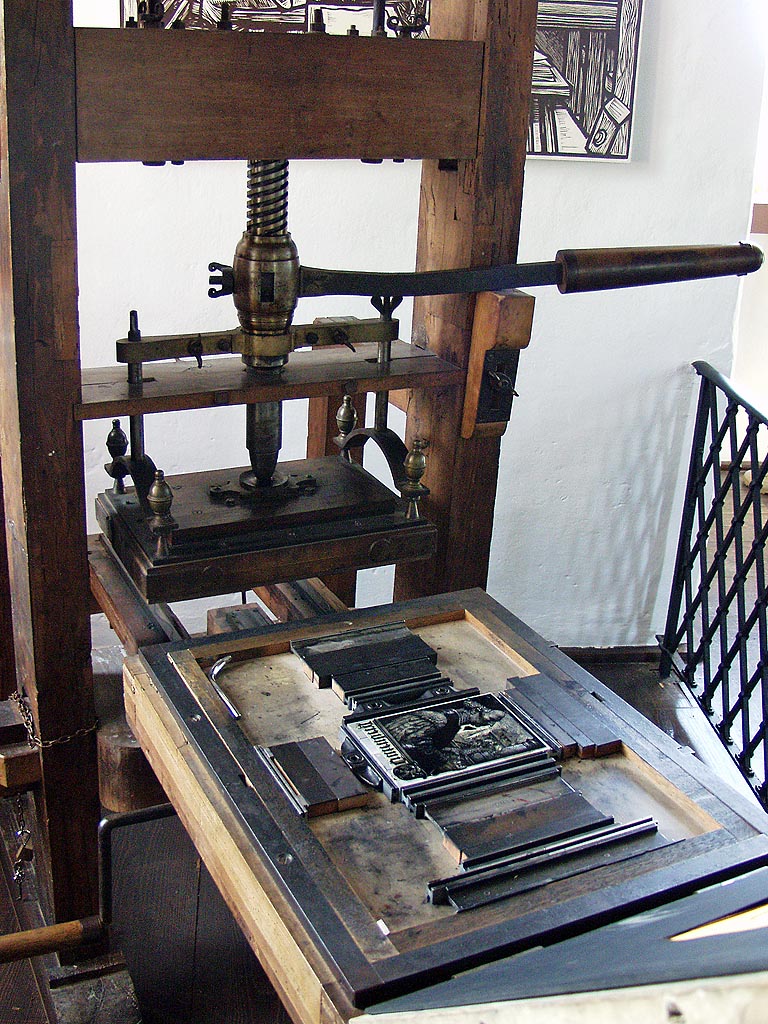
There you have it. Cheap reading material in large quantities:
1. Exposes the youth to bad ideas.
2. Crowds out quality writers.
3. Debauches the morals of young women.
(4. And lowers our income!)
Just like that darned Internet with its crazies, bloggers, and porn.
Source: William J. Bernstein, Masters of the Word: How Media Shaped History (Grove Press, 2013).
I read once that a 15th century Swedish bishop wrote a pamphlet denouncing Gutenberg, claiming that printing would destroy the noble art of copying books by hand. But the bishop wanted to get his arguments out to a wide public as quickly as possible. So he had his pamphlet printed.
In the interests of irony, Gutenberg should have replied with a hand-written letter.
That’s hilarious. Hope it’s true. Have to look it up.
The main threat of printing was to the RC Church. Luther’s ideas were quickly disseminated. Moreover, the Bible was eventually printed (and its translations, like those of Luther, Wycliffe and later, Tyndall) which undercut all Papal authority. The printing press was the main instrument of the Reformation, then the Enlightenment.
Cogent points Mr. Dahl.
And a hand written letter from Gutenberg would have been a most aptly ironic reply.
more content please
Professor Hicks, you may find the information included in this article on Gutenberg that I wrote 13 years ago of even more help on this topic. The monks alone were not opposed to printing. Resistance also came from copyists as you can imagine. Beyond that, however, by the time Gutenberg was printing, most books were copied not in monasteries, but rather in ataliers located in university towns.
http://strike-the-root.com/81/ludlow/ludlow3.html
The article was re-published in 2016 by FEE.org with my permission.
https://fee.org/articles/johannes-gutenberg-benefactor-of-humankind/
Good article. Thanks, Lawrence.