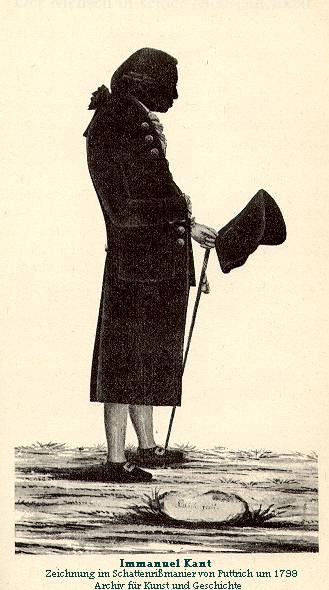
Immanuel Kant

Was Kant really that skeptical?

Some readers of Explaining Postmodernism object that I over-interpret Kant’s skepticism. Some prefer a gentler, more objectivity-friendly Kant. So while I quote Kant a lot in making the argument that Kant’s philosophy is radically subjectivist and the critical step down the road to postmodernism—not everyone is convinced. So I am grateful to Quee Nelson for

Was Kant really that skeptical? Read More »

Kant and socialism, according to Cassirer

Ernst Cassirer (1874-1945) was a leading neo-Kantian philosopher. He trained under Hermann Cohen (1842–1918), a founder and leader of the Marburg school of neo-Kantianism, which was perhaps the most dominant school of philosophy in the German academic world in the 19th century. Here is Cassirer’s assessment of why Kant matters to the history of socialism:

Kant and socialism, according to Cassirer Read More »

Wendy Steiner on Kant and what Modern Art Abandoned

In her Venus in Exile: The Rejection of Beauty in 20th-Century Art, Wendy Steiner, a professor of literature at Penn, argues that “In modernism, the perennial rewards of aesthetic experience — pleasure, insight, empathy — were largely withheld, and its generous aim, beauty, was abandoned” (p. xv). Steiner notes that “the main symbol of such

Wendy Steiner on Kant and what Modern Art Abandoned Read More »

Beiser on why the Counter-Enlightenment still matters today

A key exchange between 3:AM Magazine and scholar Frederick Beiser, author of The Fate of Reason: German Philosophy from Kant to Fichte: 3:AM: But this is the question that German philosophers in the last decades of the eighteenth century started asking: as you put it, they asked, ‘what is the authority of reason?’ They were

Beiser on why the Counter-Enlightenment still matters today Read More »

The Department of Great Putdowns: Heine on de Musset and Kant

The satirist, poet, and radical Heinrich Heine described poet Alfred de Musset as “a young man with a great future behind him.” Ouch. Musset never forgave him. Heine is known to have fought in at least ten duels in his life. One wonders why. Heine also said this of Kant, describing his clockwork walks along

The Department of Great Putdowns: Heine on de Musset and Kant Read More »

How great artists become great

Beethoven, according to biographer Maynard Solomon’s Beethoven: “Wegeler tells us that when a series of lectures on Kant was organized in Vienna in the 1790s, ‘Beethoven didn’t want to attend even once, even under my urging.’ Rather, Beethoven preferred self-education through voracious reading in popularizations of the works of the major thinkers; through rich encounters

How great artists become great Read More »