Philosophy

Hershberger on understanding postmodernism: “I wanted to understand this in order to be able to intelligently refute it”

His brief review of Explaining Postmodernism, at Amazon: 5.0 out of 5 stars. I wanted to understand this in order to be able to intelligently refute itBy Duane Hershberger on December 12, 2017 I came to this book as a result of an interview Dr. Jordan Peterson conducted with Dr. Hicks. I was already trying […]

Hershberger on understanding postmodernism: “I wanted to understand this in order to be able to intelligently refute it” Read More »

Conservatives: Get Over the Dark Ages [Open College transcript]

Un-edited transcription of this previously released podcast. Audio links: iTunes. Stitcher. YouTube. Transcription: The Initial Debate It’s a faux pas in some intellectual circles — mostly conservative ones — to say that there was a Dark Ages in European history. But the mainstream view, by contrast, has been that the Middle Ages were a dark

Conservatives: Get Over the Dark Ages [Open College transcript] Read More »

CRITICAL FEMINIST AND RACE THEORY: CATHARINE MacKINNON and DERRICK BELL. Lecture 7 of Postmodern Philosophy [Peterson Academy course]

Lecture Four: Have women and minorities made progress — or is that an illusion? Catharine MacKinnon argues that “Protecting pornography means protecting sexual abuse as speech” in order to maintain the subordination of women. Derrick Bell says “Racial equality is, in fact, not a realistic goal” and so blacks need a new strategy. Themes: Feminism’s

CRITICAL FEMINIST AND RACE THEORY: CATHARINE MacKINNON and DERRICK BELL. Lecture 7 of Postmodern Philosophy [Peterson Academy course] Read More »

On facing cancel cultures and injustices in one’s career and life [Interview excerpt]

From a 2020 interview: Jennifer Grossman [55:40]: Voicing an opinion that differs even slightly from the consensus can result in termination, cancellation, ostracism. So should one play the game of just kind of going along, or taking a principled stand, damn the consequences, justice? Howard Roark and John Galt did filing and struggling and obscurity.

On facing cancel cultures and injustices in one’s career and life [Interview excerpt] Read More »

DECONSTRUCTION AND POWER: FOUCAULT and DERRIDA. Lecture 6 of *Postmodern Philosophy* course

Lecture Six: Do claims to knowledge and morality merely mask power? Foucault argues that sex rhetoric has “a tactical role to play in a transformation into discourse, a technology of power.” And Derrida asserts that “the revolution against reason can be made only within it.” Themes: Power as substrate. Structuralism and Post-structuralism. Dekonstruction. Postmodernism. Alexis

DECONSTRUCTION AND POWER: FOUCAULT and DERRIDA. Lecture 6 of *Postmodern Philosophy* course Read More »

ON THE OBJECTIVITY OF SCIENCE: KARL POPPER and THOMAS KUHN. Lecture 5 of *Postmodern Philosophy* course

Lecture Five: Science and technology have accomplished wonders since the Enlightenment. But, as Karl Popper asks, how do we “distinguish between science and pseudo–science“? Thomas Kuhn suggests that scientists are less-than-objective and more “like the typical character of Orwell’s 1984.” Themes:  Logical Positivism and Analytic philosophy’s aspirations and travails. Scientific method. Science and pseudo-science. Falsifiability.

ON THE OBJECTIVITY OF SCIENCE: KARL POPPER and THOMAS KUHN. Lecture 5 of *Postmodern Philosophy* course Read More »

“ENTREPRENEURIAL EDUCATION: From MONTESSORI to the FUTURE.” Lecture 8 of *Philosophy of Education*

Lecture Eight: Entrepreneurial Education From Montessori to the Future Themes: Our entrepreneurial age. Montessori. The new Socratics. Learning as play. Core issues: Agency. Freedom. Work as creative play. Social win-win. AI and Robotics as challenge and as opportunity. Entrepreneurism as one’s comparative advantage. Concluding claim: Education as philosophy in practice. Text: Maria Montessori, The Montessori

“ENTREPRENEURIAL EDUCATION: From MONTESSORI to the FUTURE.” Lecture 8 of *Philosophy of Education* Read More »

German philosophy in pre-World-War-II Japan

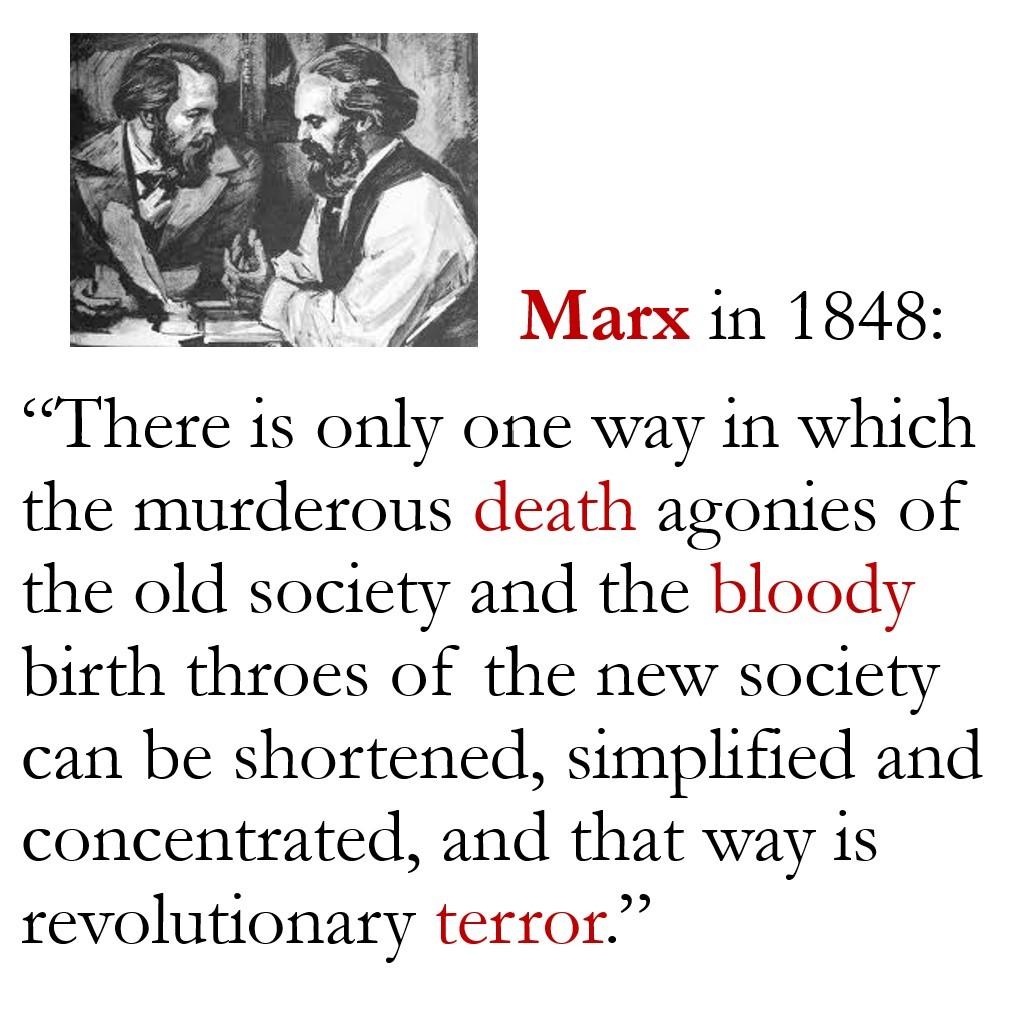
In Western nations, there is a clear connection between philosophy and totalitarian politics. Hegel’s philosophy, for example, took a “left” turn in Marx’s thinking — which Lenin, Trotsky, and Stalin drew upon — and it took a “right” turn in Treitschke’s and Nietzsche’s thinking — which Goebbels, Hitler, and the National Socialists drew upon, as

German philosophy in pre-World-War-II Japan Read More »