Philosophy

Master and Slave Moralities | Friedrich Nietzsche | *Philosophers, Explained* by Professor Stephen Hicks

Who are the great philosophers, and what makes them great? Episodes: The full playlist. Stephen R. C. Hicks, Ph.D., is Professor of Philosophy at Rockford University, USA, and has had visiting positions at Georgetown University in Washington, D.C., the University of Kasimir the Great in Poland, Oxford University’s Harris Manchester College in England, and Jagiellonian […]
Master and Slave Moralities | Friedrich Nietzsche | *Philosophers, Explained* by Professor Stephen Hicks Read More »

The State of ART EDUCATION: Joey McFadden interviews Stephen Hicks

Joseph McFadden is a New York artist and writer: “Joey and Stephen discuss the purpose of art; the state of fine arts education and the art world; the relationship between art and philosophy; 20th-century art; the triad of Marx, Freud, and Darwin; the relationship between Postmodernism and Marxism, and their impact on art & culture;

The State of ART EDUCATION: Joey McFadden interviews Stephen Hicks Read More »

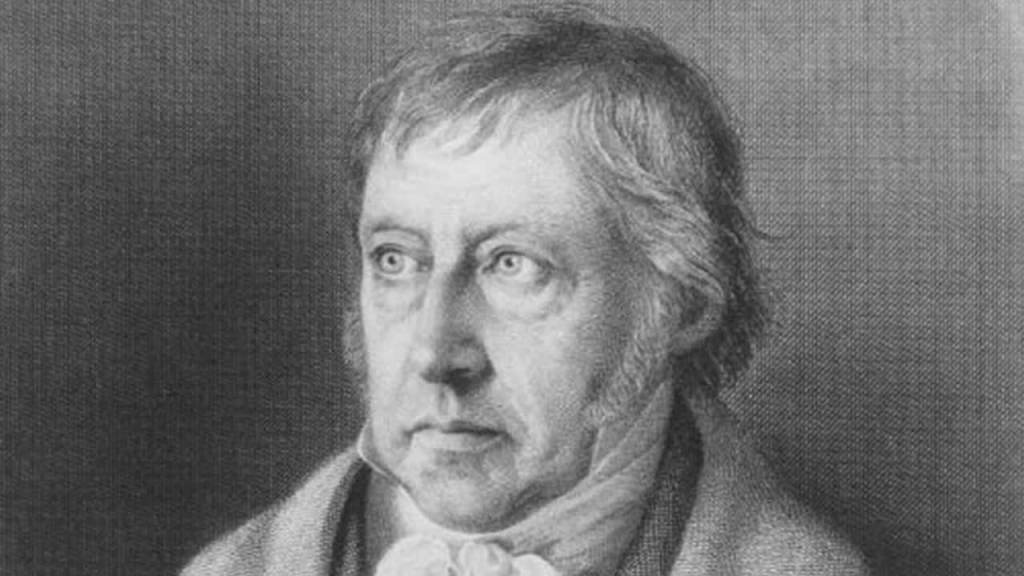
Hegel on war’s purifying powers — Baxter article

Professor Kimberly Baxter’s article summarizes Hegel’s argument that the state’s higher ethical purposes necessitate war as a means. According to Hegel, war is a “positive moment” wherein the state asserts itself as an individual and establishing its rights and interests. Sacrifice on behalf of the the state is the “substantial tie between the state and

Hegel on war’s purifying powers — Baxter article Read More »

Art critic Clement Greenburg on Kant as the first Modernist

Greenburg was the most influential art critic of the twentieth century. In the opening paragraph of his “Modernist Painting” (1960), Greenburg made a big claim: “Because he was the first to criticize the means itself of criticism, I conceive of Kant as, the first real Modernist.” Greenburg’s earlier “Avant-Garde and Kitsch,” published in Partisan Review

Art critic Clement Greenburg on Kant as the first Modernist Read More »

The surprising origin of “the dismal science” [Slavery versus Free-market capitalism]

Reprising from my interview with economist David Henderson: I asked him how economics came to be called the “dismal science.” The source, he explained, was Thomas Carlyle, the nineteenth-century historian and essayist. The surprising reason for his coining the phrase? Carlyle was attacking free-market liberals for advocating the end of slavery. Free-market liberals argued that

The surprising origin of “the dismal science” [Slavery versus Free-market capitalism] Read More »

“Only a God Can Save Us” documentary

The line is from Martin Heidegger’s resigned and despairing Der Speigel interview, shortly before his death in 1976. At Rockford University we hosted a showing of Jeffrey Van Davis’s film on Martin Heidegger’s philosophy and his disturbing relationship with National Socialism. After the showing, we had a panel discussion featuring director Van Davis, professors David

“Only a God Can Save Us” documentary Read More »

Ideological capture of universities in China, Russia, America — the same illiberal pattern

Via mandatory DEI statements, many universities in the West have been imposing ideological conformity oaths upon their faculty. That urge to control is paralleled in China and in Russia: Russia: It’s the 21st century, and the battle for liberal education is still uphill. (Thanks for Larry Liu for the China excerpt and Alexey Zhavoronkov for

Ideological capture of universities in China, Russia, America — the same illiberal pattern Read More »