Philosophy

The Pakistani intellectual scene — and *Explaining Postmodernism: Skepticism and Socialism from Rousseau to Foucault*

A Pakistani intellectual, Khurshid Ali Singay, in correspondence with me wrote about the situation there: “I can assure you again that in this side of the world, being an intellectual—secular or religious—means reading Marx or some Postmodernist thinkers. Marx is the hero both for the commoners and the literate. British philosophers, Empiricism and Liberalism are either taken […]
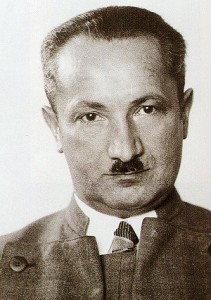
The Pakistani intellectual scene — and *Explaining Postmodernism: Skepticism and Socialism from Rousseau to Foucault* Read More »

Heidegger’s “Reunion Speech” of 1934

[Courtesy of the translator, W. H. F. Altman, here is the text of Martin Heidegger’s speech, delivered on the occasion of a 25th anniversary reunion in Konstanz, May 26-27, 1934.] Martin Heidegger, The Reunion Speech Twenty-five Years after Our Graduation, Reunion in Konstanz on May 26-27, 1934 Dear classmates! Our reunion—after twenty-five years and more—might

Heidegger’s “Reunion Speech” of 1934 Read More »

Pakistani edition of *Explaining Postmodernism: Skepticism and Socialism from Rousseau to Foucault* published

I’m happy to announce that my Explaining Postmodernism: Skepticism and Socialism from Rousseau to Foucault has been published in Pakistan. An Urdu edition, translated by Dr. Nazir Azad, was published in India in 2023. Urdu is the first or second language of 230 million people in Pakistan and India, so I am happy that it

Pakistani edition of *Explaining Postmodernism: Skepticism and Socialism from Rousseau to Foucault* published Read More »

TRAC 2014 art panel on Nerdrum’s Kitsch and Scruton’s Beauty

Blast from the past: At the Representational Art Conference in Ventura, California, I participated in a panel focused on the aesthetic theories of Odd Nerdrum and Roger Scruton. My remarks are from the 42:30- to 58-minute mark or so. Also on the panel are editor Peter Trippi, painters Jan-Ove Tuv, Alan Lawson, and Julio Reyes,

TRAC 2014 art panel on Nerdrum’s Kitsch and Scruton’s Beauty Read More »

Heidegger calling for a leader “capable of instilling terror”

From philosopher Martin Heidegger’s lectures in the winter semester of 1929-1930 on “The Fundamental Concepts of Metaphysics.” The Great War (1914-1918) had ended over a decade before but, Heidegger argued, its world-historical significance must not be lost. So the professor is explaining to his students what Germany needs: “We must first call for someone capable

Heidegger calling for a leader “capable of instilling terror” Read More »

Kant and socialism, according to Cassirer

Ernst Cassirer (1874-1945) was a leading neo-Kantian philosopher. He trained under Hermann Cohen (1842–1918), a founder and leader of the Marburg school of neo-Kantianism, which was perhaps the most dominant school of philosophy in the German academic world in the 19th century. Here is Cassirer’s assessment of why Kant matters to the history of socialism:

Kant and socialism, according to Cassirer Read More »

What Is Conservatism? James Orr (Cambridge Univ.) debates Stephen Hicks (Rockford Univ.)

James Orr defends “the conservative’s instinct for the particular over the universal, the empirical over the rational, the concrete over the abstract, the pragmatic over the ideal.” That is from Dr. Orr’s opening essay in this Reason Papers three-round debate with Dr. Stephen Hicks. Orr advocates and defends Conservatism; Hicks does the same for Liberalism.

What Is Conservatism? James Orr (Cambridge Univ.) debates Stephen Hicks (Rockford Univ.) Read More »

Orwell: “To admit that an opponent might be both honest and intelligent is felt to be intolerable. …”

George Orwell in 1944: “To admit that an opponent might be both honest and intelligent is felt to be intolerable. It is more immediately satisfying to shout that he is a fool or a scoundrel, or both, than to find out what he is really like. It is this habit of mind, among other things,

Orwell: “To admit that an opponent might be both honest and intelligent is felt to be intolerable. …” Read More »