Philosophy

Köhnke on the rise of Kant after 1870

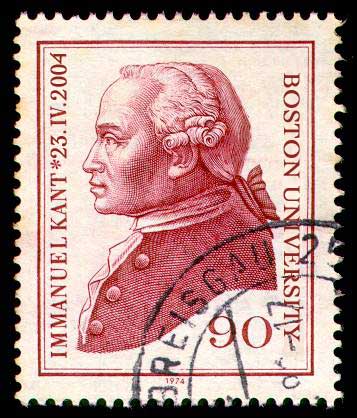
From Klaus Christian Köhnke’s The Rise of Neo-Kantianism (Cambridge, 1991): “In the 1870s Kant became the most frequently read of the classics in Germany’s universities” (p. 8) That decade marked the decline of Hegelianism and triumph of neo-Kantianism: “Immediately after the Franco-Prussian war [1870-71] things moved forward rapidly and neo-Kantianism as a whole rose rapidly in the

Köhnke on the rise of Kant after 1870 Read More »

Collective guilt — China’s social-credit scheme and other examples

“Chinese university suspends student because of dad’s bad social-credit score.” This collectivizing-of-guilt example reminds me of the commencement ceremony at my university a few years ago, at which Jenna Bush Hager, daughter of former president George Bush, gave an apolitical speech about her non-profit work. Several of our faculty members sat in stony-frowny-face, arms-crossed silence

Collective guilt — China’s social-credit scheme and other examples Read More »

Ayn Rand and Business Ethics — new booklet edition

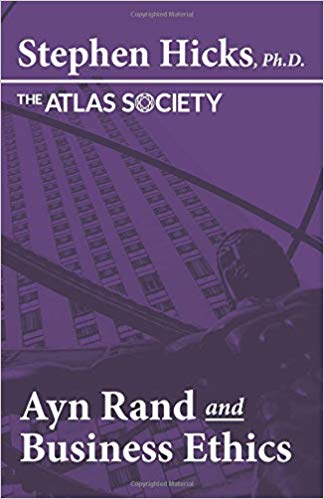
I’m happy to announce a new edition of my “Ayn Rand and Business Ethics” has been published. Thanks to the team at The Atlas Society for producing it. The essay was originally published in The Journal of Accounting, Ethics & Public Policy and has since been translated into Korean, German, Serbo-Croatian, and Portuguese. Abstract: Most

Ayn Rand and Business Ethics — new booklet edition Read More »

Como os pós-modernistas treinam—e não educam—ativistas [Portuguese translation]

[Por Stephen R. C. Hicks. A translation by Matheus Pacini of “Why Postmoderns Train—Not Educate—Activists,” James G. Martin Center for Academic Renewal, March 2019.] Por que doutrinar crianças faz sentido para os pós-modernistas? A maioria de nós foi vítima de doutrinadores ao longo de sua formação acadêmica. Um doutrinador pensa dessa forma: existe apenas uma

Como os pós-modernistas treinam—e não educam—ativistas [Portuguese translation] Read More »

¿Por Qué Los Posmodernos Entrenan—No Educan—Activistas? [Spanish translation]

[Por Stephen R. C. Hicks. A translation by Fermin Elizalde of “Why Postmoderns Train—Not Educate—Activists,” James G. Martin Center for Academic Renewal, March 2019.] He aquí por qué adoctrinar a los niños tiene mucho sentido para los posmodernistas. La mayoría de nosotros encontramos adoctrinadores pasados de moda en nuestra educación. Los adoctrinadores piensan de esta

¿Por Qué Los Posmodernos Entrenan—No Educan—Activistas? [Spanish translation] Read More »