Epistemology

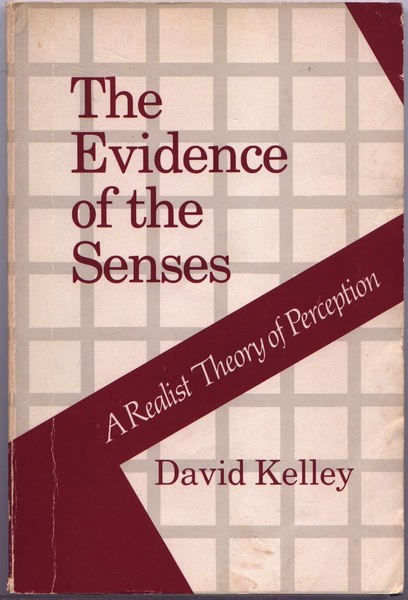
David Kelley’s *The Evidence of the Senses*

2026 is the 40th anniversary of this important publication on the foundations of epistemology. “This book is a highly original defense of realism. David Kelley argues that perception is the discrimination of objects as entities, that the awareness of these objects is direct, and that perception is a reliable foundation for empirical knowledge. Kelley’s argument

David Kelley’s *The Evidence of the Senses* Read More »

Audacious historical cause-and-effect claims

In an 1846 review of Grote’s History of Greece, John Stuart Mill makes this claim: “The Battle of Marathon, even as an event in British history, is more important than the Battle of Hastings.” My first reaction to Mill’s sentence was agreement. My second reaction was to the audacity of the claim and to wonder

Audacious historical cause-and-effect claims Read More »

Artistic representation: Picasso versus Matisse

From Jack D. Flam’s Matisse and Picasso: The Story of Their Rivalry and Friendship (2003): ‘Picasso characterized the arbitrariness of representation in his Cubist paintings as resulting from his desire for “a greater plasticity.” Rendering an object as a square or a cube, he said, was not a negation, for “reality was no longer in

Artistic representation: Picasso versus Matisse Read More »

David Hume’s current influence

David Hume topped the 2009 PhilPapers survey of most influential and admired philosophers (scroll down to bottom of the page to “Non-living philosophers most identified with”). Aristotle came in second and Kant third. I’ve been thinking much about Nietzsche and Heidegger recently: eleventh and eighteenth, respectively. Overall, the list was still dominated by thinkers in

David Hume’s current influence Read More »