History

Frey’s *America’s Economic Moralists* — review

My review essay on Donald Frey’s America’s Economic Moralists: A History of Rival Ethics and Economics (SUNY Press, 2009). My conclusion: “America’s Economic Moralists is a good historical survey of mostly religious commentaries on economics. Frey’s work is in part a historical survey and in part a polemic against the autonomy individualists. In my judgment, […]

Frey’s *America’s Economic Moralists* — review Read More »
Four recommended books on postmodernism

Reprising this recommendation of four books that focus on the postmodern challenge in specific intellectual areas: * Literature: John Ellis, Literature Lost: Social Agendas and the Corruption of the Humanities. * History: Keith Windschuttle, The Killing of History. * Science: Noretta Koertge, editor, A House Built on Sand: Exposing Postmodernist Myths About Science. * Law:

Four recommended books on postmodernism Read More »

Nietzsche on his contemporary Germans

[This is Section 29 of Stephen R.C. Hicks’s Nietzsche and the Nazis.] 29. On contemporary Germans: the world’s hope or contemptible? While the Nazis put the German-Aryan racial type first, Nietzsche is almost never complimentary about his fellow Germans. In Nietzsche’s view, Germany has slipped into flabbiness and whininess. Germany once was something to be

Nietzsche on his contemporary Germans Read More »

Heidegger’s “Reunion Speech” of 1934

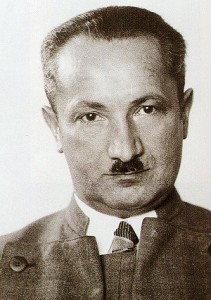
[Courtesy of the translator, W. H. F. Altman, here is the text of Martin Heidegger’s speech, delivered on the occasion of a 25th anniversary reunion in Konstanz, May 26-27, 1934.] Martin Heidegger, The Reunion Speech Twenty-five Years after Our Graduation, Reunion in Konstanz on May 26-27, 1934 Dear classmates! Our reunion—after twenty-five years and more—might

Heidegger’s “Reunion Speech” of 1934 Read More »

Heidegger calling for a leader “capable of instilling terror”

From philosopher Martin Heidegger’s lectures in the winter semester of 1929-1930 on “The Fundamental Concepts of Metaphysics.” The Great War (1914-1918) had ended over a decade before but, Heidegger argued, its world-historical significance must not be lost. So the professor is explaining to his students what Germany needs: “We must first call for someone capable

Heidegger calling for a leader “capable of instilling terror” Read More »