Lecture 1. Business Revolution
In our introductory lecture, Dr. Hicks examines the revolutionary transformation of business over the past 200–300 years, highlighting dramatic gains in life expectancy, wealth, and technology. We explore how entrepreneurship, science, religion, and culture drove economic growth, while discussing personal values and responsibility in a diverse global marketplace.
About the Course
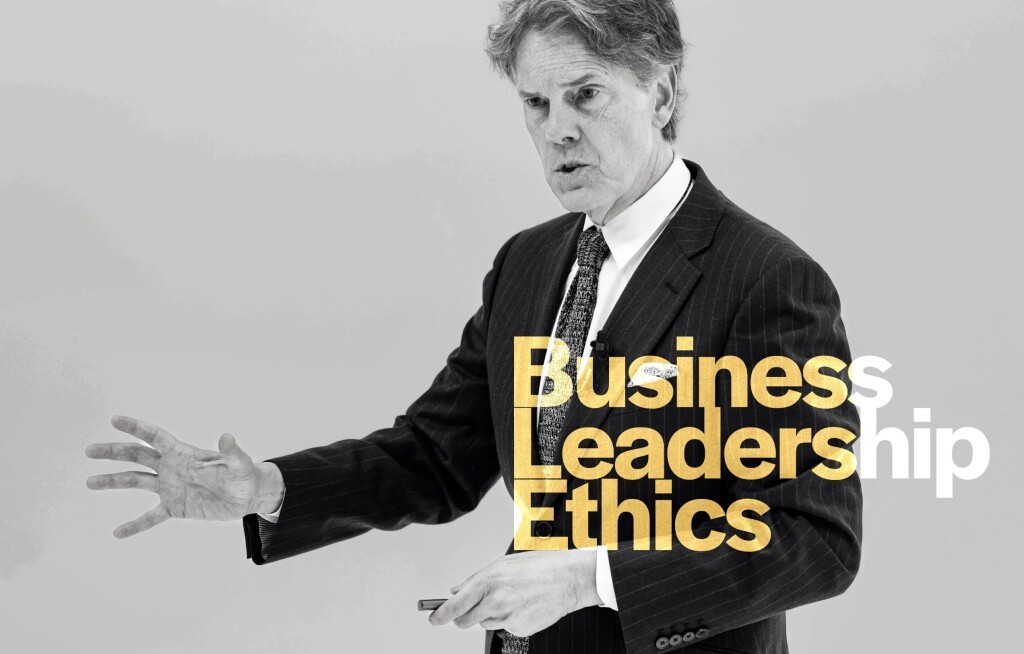
A course by Stephen R.C. Hicks, Ph.D., Professor of Philosophy. Eight lectures on our innovative business culture and the perennial challenges of entrepreneurship and leadership.
What values does business pursue? What virtues of character enable successful value pursuit? How do contradictory moral theories provide conflicting advice—or demands—that require judgment about when to negotiate, when to compromise, and when to take a principled stand?
Course Trailer and Syllabus.
Other Lectures in the Course
Lecture 2. Egoism, Altruism, Predation
In lecture two, we study three distinct moral frameworks—egoism, altruism, and predation. We examine how these moral types manifest across various domains of life, including business, sports, sexuality, and gift-giving, analyzing each approach through the dimensions of intent, action, and consequences. Dr. Hicks concludes by highlighting how entrepreneurial traits align with aspects of egoism, which values creativity, initiative, productivity, and mutually beneficial trade as morally dignified pursuits.
Lecture 3. Morals & Human Nature
In lecture three, we explore the philosophical foundations of moral frameworks, focusing on egoism versus altruism in relation to human nature. Dr. Hicks examines how views of humans—as naturally destructive and conflictual (via the myth of Gyges and Freudian psychology) or cooperative and productive—shape ethics and business practices. The lecture concludes with the “lifeboat scenario,” showing how resource scarcity influences moral decisions and highlights the tension between social Darwinism and altruistic sacrifice in zero-sum situations.
Lecture 4. Resources & Risk
In lecture four, we consider the fundamental question of ethics: what constitutes the best life, especially in business and leadership. The lecture examines three philosophical positions—egoism (self-interest and entrepreneurship as paths to flourishing), predation (humans as inherently selfish and competitive), and resource scarcity (the limits of the environment). We discuss human nature, reason, and resources, with a focus on entrepreneurial theories from Knight, Schumpeter, and Kirzner, highlighting risk-bearing, creative destruction, and alertness to opportunity as defining entrepreneurial traits.
Lecture 5. Entrepreneurial Virtues & Property
In lecture five, Dr. Hicks turns to explaining entrepreneurship through the lens of virtue ethics, identifying key traits—rationality, courage, integrity, honesty, perseverance, independence, pride, productivity, justice, and self-esteem—that support entrepreneurial success. We examine how ethical frameworks like egoism, altruism, and predation shape contrasting leadership models—collaborative, service-oriented, and predatory.
Lecture 6. Politics & Power
In lecture six, we analyze the “tragedy of the commons,” examining how commonly owned resources with economic value inevitably face depletion when used by self-interested individuals. We examine two solutions: privatization, aligning self-interest with preservation—or government regulation, controlling use through rationing, taxation, or conscription. The lecture concludes by linking these approaches to broader political philosophies, showing how ethical frameworks shape systems from capitalism to dictatorship to socialism.
Lecture 7. Customers & Employees
In lecture seven, Dr. Hicks examines two case studies—rent control and minimum wage—to demonstrate how business decisions involve navigating ethical principles, economic consequences, and political realities. The lecture emphasizes that effective business leadership requires methodically analyzing these multifaceted issues, recognizing that although economists may reach consensus on certain policies, political incentives often produce different outcomes in democratic societies.
Lecture 8. Thinking for the Future
In our eighth and final lecture, we explore the cognitive skills business leaders need to navigate rapidly changing economic landscapes, examining how technological innovations historically create more jobs than they displace. We emphasize the growing importance of problem-solving, critical thinking, and entrepreneurial mindsets in a world of accelerating scientific and technological change. Dr. Hicks concludes the course by highlighting how transformations in business culture have dramatically increased global wealth and life expectancy over the past two centuries, stressing that future success will demand both sharp thinking and strong character to tackle the complex challenges of tomorrow.
About the Instructor

Stephen R. C. Hicks, Ph.D., has been Professor of Philosophy at Rockford University, Illinois; Visiting Professor of Business Ethics at Georgetown University, Washington, D.C.; Visiting Professor at the University of Kasimir the Great, Poland; Visiting Fellow at Harris Manchester College of Oxford University; and Visiting Professor at the Jagiellonian University, Poland.
In 2010, he won his university’s Excellence in Teaching Award.
Dr. Hicks is author of Explaining Postmodernism: Skepticism and Socialism from Rousseau to Foucault, Nietzsche and the Nazis, Entrepreneurial Living, Liberalism Pro and Con, and Eight Philosophies of Education. He has published in Business Ethics Quarterly, Review of Metaphysics, and The Wall Street Journal. His writings have been translated into twenty languages.

Course trailer and enrollment options at the Peterson Academy site. Professor Hicks’s other courses — Postmodern Philosophy, Modern Ethics, Philosophy of Education, Introduction to Logic, Philosophy of Politics: From the French Revolution to World War II, and Philosophy of Politics: From the Cold War to After 9/11. A new course — Metaphysics and Epistemology — is coming soon to Peterson Academy.