The original interview is Spanish is published at Tras la Identidad. Below is a translation into English.
A COALITION AGAINST THE WEST
Stephen RC Hicks, philosopher and professor,
October 1, 2025
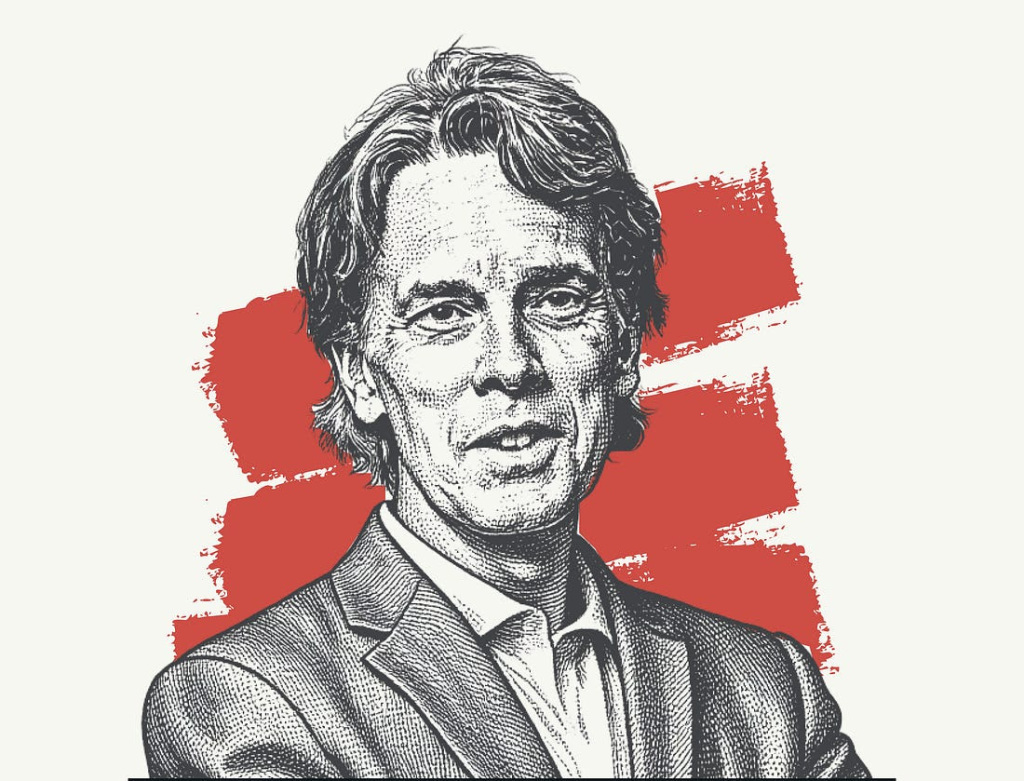
Stephen RC Hicks is a philosopher and author of, among others, texts such as “Explaining Postmodernism: Skepticism and Socialism from Rousseau to Foucault”, a book recommended at the time by none other than the Canadian psychologist, thinker and communicator Jordan Peterson. His responses to what has come to be called the “woke movement ” inaugurate After Identity. As this academic agrees to affirm, the ideas of this intellectual corpus threaten the Western world, at least its liberal aspect, one of the keys to the history of progress and success of the West.
Q: To what extent is what has come to be called “critical social justice,” “identity synthesis,” or “ woke” a strain of postmodern philosophy?
Yes, I think it’s fair to say that. I would say that the woke movement itself is a coalition composed of many cultural or political movements, in which independently developing sub-movements discover they have important common ground or areas of agreement, sometimes on principles or more theoretical issues, sometimes on specific policies they agree on, or sometimes on specific common enemies to pursue.
I think there are a number of people in woke culture who are emerging from a sense of having been marginalized or excluded from society, and are seeking acceptance. But they’re not particularly theoretical. They may simply be people who feel economically marginalized, or who, for example, have a sexual identity that’s important to them but is seen as strange by most people in society. That’s one strand.
I would say that the woke movement itself is a coalition made up of many cultural or political movements, in which sub-movements that have their own independent development discover that they have important similarities or areas of agreement.
The ones that interest me most are those who use the woke movement to promote more ideological causes. There are those, for example, in the West, generally speaking, or globally, who oppose capitalism. They don’t like individualism. They don’t like science, even though the West is the birthplace of the market and civil rights. They don’t like technology or entrepreneurs or all the rich people, and so on. Regarding the modern world, they think it’s wrong. And they think this way from a philosophical perspective, at least most of them. If you read postmodern theorists, like Michel Foucault, Jacques Derrida, Jean-François Lyotard, and Martin Heidegger— philosophers to whom they always go back [the woke theorists , ed. ]—they all openly say things like the entire modern world is a mistake or that they reject the entire Enlightenment project. And that’s a huge claim.
Critical theorists still like to think of themselves as social scientists, trying to figure out how the world works so they can strategize.
They all mounted philosophical arguments against what made the modern world modern. So you’ll see them distrusting science and technology, and rejecting liberalism and capitalism, etc. That’s another important current behind woke .
Also, back in the 1960s and 1970s, there were those who explicitly said that modern society today is too powerful to be attacked head-on. They said, “We can’t be like the old Marxist revolutionaries and just plant bombs and tear everything down, or wait for some kind of mass revolution by the workers, or whatever. What we need to do is look at the unexpected margins of society.” Their reflection was also, “If we start looking at criminals, deviants, disenfranchised people, and people who don’t fit into society, maybe we can find in them a leverage point, a way to take those people and unite around them, but use them as a way to slowly break and splinter existing society.” So they—and this is before the word “woke” became popular—we were already talking about the same kinds of disenfranchised people, but seeing them as a strategic tool in this broader anti-Western movement. I think that’s another important part of the coalition.
A third of the woke is the group known in intellectual circles as critical theorists. They were originally called the Frankfurt School, because they started in Frankfurt, Germany. And they weren’t as cynical, skeptical, and relativist as the postmodernists in their philosophy. But nevertheless, they were still quite political in their thinking. And all of them were Marxists when they were young. And they came to think that Marxism had theoretical problems, even though they thought the core of Marxism was essentially correct. But instead of just saying there’s nothing but narratives, we’re all skeptical about everything, and so on, they were social scientists. And they said that Marxism was a kind of social science. It describes how society works, and it gives a certain future causal history, and we can make predictions.
The postmodernists would later say, “We have to throw out science, and throw out reason. It’s all subjective narratives.” What the early Frankfurt School thinkers were saying was that we need better science and better social science to work with Marxism. They were still realists, and they were still trying to push that project forward. What they did was keep what they thought was fundamentally important about Marxism, but they added some Freudian psychology , for example. At the time, Freudian psychology was seen as the best new scientific approach to psychology.
So the Frankfurt School—the critical theorists—said that the problem with Marxism as a social science was that it was naive about psychology. They said, “We have to add a little psychology.” And then they did the same thing with social psychology and sociology. They said, “Marx is reducing everything to economics, but it’s not all just economics.” Because they understood that in reality, there are rich versus poor, but it’s also men versus women, some ethnic groups versus those ethnic groups, and these religious groups versus those religious groups, and so on. What they argued then is that we needed to have a lot more sociology, sociology of religion, sociology of ethnicity, and add that to Marxism in order to come up with a better strategy for overthrowing capitalism later on. So these are the guys who are starting to do their work in the 1930s, 1940s, and 1950s.
Q: Which postmodern thinkers would you highlight in this context?
Probably the most famous of these, at least in the North American context, is critical theorist Herbert Marcuse in the 1960s. At that time, there was a big shift from the Old Left, which was quite doctrinaire Marxist and dominant, to the New Left. The 1960s were a time of rebellion and revolution. At that time, a New Left emerged that was, again, largely a mixture of all sorts of sub-movements. But the most significant, I think, was the critical theory movement . It inspired a significant number of young people to become professors or to enter intellectual life in the 1960s, thinking that they needed a more novel strategy, something more than old-fashioned Marxism. They sought to do better psychology, better sociology, to take on the task of undermining Western civilization, or at least undermining the capitalist and liberal part of the West.
The woke , later on, were to some extent shaped by them. For example, if you include in woke, say, critical race theory, that’s a movement that started in the 1990s in academic legal circles and then really picked up steam in the early 2000s. But there’s also critical legal theory, critical race theory, critical feminist theory … In short, all of these critical theories, with that adjective plus tacked on in between, are explicitly inspired by the critical theory of Herbert Marcuse of the Frankfurt School. That’s the big theory that they apply to our particular problems, feminism, racism, ethnic studies, and so on. That’s the movement that then exploded into the cultural sphere in 2010, certainly in 2015 or so. In the current round of debates about the culture wars, that’s what we’re calling woke.
Q: You explain in your book that for these left-wing thinkers, language is ultimately a rhetorical instrument that isn’t useful for truly discussing things. Is that correct?
That’s exactly right. But this instrumentalization of language in the service of politics, as you describe it, is more postmodern and less critical theory. Because critical theorists still like to think of themselves as social scientists, trying to figure out how the world works so they can strategize. Postmodernists think that figuring out how the world works causally doesn’t make any sense because the world is unknowable and too chaotic.
In woke culture, language is just another weapon. It doesn’t matter whether you use language to tell the truth or not, to speak of real justice or not.
So all you can do is, whatever your moral, political, and personal values, take them as subjective and fight for them, using whatever weapons you can in the struggle. They believe everyone is using their weapons against your values. And language is just another weapon. It doesn’t matter whether you use language to speak the truth or not, to speak of real justice or not. What matters is whether language allows you to weaken your enemy. Does language increase your power in the social space? If so, use it that way.
Q: Proof of the existence of the coalition you speak of is the demonstrations against Western society and liberal capitalist regimes, for example, in pro-Palestinian demonstrations following the Hamas terrorist attacks of October 7, 2023. Isn’t that true?
Yes. From the woke perspective , at least the woke perspective in North America, these people don’t care about the people of Palestine, the Palestinians, or the people of Gaza. Some don’t even know exactly where that region of the world is. Instead, they have a mental template in which Israel is the most successful country. Israel is a liberal market, a democratic country, an ally of the United States, which they hate as a nation. Gazans, from their perspective, fit the model as a marginalized group, a weak group fighting against the big enemy. The big enemy is Israel, and of course the United States. They hate Israel, even if they’re not entirely sure where Israel is on the map. They think like this: “We’ll say anything if we think it will weaken our hated enemy.”
Their attitude is purely performative. But we have to make a distinction between the average college student who doesn’t know what they’re doing and the others, the more thoughtful strategists of the movement. I’m talking about the people who direct and make sure that 10,000 flags are ordered, that there are enough water bottles at the demonstrations, the people who decide the locations of the demonstrations and the slogans to use. Be that as it may, among postmodern theorists or activists or critical theorists or people or activists, there is a kind of coalition.
Q: You say ideas in philosophy come and go. Do you see signs that certain woke ideas are fading away?
I think it’s true that, historically, there have always been movements that rise up and have their moment of glory, so to speak, whether destructive or constructive, and then eventually fade away. The truest ideas tend to last longer, and false ones, for various reasons, are eliminated more quickly. I think what really matters is whether we, as individuals, use our minds well to hold more true ideas in our heads than false ones, and then develop institutions together that allow the best ideas to be put into practice and guide us. I’ve always been cautiously optimistic, partly because I’m a philosopher and I’ve been studying postmodernism and critical theory for many years from within academia. Even back when I published my book. I thought postmodernism was ending, because within academia, the postmodern movement seemed ossified. There weren’t new arguments or new ideas; it seemed like they were recycling ideas that were already 10 or 20 years old, and it was getting a bit boring. That was my feeling, because I think academics, at least, like new arguments and new ideas. And I think that’s happened in many parts of academia.
The parallel creation of new institutions is one way to solve the problem.
The postmodernists, institutionally, and some of the critical theorists were successful in capturing some higher education institutions. This artificially extended its lifespan. They then succeeded in turning it from being simply an ideological movement or a movement of ideas into a cultural movement that influenced education, legislation, politics, the art world, and so on. It’s very interesting to think about why that happened, but that’s another story. But here we are, 10 or 20 years later, and it’s still a cultural force.
But I’m optimistic. Because I think when wokeness burst into the public eye in 2020, everyone started to realize how strange it was that everything was suddenly about sex, and that journalism, education and the professions seemed to be getting worse. I think what’s happened is partly thanks to the Internet.
What’s happened, partly thanks to the Internet, is that people are educating themselves on all these issues and trying to figure out what they stand for. People have read a lot of books and have become more informed about these issues.
They have begun to react. For example, some parents began to go to their local school boards more and more often and exert some pressure. Newspapers that went down the wrong path lost a large number of subscribers. Some colleges and universities that allowed mobs to take over disintegrated and went bankrupt, and former students who are now successful in their lives and used to send a million-dollar check to their favorite university stopped signing the check.
I also believe in the development of a large number of new institutions, explicitly created to avoid ideological capture. For example, many parents or business owners might say, “Let’s get together and start a new school.” This is happening. The parallel creation of new institutions is one way to solve the problem. I don’t want to talk about the election [of Donald Trump as US president, editor’s note ], but I think an important component of why the last presidential election in the United States went the way it did has to do with the fact that it became a referendum on woke cultural issues.
Q: In your book, you also describe some philosophers who embrace a notion of collectivism, a form of “better socialism,” so to speak. There’s also this idea that the right or conservatives also run the risk of falling into this way of thinking, perhaps inspired by Heidegger and Hegel. Isn’t that right?
That’s too simplistic to say. But I think most major philosophical, cultural, and political issues always have three main positions, and they’re all fundamentally different from each other, although sometimes, on applied issues, they overlap. I think you’re right to say that there’s a central theme on the left, which is often collectivist, and this combines with the skepticism and irrationalism of postmodernists to oppose a more liberal individualist position focused on the pursuit of happiness. I mean a position in favor of the Enlightenment and the modern world, science, capitalism, and entrepreneurship.
But we shouldn’t overlook another historical contender, coming from conservatives or the right, who is often also collectivist, saying that one must merge with all of humanity into a collective being in which to worship God, suggesting that everyone has to believe in the same religion and practice that religion in the same way in order to properly be a collective being. If they’re not so overtly religious, they’ll again say that we need to merge into a nation or into our ethnic identity to see ourselves as part of that whole and live to serve that whole. And that that whole has a government that speaks for the whole. And that we need to give that government complete power over everyone else to achieve its agenda.
Various forms of nationalism, various forms of ethnocentrism, typically come from the right and the conservative right, or sometimes it takes the form of strong traditionalism—maybe our traditions are religious. But the important thing is that we are born into a tradition and are shaped and created by that tradition, and our purpose in life is to perpetuate that tradition in the next generation, and that is also strongly associated with the right.
One of the dangers is that those who are displeased with the left, particularly in its woke or postmodern or critical theory forms, are looking for answers, but they don’t find the liberal individualist capitalist answer compelling, instead adopting and revitalizing old kinds of conservatism from the right. There are some signs that this is happening, and you can see that some of Donald Trump ‘s supporters come from that ideological and cultural sector. There have been, I would say, more serious efforts on the part of conservative intellectuals over the last 10 or 15 years to increase the visibility of their position and develop new and updated versions of their positions.
Related: Professor Hicks’s book Explaining Postmodernism: Skepticism and Socialism from Rousseau to Foucault. Also in audiobook form at YouTube.