Is peace or war the natural state of man? Do men fight primarily over material possessions or over women?
For decades anthropologist Napoleon Chagnon studied the Yanomamö, a remote tribe in South America, learning about their almost-constant warfare. His findings put him in open conflict with academic anthropologists and the American Anthropological Association. The latter saga is worth an anthropological study in its own right.
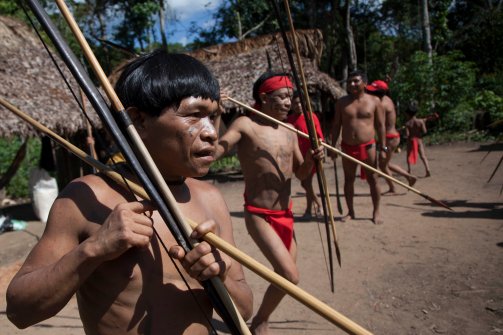
It’s a tale of Rousseauians (peace!) versus Hobbesians (war!) and Marxists (materialism!) versus Don-Juan-Darwinists (sex!).
Below is an AI summary of Nicholas Wade’s article in The New York Times (paywallled). Here are Chagnon’s early article in Science and his later, amusingly-titled book: Noble Savages: My Life Among Two Dangerous Tribes — the Yanomamo and the Anthropologists.
Google Gemini: Nicholas Wade, a science journalist, highly praised anthropologist Napoleon Chagnon’s 2013 memoir Noble Savages: My Life Among Two Dangerous Tribes – the Yanomamö and the Anthropologists. Wade described the book as a “beautifully written adventure story” that documents Chagnon’s, often controversial, 35-year study of the Yanomamö in the Amazon. Key details regarding their connection:
- Wade’s Review: In The New York Times, Wade highlighted Noble Savages as a testament to Chagnon’s efforts to understand an “untouched human society”.
- Themes: Wade noted the book covers three main themes: Chagnon’s survival in a violent culture, the analysis of Yanomamö society’s relevance to human evolution, and his professional conflicts with the American Anthropological Association.
- Scientific Support: Wade’s coverage reflected a sympathetic view of Chagnon’s, often criticized, evolutionary, and sociobiological approach to anthropology, highlighting Chagnon’s, “evidence-based scientific approach”.
- Content: The book detailed Chagnon’s findings on the intense warfare and violence among the Yanomamö, which, according to his, “fierceness” data, led to higher reproductive success for men.
Chagnon is widely known for his studies of the Yanomamö, while Wade is recognized for popularizing scientific, and sometimes controversial, evolutionary perspectives.
[First published February 21, 2013.]
The way Chagnon was treated by so-called scientists is bad enough. But the decision by a supposedly “scientific” society, the AAA, to eliminate the word “science” from its long-range mission plan and focus instead on “public understanding” is incredible. Exactly how is this “understanding” to be reached without science?
Um … by faith, dogmatism and intimidation …?
“Understand” = “regurgitate the party line”
I think Stanley Kubrick had a better peg on the reality of early man than Jean Jacques. A cardinal means of apportioning scarce resources in the state of nature was and is violence, familiar to anyone who watches nature documentaries, to Chagnon, and as depicted in the early scenes of the proto-human apes in Kubrick’s ‘2001: A Space Odyssey’. It was the evolution of private property that enabled large scale economic, hence social cooperation between humans and formed a cornerstone of civilization. Of course another, if inefficient alternative is slavery. It is no coincidence that modern foes of property reanimated that ancient institution on often stupefying scale.
Survival International has compiled a list of materials from experts, anthropologists and the Yanomami themselves on the Chagnon debate, and how Chagnon’s work has been disastrous for the tribe.
Visit http://www.survivalinternational.org/articles/3272 for statements from Davi Yanomami, Eduardo Viveiros de Castro, Philippe Descola and Manuela Carneiro da Cunha, and an open letter signed by over a dozen anthropologists who have worked for years with the Yanomami and who ‘disagree with Napoleon Chagnon’s public characterisation of the Yanomami as a fierce, violent and archaic people.’