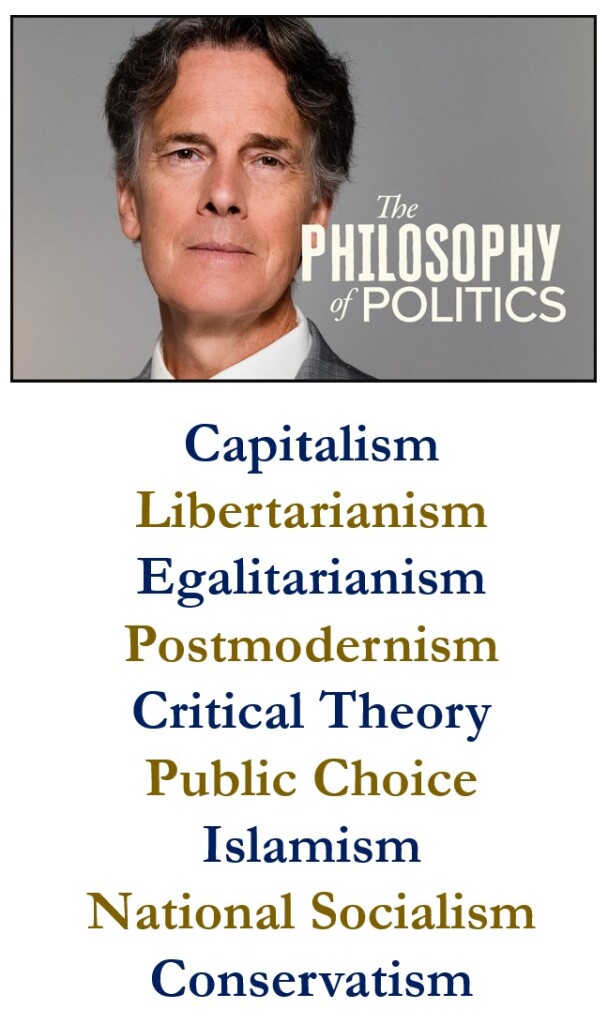
In this eight-lecture course, Professor Stephen R.C. Hicks takes us on a journey through the evolution of modern political philosophies from the tensions of Cold War to the turbulent post-9/11 era. Major thinkers covered include: Ayn Rand, Robert Nozick, John Rawls, James Buchanan, Herbert Marcuse, Michel Foucault, Roger Scruton, Sayyid Qutb, Alexander Dugin, and others.
Lecture 1: The Capitalist Ideal. Ayn Rand and Robert Nozick
Themes: Capitalism. Individual rights. Objectivism. Limited government. Capitalism as moral and practical. Romanticism. Libertarianism. On being deeply anti-slavery. Texts: Rand, Capitalism: The Unknown Ideal, Atlas Shrugged. Nozick, Anarchy, State, and Utopia.
Lecture 2: Veiled Justice Politics. John Rawls
Themes: Fairness Liberalism. Social Contract. The Veil of Ignorance. The Difference Principle. Reflective Equilibrium. Kant. Texts: Rawls, A Theory of Justice and A Brief Inquiry into the Meaning of Sin and Faith
Lecture 3: Public Choice Politics. James Buchanan
Themes: Public Choice. Enough “ideal” politics! Politics without the romance. On Keynesianism and “Third Way” politics. Bureaucracy. Dispersed costs and concentrated benefits. Regulatory capture. Constitutionalism. Texts: “Public Choice: Politics without Romance” and Democracy in Deficit: The Political Legacy of Lord Keynes
Lecture 4: Critical Theory and Repressive Tolerance. Herbert Marcuse
Themes: Critical Theory. The Frankfurt School. From Marx and Freud. Horkheimer and Adorno critique the Enlightenment. A New Left. The long march. Text: Horkheimer and Adorno, Dialectic of Enlightenment; Marcuse, A Critique of Pure Tolerance
Lecture 5: Biopolitics and Postmodernism. Michel Foucault
Themes: Postmodernism. The Enlightenment as a mask. Against metanarratives. Power as the substratum. “Justice”? Knowledge-Power as repressive. Foucault in Iran. Texts: Foucault, Discipline and Punish
Lecture 6: Islamism and Religious Politics. Sayyid Qutb
Themes: Islamism. Reactions to America. Reactions to Israel. Baathist Socialism—or Muslim Brotherhood—or Al Qaeda? The call to jihaad. The Iranian Revolution. Texts: Qutb, Milestones
Lecture 7: A Fourth Way of Politics? Alexander Dugin
Themes: National Bolshevism. Against the West’s individualism, liberalism, capitalism, cosmopolitanism. Salvaging the good in Communism and Fascism. Heidegger. Reviving the pre-modern. Texts: Dugin, “Fascism—Borderless and Red,” The Fourth Political Theory
Lecture 8: Modern Conservatism. Roger Scruton
Themes: Conservatism. Tradition. Rootedness. Against abstract individualism. Liberalism as conservatism’s biggest enemy. Conclusion: The Political Spectrum. Text: Scruton, The Meaning of Conservatism
About the Instructor
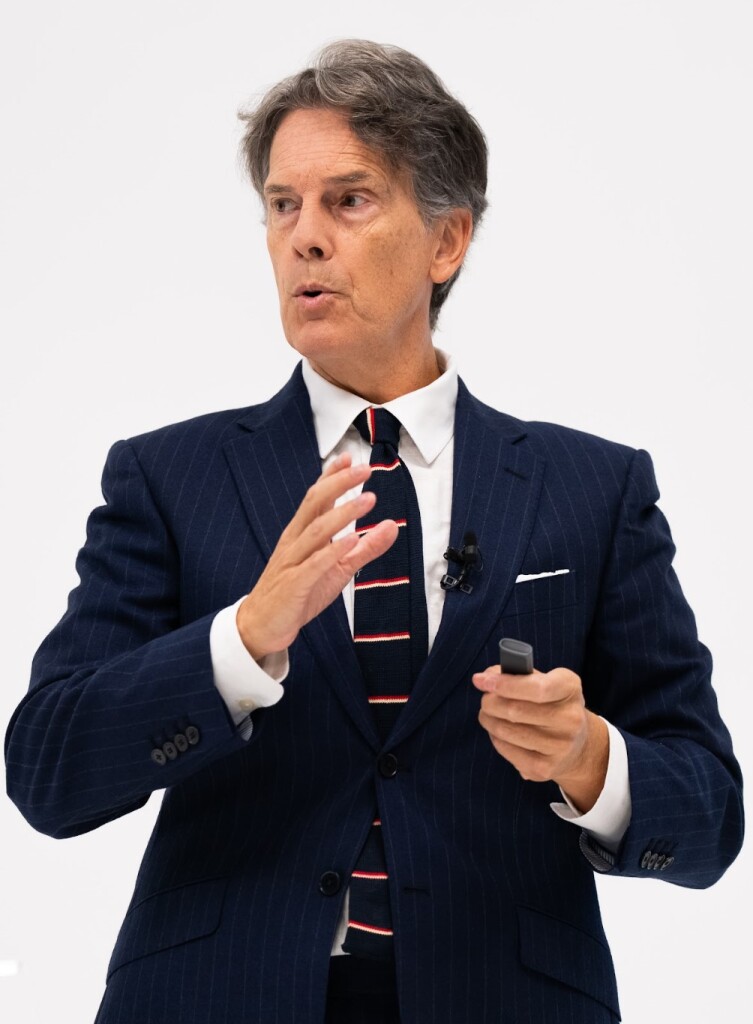
Stephen R. C. Hicks, Ph.D. is Professor of Philosophy and the author of Explaining Postmodernism: Skepticism and Socialism from Rousseau to Foucault, Nietzsche and the Nazis, Entrepreneurial Living, Liberalism Pro and Con, and Eight Philosophies of Education. He has published in Business Ethics Quarterly, Review of Metaphysics, and The Wall Street Journal. His writings have been translated into twenty languages. He has been Visiting Professor of Business Ethics at Georgetown University (Washington, DC), Visiting Professor at the University of Kasimir the Great (Poland), Visiting Fellow at Harris Manchester College (Oxford University), and Visiting Professor at Jagiellonian University (Poland).
Trailer and enrollment options at the Peterson Academy site here.
See also Professor Hicks’s courses on Modern Philosophy, Postmodern Philosophy, Philosophy of Ethics, and The Philosophy of Politics: From the French Revolution to World War II.