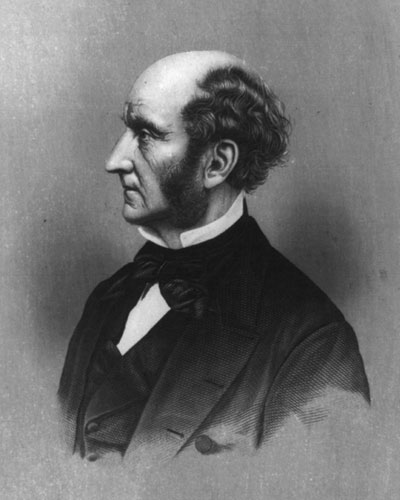
In an 1846 review of Grote’s History of Greece, John Stuart Mill makes this claim: “The Battle of Marathon, even as an event in British history, is more important than the Battle of Hastings.”
My first reaction to Mill’s sentence was agreement. My second reaction was to the audacity of the claim and to wonder how it could be justified.
The 1066 CE Battle of Hastings was 780 years Before Mill, and the 490 BCE Battle of Marathon was 2,336 years BM. But how does one make cause-and-effect claims about human actions involving millions of people across thousands of years? That takes major conceptualizing cojones.
Here is Mill’s sentence in context: “The interest of Grecian history is unexhausted and inexhaustible. As a mere story, hardly any other portion of authentic history can compete with it. Its characters, its situations, the very march of its incidents, are epic. It is an heroic poem, of which the personages are peoples. It is also, of all histories of which we know so much, the most abounding in consequences to us who now live. The true ancestors of the European nations (it has been well said) are not those from whose blood they are sprung, but those from whom they derive the richest portion of their inheritance. The battle of Marathon, even as an event in English history, is more important than the battle of Hastings. If the issue of that day had been different, the Britons and the Saxons might still have been wandering in the woods.”
Mill is doing “What-if” history: We know we are what we are today significantly because of the Greek victory at Marathon, but where would we be if the Persians had won?
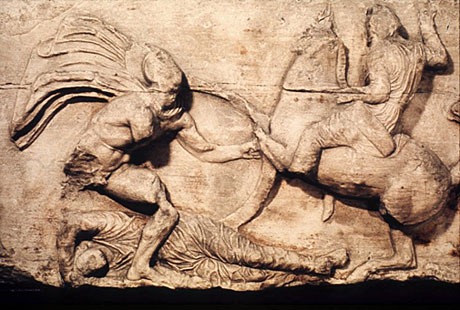
Let’s separate two propositions:
1. The Greeks defeated the Persians at Marathon. Therefore, we are where we are today. What evidence do we have connecting those two sentences?
2. If the Persians had defeated the Greeks at Marathon, then … . How do we complete the sentence?
On 1. The Greeks’ defeating the Persians made it possible for Greek culture to be transmitted across the generations. That was not a deterministic process — each generation’s decision-makers to varying degrees had to accept and propagate its distinctive Greek inheritance of independent, naturalistic thinking, and to the extent that each generation did it developed a culture of rationality, creativity, innovation, science, and artistry. As historians we can see the positive evidence for those connections as they played out across time: the western European decision-makers of the 300-1000s largely rejected the Greek philosophy and declined into the Dark Ages; but further east Byzantium continued to flourish, keeping the Greek texts and ideas alive; the decision-makers of the 1100s to 1400s rediscovered and rejuvenated the Greeks and the Renaissance ensued; and so on.
On 2. What counts as evidence here? We can imagine victorious Persians stamping out Greek culture or dispirited Greeks letting themselves slide into insignificance. But we can also imagine a more relaxed Persian regime content with tribute or tenacious Greeks keeping the flame alive and rebelling a few years later.
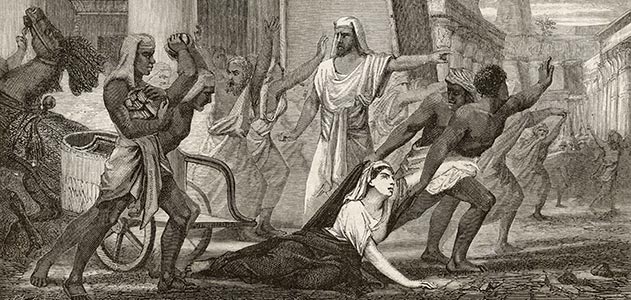
Imagination aside, we can think analogically to real historical cases. From the 300s to the 500s CE, the victory of early Christianity did lead to the suppression and extermination of Greek culture. But previously, from 197 to 30 BCE, the Romans systematically defeated the Greeks — yet the Greek inheritance survived, becoming not only part of Roman culture but for many generations the dominant philosophy of the Romans. (I like the saying that the Romans defeated the Greeks but the Greeks conquered the Romans.)
So a Persian victory would have led to which result? I don’t know. And not knowing that, can we say how important Marathon was to where we are 2,500 years later?
Related: My lecture “What Moves History: An Introduction to the Philosophy of History”:
Wouldn’t any battle occurring earlier in history automatically have an advantage in terms of importance compared to a battle occurring later, simply because more time has passed for history to have changed because of it?
Reply
I sent a comment and somehow it mysteriously disappeared. “Moderated”?
Reply
It hasn’t shown up here. Can you re-post it?
Reply
Thanks for re-posting, Mladen. Regarding your video clip (http://www.youtube.com/watch?v=uuslxJFpBuU): Wouldn’t we have the same questions about the rise of Islam? It’s about 1,000 years from Marathon to Muhammad.
Reply
I am not sufficiently knowledgeable about the systems or chaos theories and certainly wouldn’t know how to apply them to history. In the sense that, had Dienekes sneezed, (especially at that all-important moment) the outcome of the Persian war would have been different. But I guess what Stuart Mills wanted to make a point of is that not everything in history and not every civilization is equally important for what we are today. Even if we can’t really know what would have happened, I think that we could speculate on the basis of what we know did happen in the meantime. If we examine our vocabulary, we will find a huge number of Greek and even greater of Latin words (the latter were taught literacy by bilingual Greeks from Magna Graecia and from there it spread elsewhere too). I tried to illustrate, in my re-post that you still seem to be moderating :), that Persian cultural influence or, rather, cultural influences coming from that same part of the world continued on into the present in spite of the defeat at Marathon, that there is a sort of continuity, even in the 1,000 years you are mentioning. And not only on the European world but on the Middle Eastern and Arab world in particular. As we speak, Muslims are in the West millions more than just ten years ago. We already have “no-go zones” for Non-Muslims in the West where only sharia applies. If the trend continues at this speed, we will soon have full-fledged Islamic Republics, states within states. In the meantime, Christians from the former Ottoman Empire will have to put up with the likes of the President of a world’s superpower for whom Islam is a religion of peace and tolerance. A typical example of ignorance (of what happened or might happen, if history teaches anything). Or just arrogance?
Reply
Thanks for this, Mladen. Good material. I can see in my spam folder that your earlier posts, e.g., to the Islam video, were auto-quarantined. I will see about how to release them.
Reply
First of all I apologize in advance for my poor english…
On 1. Nothing really to add.
On 2. The Romans admired, respected & systematically studied the Greek civilization in almost all of its aspects. Therefore it’s safe to say that they treated the Greeks much differently than how the Persians would do if they had won the battle of Marathon.
Greek & Persian civilizations, though both advanced civilizations, didn’t had that much in common.
So the Romans conquering the Greeks can’t really give us an idea of how it would be if the Persians did that before the Romans.
Also what I believe is the most important thing in that J.S.Mill’s text you’re quoting is this:
“The interest of Grecian history is unexhausted and inexhaustible. It is an heroic poem (an amazing thing to say about the history of a nation, that can be explained by his next words), of which the personages are peoples.”
He sees Greek history as a poem in which the characters, the protagonists are PEOPLES, which is absolutely true. Greek civilization did focus on man in all of its aspects.
The Persian Empire could never let that delivered that to the word, exactly because it would never allow it to develop, no matter how tolerant it was.
Allowing the Greeks to develop “a culture of rationality, creativity, innovation, science, and artistry” while under Persian rule, is like getting to bed with a scorpion. No occupier allows its vassals to develop tools that can be used to revolt against his rule.
And why the Romans did exactly that? I believe I already answered that above. I’ll only add that the Greeks at the point that got conquered by the Romans, were in decline & later probably (if this can be said) felt safe in the arms of an “admirer” of that magnitude. On the contrary, during the 1st Greco-Persian wars & the centuries that followed they were at their best & a very dangerous rival. They most certainly would revolt. It is certain that the Persians would be merciless with the Greeks (& for many other reasons).
So, it’s more than safe to say that yes the Greek victories against the Persian Empire (& in particular the battle of Marathon) are very important for the reasons that you’ve already described (On 1.).
Then again this is only my opinion.
Regards
Reply
1. Rome was Greek colony. They were part and parcel of western civilization. The Romans got their idea for their republican form of government from the Greeks. Openmindedone is correct, comparing the subjugation of Greece to Rome after the Romans had incorporated every world changing idea they developed would not have the same results as subjugation by a stunted and superstitious empire that worshiped a god king 100 years before Socrates was born.
2. If you want a better look at what would have happened take a look at what happened to Constantinople after the Turks captured it. The most advanced civilization on earth at the time was destroyed and the region entered a period of moribund theocratic stagnation that continues to this day.
Reply