Some initial evidence for your consideration: paintings from Picasso, Duchamp, Dali, and de Kooning.
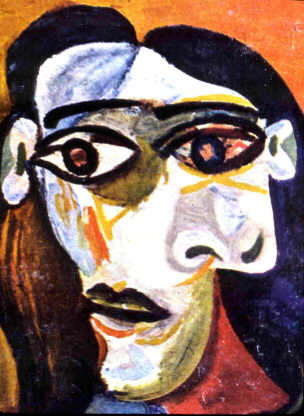
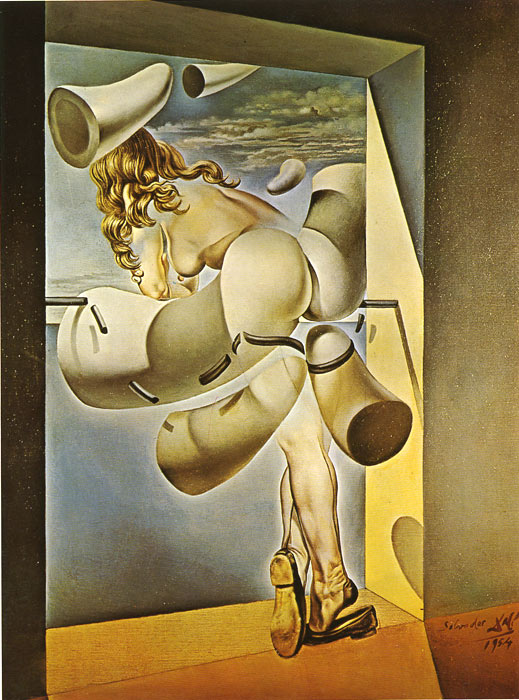
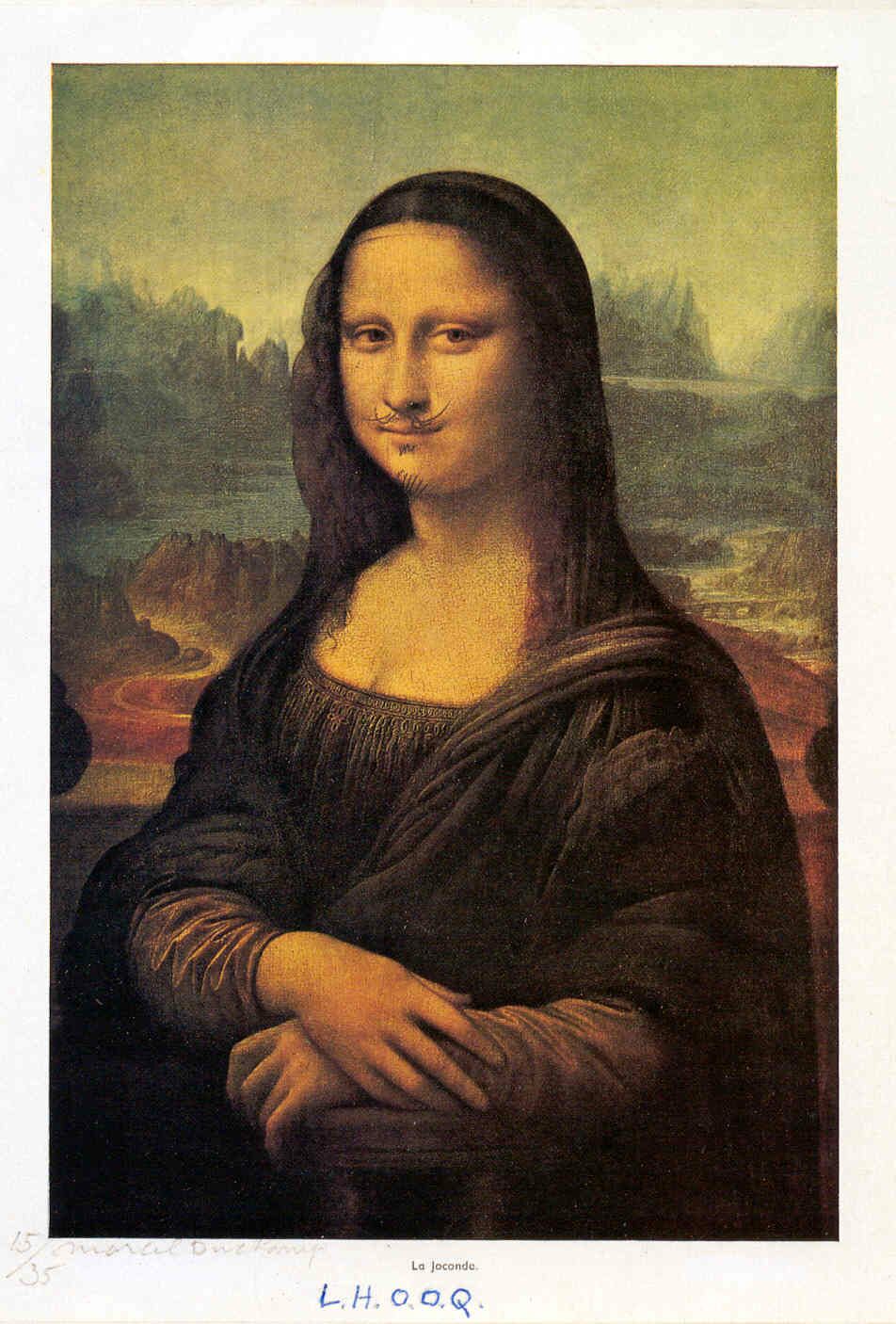
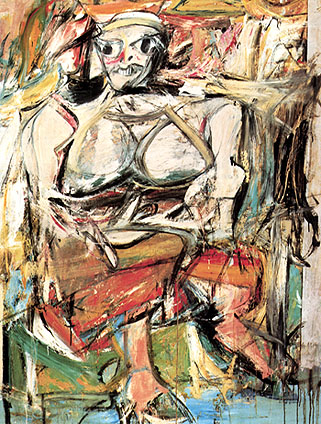
At a TRAC conference in Ventura, I heard an intriguing talk by Kay Kane, professor of drawing at Queensland College of Art, Griffith University, Australia. Kane’s talk was based partly on (and partly diverged from) Wendy Steiner’s Venus in Exile (University of Chicago Press, 2002), a provocative work about the loss or rejection of female beauty in modern art.
I am sympathetic to the Kane-Steiner thesis and think there are two kinds of evidence for it.
* Positive evidence: the many, many modernist works showing women as distorted, vandalized, violated, or predatory.
* Negative evidence: the complete absence of modernist works showing women as strong, beautiful, nurturing, or sensual.
But I wonder also about the fact that modernists were anti-male by those criteria. Here are Grosz, Picasso, Man Ray, and Giacometti, for example.
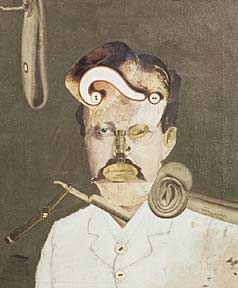
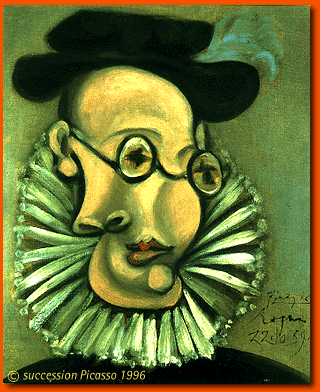
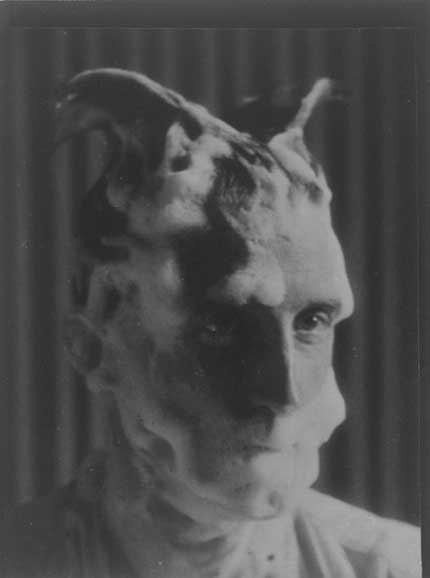
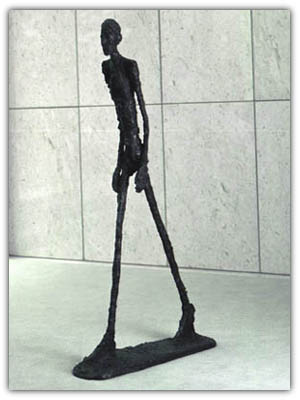
We find the same modernist trend: many negative portrayals of men as victims, ridiculous, dessicated, impotent, deranged, and an absence of positive portrayals of men as powerful, graceful, intelligent, and beautiful.
So is it that the modernists are more broadly anti-humanist? That is, they think that humanity is pretty bad, and whether portraying males or females they focus on the negative. Or are there additional signs that they are uniquely anti-female? That is, they have mixed or positive views of men but they portray women in especially negative ways.
Related: My account of philosophy’s role in the transformation of art into modernism.
To classify the visual arts AFTER THE FACT is a bit of monday-morning quarterbacking. No one adjective describes the increasing output of paintings/painters. Indeed, quantity tends to displace quality. Cubism and its similars compare with the 12 tone serial system of Schoenberg in music. The work of art is made to fit an arbitrary bed of Procrustes. One therefore expects distortion. The visual arts should recreate the most beautiful things in nature and mankind and by being selective, and clear, enhance that beauty. Cubism egomanically seeks to form a new perceptive mode — it is like the bent mirrors in an amusement park. It IS NOT GROTESQUE in the manner of Da Vinci or Goya, both of whom found an interest in THAT KIND OF DISTORTION, which was natural. I do not think Picasso or Dali can be called misogynistic. Painting and sculpture, after WWI, seemed to have marched in rhythm with musical (quasi) systems, as above, which veer away from the natural human ear to the (Marxist-poisoned?) human mind. The pursuit of “abstract art” displays the breakdown of form, hence, meaning. The best “abstract artworks” are little more than color experiments. Art, like music, depends on the INTEGRATION OF ITS CONTENT — form, color, perspective, ideas. The reader may find good grist for his mill in Jacques Barzun’s FROM DAWN TILL DUSK, that annotates the progress of this disintegration during the 20th century.
Reply
Its a lot harder to create beauty. That actually explains a lot.
Reply
No, they were just crazy.
Reply