The plague hit London again in the hot summer of 1665. Panic struck and rumors abounded about its cause. The Lord Mayor of London was convinced of one theory: the plague was spread by cats and dogs. So he ordered all the city’s cats and dogs killed, and an estimated 40,000 dogs and 200,000 cats were exterminated.
The truth is that the plague’s germs were carried by fleas that lived on rats. Cats are a natural enemy of rats. Killing the cats enabled the rat population to explode, thus causing the plague to spread more easily.
The lesson: Faulty science combined with top-down political power can be deadly.
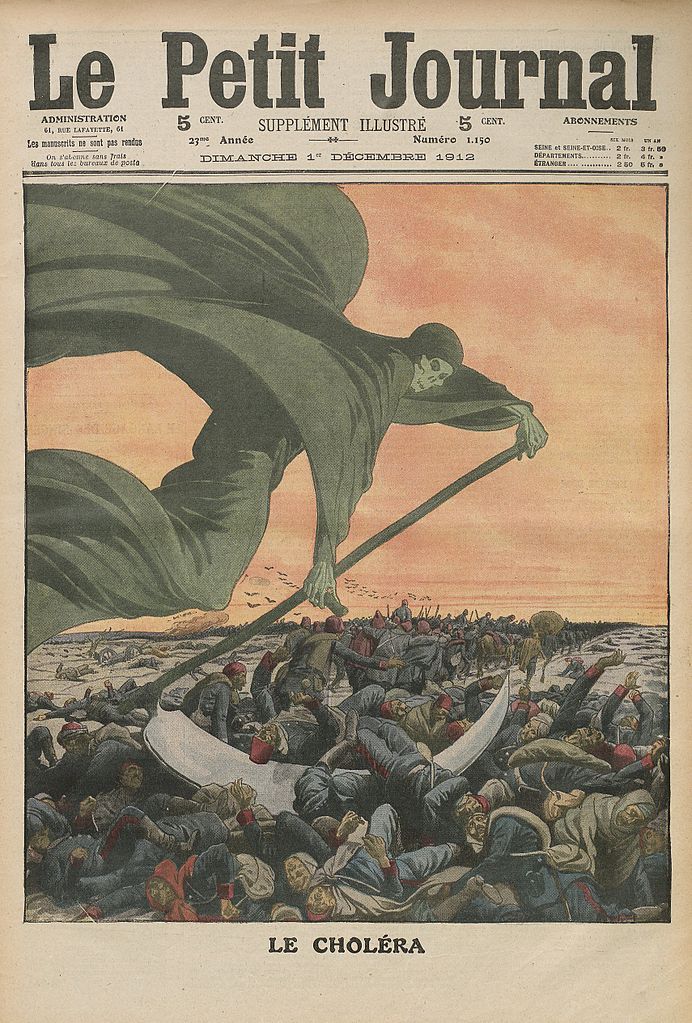
Cholera hit London regularly between 1831 and 1854, and in the summer of 1854 an especially terrible outbreak occurred. London was a fast-growing urban center and its infrastructure had not kept up with its growth. Human feces and urine were often stored in cesspools dug into the basements or open pits. One can only imagine the stench.
The leading explanation for cholera was the miasma theory: that it was airborne and contracted by inhaling noxious fumes. So London’s public health authorities ordered that the nasty cesspools be emptied and the sewage dumped into the Thames — the very river from which most Londoners got their drinking and washing water.
The truth is that the cholera bacterium is almost always spread via impure drinking water. (One of my new heroes is John Snow.)
The lesson: Ditto.
Caveat: File these two under unintended consequences — but not to downplay the challenging issues about the proper relationship between evolving scientific knowledge, public health, and political power, I recommend them only as cautionary tales, in case there are any politicians in great haste to save the day by imposing policies based on the most recent hypothesis for our own good. I am sure they are a dying breed.
Posted 3 years, 10 months ago at 1:30 pm. 7 comments