Stephen Hicks, Ph.D.

Philosopher

Classic readings for Philosophy of Education

apple-132x75For my Philosophy of Education course lectures on video, readings are now posted from key philosophers to accompany several of the lectures. [All links are to PDFs.]

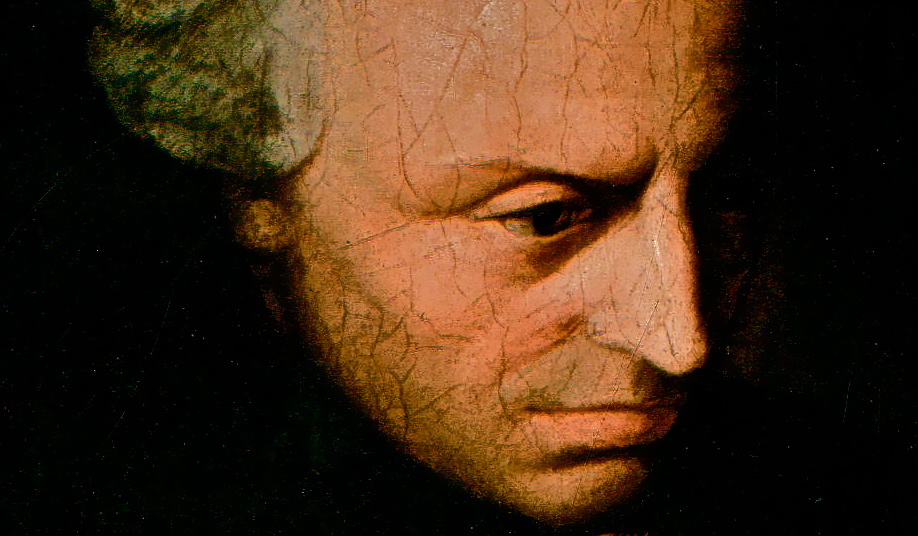
Idealism: Plato (the Allegory of the Cave from Republic) and Immanuel Kant (from On Education).

Realism: Aristotle (from Politics) and John Locke (from Some Thoughts concerning Education).

Pragmatism: John Dewey (from Democracy and Education).

Behaviorism: B. F. Skinner (from Beyond Freedom and Dignity).

Existentialism: Jean-Paul Sartre (from Existentialism Is a Humanism).

Marxism: Karl Marx (from Theses on Feuerbach and The Holy Family).

Postmodernism: Henry Giroux (from Border Pedagogy as Postmodern Resistance).

In each case, I discuss the readings in my video lectures, but nothing beats also reading the primary sources for oneself.

Posted 5 months ago at 7:35 am.

Add a comment

Philosophical Foundations of Education course

pencils-150x100Here is the syllabus and schedule [pdf] for my graduate course this semester.

I’ll be doing a few experiments with the course this time. One is using my online lectures in Philosophy of Education as assignments for class preparation, along with reading from Howard Ozmon’s textbook. I’ll also be asking the students to read and write a critical review of Jerry Kirkpatrick’s Montessori, Dewey, and Capitalism, a fine historically-informed survey of educational theory.

enrightmarsha-1024pxAnd in the second half of the semester I will be working with Marsha Familaro Enright, who will lead several Socratic discussions on key philosophers of education — including Plato, John Locke, Immanuel Kant, John Dewey, B. F. Skinner, Jean-Paul Sartre, Karl Marx, and Henry Giroux.

Posted 5 months, 1 week ago at 8:09 pm.

Add a comment

John Dewey on education

apple-88x50Stephen Hicks discusses pragmatist philosopher John Dewey’s approach to education. This is from Part 9 of Professor Hicks’s Philosophy of Education course.

Clips 1-2:

Previous: Pragmatic philosophy: Evolution, skepticism, and democracy.
Next: Pragmatic education.
Return to the Philosophy of Education page.
Return to the StephenHicks.org main page.

Posted 1 year, 8 months ago at 1:25 pm.

Add a comment

Pragmatic philosophy: Evolution, skepticism, and democracy

apple-88x50Stephen Hicks discusses pragmatism as a philosophical system. This is from Part 9 of his Philosophy of Education course.

Clips 1-14:

Previous: [Part 8: Realism] Character, discipline, and liberty.
Next: John Dewey on education.
Return to the Philosophy of Education page.
Return to the StephenHicks.org main page.

Posted 1 year, 8 months ago at 11:13 am.

Add a comment

John Dewey on education as socialization

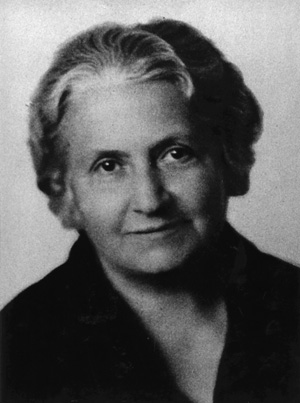
John Dewey was one of the top two most influential philosophers of education in the twentieth century. Maria Montessori was the other.

Dewey’s influence has been most strongly felt in the American public school system. In America, Montessori’s influence has mostly been grassroots and in privately funded schools.

pencils-75x50Montessori’s approach is highly individualistic and individualized. A common question arises, however, about the extent to which Dewey is a collectivist or individualist in his philosophy and his education theory, especially given his distancing himself from some “Progressive” educators who claimed to be following Dewey’s lead in implementing strongly collectivized approaches to education.

So here is some data from a key section of Dewey’s Democracy and Education (1916).

As a pragmatist, Dewey situates education biologically, in terms of life and death and the conditional, action-oriented nature of survival: “Life is a self-renewing process through action upon the environment” (162).

He notes that individuals come and go, as do species, thus the need for living beings to change responsively to changing conditions: “Continuity of life means continual readaptation of the environment to the needs of living organisms” (162).

dewey-john-young-100x100So far Dewey is setting a straightforward evolutionary biological context. Dewey was born in the same year that Charles Darwin’s Origin of Species was published, and he came to intellectual maturity in a world transformed by biological thinking.

Dewey’s next step is to take social groups and not individuals as the operative unit of analysis.

Dewey introduces education in making this step: “Education, in its broadest sense, is the means of this social continuity of life” (162). Note that education is not about equipping individuals for life. It does educate individuals, but its purpose is social continuity.

Individuals do have a role: “Each individual, each unit who is the carrier of the life-experience of the group, in time passes away. Yet the life of the group goes on” (162). Individuals are important — not as individuals — but as “units” who are “carriers” of the “life-experience of the group.” Individuals are vehicles through which the group lives.

Individuals are born with no knowledge or skills, so they must be “initiated into the interests, purposes, information, skill, and practices of the mature members: Otherwise the group will cease its characteristic life” (162). The end goal is the continuing of the group’s “characteristic life,” or avoiding its demise; the goal is not for the individual to find his or her own character and life.

deweyjohn-100x133Dewey next addresses the question of what exactly a group is. If education is about the group, we should know what we mean by “group.”

Dewey notes that group does not come into existence simply as a result of physical proximity, and he lays out a strong set of additional conditions for group existence:

“Individuals do not even compose a social group because they all work for a common end. The parts of a machine work with a maximum of cooperativeness for a common result, but they do not form a community. If, however, they were all cognizant of the common end and all interested in it so that they regulated their specific activity in view of it, then they would form a community” (163).

Unpack that: For a social group to exist, there must be (1) a common end, everyone must be (2) aware of the common end, everyone must be (3) interested in the common end, and everyone must (4) act to achieve the common end.

Deweyan education, then, is centrally about the common, the group, the social. In a remark about the consequent importance of communication skills in education, Dewey states, “Consensus demands communication” (163).

con·sen·sus (kn-snss) n. 1. An opinion or position reached by a group as a whole.

pencil_box-50x52Thus, in my reading, Dewey is extremely un-individualistic and highly collectivistic.
.
.

Notes:

My page references for Dewey are to the seventh edition of Ozmon and Craver’s Philosophical Foundations of Education, the text I use in my Philosophy of Education course.

Posted 2 years, 2 months ago at 4:48 pm.

Add a comment

Kirkpatrick on Montessori and Dewey

Professor Jerry Kirkpatrick gave a talk at Rockford College on October 28 on “Montessori and Dewey as Educational Philosophers.” Dr. Kirkpatrick is Professor of International Business at California State Polytechnic University, Pomona.

In the following eleven-minute interview after his talk, I speak with Dr. Kirkpatrick about the two great educational philosophers of the twentieth century, both of whom are exerting great influence in the twenty-first.

The talk was also based on Dr. Kirpatrick’s fine book Montessori, Dewey, and Capitalism. His talk at Rockford College was sponsored by the Center for Ethics and Entrepreneurship, and this video interview is also available here at the center’s site.

More of my interviews with CEE’s guest speakers are available here.

Posted 2 years, 3 months ago at 1:40 pm.

5 comments

Fall 2009 guest speakers

2009-fall-speakers The Center for Ethics and Entrepreneurship and the Department of Philosophy have an intellectually-stimulating line-up of guest speakers [pdf] this fall semester:

On September 16, Timothy Sandefur will be speaking on “Market Entrepreneurs and Political Entrepreneurs: Some Legal and Constitutional Issues.” Sandefur is a Senior Staff Attorney at the Pacific Legal Foundation, a public interest law firm based in Sacramento, California.

Jerry Kirkpatrick will be giving two talks: “The Importance of Philosophy to a Successful Business Career” on October 27 and “Montessori and Dewey as Educational Philosophers” on October 28. Kirkpatrick is Professor of International Business & Marketing at California State Polytechnic University

Joshua Hall will also be giving two talks on the theme of “The Dilemma of School Finance Reform,” one on October 13 and one on November 11. Hall is Assistant Professor of Economics at Beloit College and on the Editorial Review Board of the Journal of Economics and Economic Education Research.

For more details, please see the flyer [pdf]. Admission is free and open to the public.

Posted 2 years, 4 months ago at 2:18 pm.

Add a comment

Bibliography [EP]

[This is the Bibliography from Explaining Postmodernism: Skepticism and Socialism from Rousseau to Foucault]

Bibliography

Abrams, M. H. et al. The Norton Anthology of English Literature. Fifth edition, Volume II. New York: W. W. Norton & Co., 1986.

Ayer, A. J. Language, Truth, and Logic [1936]. Dover, 1946.

Ayer, A. J., editor. Logical Positivism. Free Press, 1959.

Bahro, Rudolf. From Red to Green. London: Verso Books, 1984.

Barker, Theo and Drake, Michael, editors. Population and Society in Britain, 1850-1980. New York University Press, 1982.

Barnard, F. M. Herder’s Social and Political Thought: From Enlightenment to Nationalism. Oxford: Clarendon Press, 1965.

Barnard, F. M., editor. J. G. Herder on Social and Political Culture. Cambridge University Press, 1969.

Beardsworth, Richard. Derrida and the Political. London: Routledge, 1996.

Beccaria, Cesare. On Crimes and Punishments [1764]. Excerpts in Isaac Kramnick, editor, 1995.

Beck, Lewis White. 1969. Early German Philosophy: Kant and His Predecessors. Cambridge, Mass.: Harvard University Press.

Becker, Carl. The Heavenly City of the Eighteenth-Century Philosophers. Yale University Press, 1932.

Berlin, Isaiah. Against the Current. Viking Press, 1980.

Beiser, Fred. “Kant’s intellectual development: 1746-1781.” In Paul Guyer, editor, 1992.

Bricmont, Jean. “Exposing the Emperor’s New Clothes: Why We Won’t Leave Postmodernism Alone.” Free Inquiry. Fall 1998, 23-26.

Bruun, Geoffrey. Saint-Just: Apostle of the Terror. Houghton Mifflin, 1932.

Buer, Mabel Craven. Health, Welfare and Population in the Early Days of the Industrial Revolution, London: G. Routledge, 1926.

Burnham, James. The Managerial Revolution: What Is Happening in the World. New York: John Day, 1941.

Burrow, J. W. The Crisis of Reason: European Thought, 1848-1914. Yale University Press, 2000.

Cahoone, Lawrence E., editor. From Modernism to Postmodernism. Blackwell, 1996.

Carnap, Rudolf. “The Elimination of Metaphysics through Logical Analysis of Language” [1932]. Translated by A. Pap. In A. J. Ayer, editor, 1959.

Chisholm, Roderick. The Foundations of Knowing. Minneapolis: Harvester Publishing, 1982.

Code, Lorraine. What Can She Know? Ithaca: Cornell University Press, 1991.

Copi, I. M. and Gould, J. A., editors. Readings on Logic. New York: Macmillan, 1964.

Courtois, Stéphane, Werth, Nicolas, Panné, Jean-Louis, Paczkowski, Karel Bartosek, and Margolin, Jean-Louis, editors. The Black Book of Communism: Crimes, Terror, Repression [1997]. Translated by Jonathan Murphy and Mark Kramer. Harvard University Press, 1999.

Craig, Gordon A. Germany, 1866-1945. Oxford University Press, 1978.

Crossman, Richard, editor. The God that Failed [1949]. New York and Evanston: Harper Colophon, 1963.

Dahlstrom, Daniel O. “The aesthetic holism of Hamann, Herder, and Schiller.” In Karl Ameriks, editor, The Cambridge Companion to German Idealism. Cambridge University Press, 2000.

Derrida, Jacques. Moscou aller-retour. Saint Etienne: De l’Aube, 1995.

Derrida, Jacques. Specters of Marx. Routledge, 1994.

Derrida, Jacques. Writing and Difference. Translated by Alan Bass. University of Chicago Press, 1978.

Dewey, John. Logic: The Theory of Inquiry. Holt, Rinehart, and Winston, 1938.

Dewey, John. My Pedagogic Creed. Chicago: A. Flanagan Co., 1897.

Dewey, John. Reconstruction in Philosophy. Henry Holt, 1920.

Dickstein, Morris, editor. The Revival of Pragmatism: New Essays on Social Thought, Law, and Culture. Duke University Press, 1998.

Dostoevsky, Fyodor. Notes from Underground [1864]. Edited by Michael R. Katz. New York: W. W. Norton & Co., 1989.

Drake, Michael, editor. Population in Industrialization. Methuen and Co., 1969.

Dummett, Michael. Origins of Analytical Philosophy. Harvard University Press, 1993.

Dworkin, Andrea. Intercourse. New York: Free Press, 1987.

Ellis, John. Against Deconstruction. Princeton University Press, 1989.

Ellis, John. Literature Lost. Yale University Press, 1997.

Ellis, Kate. “Stories Without Endings: Deconstructive Theory and Political Practice.” Socialist Review 91:2. 1989, 37-52.

Engels, Friedrich. “Socialism Utopian and Scientific” [1875]. Translated by Edward Aveling. In The Essential Left: Marx, Engels, Lenin: Their Basic Teachings. Barnes and Noble, 1961.

Faubion, James D., editor. Rethinking the Subject: An Anthology of Contemporary European Social Thought. Boulder: Westview, 1995.

Feigl, Herbert, and Sellars, Wilfrid. Readings in Philosophical Analysis. Appleton-Century-Crofts, 1949.

Feyerabend, Paul. Against Method [1975]. Third edition. Verso, 1993.

Feyerabend, Paul. “Creativity—A Dangerous Myth.” Critical Inquiry 13 (Summer 1987), 700-711.

Fichte, Johann. Addresses to the German Nation [1807]. Translated by R. F. Jones and G. H. Turnbull. Open Court, 1922.

Fish, Stanley. Is There a Text in this Class? Harvard University Press, 1982.

Fish, Stanley. “Pragmatism and Literary Theory.” Critical Inquiry 11. March 1985, 433-458.

Fish, Stanley. There’s No Such Thing as Free Speech, And It’s a Good Thing Too. Oxford University Press, 1994.

Foucault, Michel. The Archaeology of Knowledge [1969]. Translated by A. M. Sheridan Smith. Pantheon, 1972.

Foucault, Michel. “Discipline.” In James D. Faubion, editor, 1995.

Foucault, Michel. Discipline and Punish [1977a]. Translated by Alan Sheridan. Pantheon, 1977.

Foucault, Michel. Foucault Live (Interviews, 1961-1984). Edited by Sylvère Lotringer. Translated by Lysa Hochroth and John Johnston. New York: Semiotext(e), 1989.

Foucault, Michel. The History of Sexuality, Volume 1, An Introduction. Translated by Robert Hurley. Random House, 1978.

Foucault, Michel. “Introduction” to Ludwig Binswanger, Le rêve et l’existence. Traduit de l’Allemand par Jacqueline Verdeaux. Paris: Desclée de Brouwer, 1954.

Foucault, Michel. Language, Counter-Memory, Practice: Selected Essays and Interviews by Michel Foucault [1977b]. Edited by Donald F. Bouchard. Cornell University Press, 1977.

Foucault, Michel. Madness and Civilization. Translated by Richard Howard. Random, 1965.

Foucault, Michel. The Order of Things: An Archaeology of the Human Sciences [1966]. Vintage, 1973.

Foucault, Michel. “Truth, Power, Self: An Interview with Michel Foucault” [1982]. In Luther H. Martin, Huck Gutman, and Patrick H. Hutton, editors, Technologies of the Self. University of Massachusetts Press, 1988.

Freud, Sigmund. Civilization and Its Discontents [1930]. Translated by James Strachey. New York: W. W. Norton, 1961.

Friedrich, Rainer. “Brecht and Postmodernism.” Philosophy and Literature 23:1. April 1999, 44-64.

Goebbels, Joseph. Michael [1929]. In George Mosse, editor, 1966.

Goebbels, Joseph. “National Socialism or Bolshevism?” [1925]. In Anton Kaes, editor, 1994.

Goetzmann, William H., editor. The American Hegelians. A. A. Knopf, 1973.

Golden, Jill. “The Care of the Self: Poststructuralist Questions about Moral Education and Gender.” Journal of Moral Education 25:4. 1996.

Gramsci, Antonio. Selections from the Prison Notebooks [composed 1929-1935]. Edited by Quintin Hoare and Geoffrey Nowell Smith. New York: International, 1971.

Gray, John. Enlightenment’s Wake. London: Routledge, 1995.

Gray, John. Straw Dogs: Thoughts on Humans and Other Animals. Granta, 2002.

Grey, Thomas. “Freestanding Legal Pragmatism.” In Morris Dickstein, editor 1998, 254-274.

Gross, Paul R., and Levitt, Norman. Higher Superstition: The Academic Left and Its Quarrels with Science. Johns Hopkins University Press, 1997.

Guelke, Adrian. The Age of Terrorism and the International Political System. London: I. B. Tauris, 1995.

Guyer, Paul, editor. The Cambridge Companion to Kant. Cambridge University Press, 1992.

Hanson, Norwood Russell. Patterns of Discovery. Cambridge University Press, 1958.

Harrington, Michael. The Other America [1962]. Pelican, 1971.

Harrington, Michael. Socialism. New York: Saturday Review Press, 1970.

Hasnas, John. “Back to the Future: From Critical Legal Studies Forward to Legal Realism.” Duke Law Journal 45 (1995), 84-132.

Hayek, F. A. The Counter-Revolution of Science: Studies in the Abuse of Reason [1952]. Second edition. Liberty Fund, 1980.

Hayek, F. A. The Road to Serfdom [1944]. University of Chicago Press, 1994.

Hegel, G. W. F. Phenomenology of Spirit [1807]. Translated by A. V. Miller. Oxford University Press, 1977.

Hegel, G. W. F. The Philosophy of Hegel. Edited by C. J. Friedrich. Modern Library, 1953/54.

Hegel, G. W. F. Philosophy of History [1830/1831]. Translated by J. Sibree. Prometheus, 1991.

Hegel, G. W. F. Philosophy of Right [1821]. Translated by T. M. Knox. Oxford, 1952.

Hegel, G. W. F. Hegel’s Science of Logic [1812-1816]. Translated by A. V. Miller. Humanities Press International, 1989.

Heidegger, Martin. Basic Writings, revised and expanded edition. Edited by David Farrell Krell. HarperCollins, 1993.

Heidegger, Martin. German Existentialism. Translated by Dagobert D. Runes. Philosophical Library, 1965.

Heidegger, Martin. An Introduction to Metaphysics [1953]. Translated by Ralph Manheim. Yale University Press, 1959.

Heidegger, Martin. Letter on Humanism [1947]. In Basic Writings, 1993.

Heidegger, Martin. The Question Concerning Technology [1949]. Translated by William Lovitt. New York: Garland, 1977. Includes “The Turning” and “The Word of Nietzsche.”

Heidegger, Martin. “What Is Metaphysics?” [1929]. In Walter Kaufmann, editor, Existentialism from Dostoevsky to Sartre. New American Library, 1975.

Heilbroner, Robert. “Reflections—After Communism.” The New Yorker, September 10, 1990.

Heilbroner, Robert. “Socialism.” In David R. Henderson, editor, 1993.

Henderson, David R., editor. The Fortune Encyclopedia of Economics. New York: Warner, 1993.

Herder, Johann. Letters for the Advancement of Humanity [1793-1797]. In David Williams, editor, 1999.

Herder, Johann. Journal of My Voyage in the Year 1769. In F. M. Barnard, editor, 1969.

Herder, Johann. Yet Another Philosophy of History [1774]. In F. M. Barnard, editor, 1969.

Herman, Arthur. The Idea of Decline in Western History. New York: Free Press, 1997.

Hessen, Robert. “Child Labor and the Industrial Revolution.” The Objectivist Newsletter 1:4. April 1962.

Himmelfarb, Gertrude. “The Webbs: The Religion of Socialism.” Marriage and Morals Among the Victorians. Vintage, 1987.

Höffe, Otfried. Immanuel Kant. Translated by Marshall Farrier. State University of New York Press, 1994.

Hoffman, Elizabeth Aycock. “Political Power in The Scarlet Letter.” American Transcendental Quarterly. March 1990, 13-29.

Hollander, Paul. Decline and Discontent: Communism and the West Today. Transaction, 1992.

Hollander, Paul. Political Pilgrims: Travels of Western Intellectuals to the Soviet Union, China, and Cuba. Oxford University Press, 1993.

Hook, Sidney. Out of Step. New York: Carroll and Graf, 1988.

Horkheimer, Max. “The Impotence of the German Working Class” [written 1927; published under a pseudonym in 1934]. In Anton Kaes, editor, 1994.

Horkheimer, Max and Adorno, Theodor W. Dialectic of Enlightenment [1947]. Translated by John Cumming. Continuum, 1997.

Hume, David. Dialogues concerning Natural Religion [written 1750s; published posthumously in 1779]. Penguin, 1990.

Hume, David. An Enquiry concerning Human Understanding [1748]. Edited by Antony Flew. Open Court, 1988.

Hume, David. A Treatise of Human Nature [1739]. Second edition by L. A. Selby-Bigge and P. H. Nidditch. Oxford University Press, 1978.

Huyssen, Andreas. After the Great Divide: Modernism, Mass Culture, Postmodernism. Indiana University Press, 1986.

Hyams, Edward. The Millenium Postponed: Socialism from Sir Thomas More to Mao Tse Tung. Taplinger, 1973.

Jameson, Fredric. The Political Unconscious: Narrative as a Socially Symbolic Act. Cornell University Press, 1981.

Janaway, Christopher, editor. The Cambridge Companion to Schopenhauer. Cambridge University Press, 1999.

Kaes, Anton, Jay, Martin, and Dimendberg, Edward, editors. The Weimar Republic Sourcebook. University of California Press, 1994.

Kant, Immanuel. Critique of Pure Reason [1781]. Translated by Norman Kemp Smith. MacMillan, 1929.

Kant, Immanuel. Groundwork of the Metaphysic of Morals [1785]. Translated by H. J. Paton. Harper Torchbooks, 1964.

Kant, Immanuel. On Education. Translated by Annette Churton. University of Michigan Press, 1960.

Kant, Immanuel. Perpetual Peace and Other Essays. Translated by Ted Humphrey. Hackett, 1983.

Kant, Immanuel. Religion and Rational Theology. Translated and edited by Allen W. Wood and George Di Giovanni, Cambridge, 1996.

Kant, Immanuel. “Review of Herder” [1785]. In Immanuel Kant, On History. Edited by Lewis White Beck. Bobbs-Merrill, 1963.

Kaufmann, Walter, editor. 1975. Existentialism from Dostoevsky to Sartre. New American Library.

Kelley, David. The Evidence of the Senses. Baton Rouge: Louisiana State University Press, 1986.

Kierkegaard, Søren. Fear and Trembling [1843]. Translated by Walter Lowrie. A. A. Knopf, 1994.

Koertge, Noretta, editor. A House Built on Sand: Exposing Postmodernist Myths About Science. Oxford University Press, 1998.

Kors, Alan and Peters, Edward. Witchcraft in Europe, 1100-1700. University of Pennsylvania Press, 1972.

Kors, Alan and Silverglate, Harvey A. The Shadow University: The Betrayal of Liberty on America’s Campuses. New York: The Free Press, 1998.

Kramnick, Isaac, editor. The Portable Enlightenment Reader. Penguin, 1995.

Kuhn, Helmut. “German Philosophy and National Socialism.” In Paul Edwards, editor, The Encyclopedia of Philosophy. MacMillan, 1963.

Kuhn, Thomas. The Structure of Scientific Revolutions [1962]. Second Edition. University of Chicago Press, 1970.

Kurtz, Paul and Madigan, Timothy J., editors. Challenges to the Enlightenment. Prometheus Books, 1994.

Laqueur, Walter. Weimar: A Cultural History, 1918-1933. G. P. Putnam’s Sons, 1974.

Lauryssens, Stan. The Man Who Invented the Third Reich. Sutton, 1999.

Lenin, V. I. Imperialism: the Highest Stage of Capitalism [1916]. International Publishers, no date given.

Lenin, V. I. The State and Revolution [1917]. In The Essential Left: Marx, Engels, Lenin: Their Basic Teachings. Barnes and Noble, 1961.

Lenin, V. I. What Is to Be Done? [1902]. New York: Dover, 1987.

Lentricchia, Frank. After the New Criticism. University of Chicago Press, 1980.

Lentricchia, Frank. Criticism and Social Change. University of Chicago Press, 1983.

Lilla, Mark. “The Politics of Jacques Derrida.” The New York Review of Books. June 25, 1998, 36-41.

Lilla, Mark. The Reckless Mind: Intellectuals in Politics. New York: New York Review of Books, 2001.

Luban, David. “What’s Pragmatic about Legal Pragmatism?” In Morris Dickstein, editor, 1998, 275-303.

Lukács, Georg. History and Class Consciousness [1923]. M.I.T. Press, 1971.

Lyotard, Jean-François. The Differend: Phrases in Dispute. Translated by Georges Van Den Abbeele. University of Minnesota Press, 1988.

Lyotard, Jean-François. The Postmodern Condition: A Report on Knowledge. Translated by Geoff Bennington and Brian Massumi. University of Minnesota Press, 1984.

Lyotard, Jean-François. Postmodern Fables. Translated by Georges Van Den Abbeele. University of Minnesota Press, 1997.

MacKinnon, Catharine. Only Words. Harvard University Press, 1993.

Marcuse, Herbert. “Contribution to a Phenomenology of Historical Materialism” [1928]. Telos 4, 1969.

Marcuse, Herbert. Eros and Civilization [1955]. Beacon Press, 1966.

Marcuse, Herbert. An Essay on Liberation. Beacon Press, 1969.

Marcuse, Herbert. One-Dimensional Man. Beacon Press, 1964.

Marcuse, Herbert. Reason and Revolution: Hegel and the Rise of Social Theory [1941]. Humanities Press, 1954.

Marcuse, Herbert. “Repressive Tolerance” [1965]. In Robert Paul Wolff, editor, A Critique of Pure Tolerance. Beacon Press, 1969.

Marx, Karl. Capital, Volume I [1867]. Translated by Ben Fowkes. Penguin, 1992.

Marx, Karl. “Contribution to the Critique of Hegel’s Philosophy of Law” [1844].

Marx, Karl. Critique of the Gotha Program [1875]. In Robert C. Tucker, editor. The Marx-Engels Reader. Second edition. W. W. Norton & Co., 1978.

Marx, Karl, and Engels, Friedrich. Marx and Engels: Basic Writings on Politics and Philosophy. Edited by Lewis S. Feuer. Doubleday Anchor, 1959.

Marx, Karl, and Engels, Friedrich. The Manifesto of the Communist Party [1848]. International Press, 1948.

May, Todd. Between Genealogy and Epistemology. Pennsylvania State University Press, 1993.

Medlin, Brian. “Ultimate Principles and Ethical Egoism.” Australasian Journal of Philosophy 35:2. 1957, 111-118.

Meinecke, Friedrich. The Age of German Liberation, 1795-1815. University of California Press, 1977.

Miller, James. History and Human Existence: From Marx to Merleau-Ponty. Berkeley: University of California Press, 1979.

Miller, James. The Passion of Michel Foucault. Harvard University Press, 1993.

Miller, James. Rousseau: Dreamer of Democracy. Yale University Press, 1984.

Mises, Ludwig von. Socialism [1922]. Indianapolis: Liberty Fund, 1981.

Moeller Van Den Bruck, Arthur. Germany’s Third Empire [1923]. New York: Howard Fertig, 1971.

Mohanty, Chandra Talpade. “On Race and Voice: Challenges for Liberal Education in the 1990s.” Cultural Critique. 1990, 179-ff.

Mosse, George L., editor. Nazi Culture: Intellectual, Cultural and Social Life in the Third Reich. New York: Grosset and Dunlap, 1966.

Nagel, Ernest. Logic Without Metaphysics. Glencoe, Illinois: Free Press, 1956.

Nardinelli, Clark. Child Labor and the Industrial Revolution. Bloomington: Indiana University Press, 1990.

Nardinelli, Clark. “Industrial Revolution and Standard of Living.” In David R. Henderson, editor, 1993.

Neurath, Otto. “Physikalismus.” Scientia. 1931.

Nietzsche, Friedrich. Basic Writings of Nietzsche. Edited and translated by Walter Kaufmann. Modern Library, 1968.

Nietzsche, Friedrich. The Portable Nietzsche. Edited and translated by Walter Kaufmann. Penguin, 1976.

Nietzsche, Friedrich. “Schopenhauer as Educator (Second Untimely Meditation).” In Walter Kaufmann, editor, 1975.

Nietzsche, Friedrich. The Will to Power. Edited by Walter Kaufmann and translated by Walter Kaufmann and R. J. Hollingdale. Vintage, 1968.

Nipperdey, Thomas. Germany from Napoleon to Bismarck, 1800-1866. Translated by Daniel Nolan. Princeton University Press, 1996.

Panitch, Leo. “Ralph Miliband, Socialist Intellectual, 1924-1994.” In Leo Panitch, editor, 1995, 1-21.

Panitch, Leo, editor. Why Not Capitalism. Socialist Register 1995. London: The Merlin Press, 1995.

Passmore, John. Recent Philosophers. LaSalle, Illinois: Open Court, 1985.

Peikoff, Leonard. The Ominous Parallels: The End of Freedom in America. New York: Stein and Day, 1982.

Pipes, Richard. Property and Freedom. New York: A. A. Knopf, 1999.

Popper, Karl. The Logic of Scientific Discovery [1935]. Toronto: University of Toronto Press, 1959.

Popper, Karl. Objective Knowledge. Oxford University Press, 1972.

Prado, C. G. Starting With Foucault: An Introduction to Genealogy. Boulder, Colorado: Westview, 1995.

Quine, W. V. O. “Epistemology Naturalized.” In Ontological Relativity. New York: Columbia University Press, 1969.

Quine, W. V. O. “Two Dogmas of Empiricism” [1953]. From a Logical Point of View. Second Edition, Revised. Harper and Row, 1961.

Radosh, Ronald. Commies, A Journey Through the Old Left, the New Left, and the Leftover Left. San Francisco: Encounter Books, 2002.

Rand, Ayn. Atlas Shrugged. New York: Random House, 1957.

Rand, Ayn. The New Left: The Anti-Industrial Revolution [1971]. Revised edition. Signet, 1975.

Reuth, Ralf Georg. Goebbels. Translated by Krishna Winston. New York: Harcourt Brace, 1990.

Reynolds, Alan. “National Prosperity Is No Mystery.” Orbis 40:2, Spring 1996, 199-213.

Ringer, Fritz K. The Decline of the German Mandarins: The German Academic Community, 1890-1933. Harvard University Press, 1969.

Rorty, Richard. Consequences of Pragmatism. University of Minnesota Press, 1982.

Rorty, Richard. Contingency, Irony, and Solidarity. Cambridge University Press, 1989.

Rorty, Richard. “A Conversation with Richard Rorty.” Interview by Scott Stossel. April 23, 1998. http://www.theatlantic.com/unbound/ bookauth/ ba980423.htm. Site viewed May 2, 2000.

Rorty, Richard. Objectivity, Relativism, and Truth. Cambridge University Press, 1991.

Rorty, Richard. Philosophy and the Mirror of Nature. Princeton University Press, 1979.

Rorty, Richard. “Trotsky and the Wild Orchids.” In Paul Kurtz and Timothy Madigan, editors, 1994.

Rorty, Richard. “The World Well Lost.” The Journal of Philosophy 69:19 (October 26, 1972), 649-665.

Rousseau, Jean-Jacques. Discourse on the Origin and Foundations of Inequality Among Men [1755]. Translated by Donald Cress. Indianapolis: Hackett, 1992.

Rousseau, Jean-Jacques. Discourse on the Sciences and the Arts [1749]. In The First and Second Discourses. Translated by Roger D. and Judith R. Masters. St. Martin’s Press, 1964.

Rousseau, Jean-Jacques. Emile [1762a]. Translated by Allan Bloom. Basic Books, 1979.

Rousseau, Jean-Jacques. Projet de Constitution pour la Corse [1765]. In The Political Writings of Jean-Jacques Rousseau, Volume II. Edited by C. E. Vaughan. New York: John Wiley & Sons, 1962.

Rousseau, Jean-Jacques. The Social Contract [1762b]. Translated by Donald Cress. Indianapolis: Hackett, 1987.

Rummel, R. J. Death by Government. Transaction, 1994.

Russell, Bertrand. The Problems of Philosophy [1912]. Indianapolis: Hackett, 1991.

Schleiermacher, Friedrich. The Christian Faith [1821-22]. Edited by H. R. Mackintosh and J. S. Stewart. New York: Harper and Row, 1963.

Schleiermacher, Friedrich. On Religion: Speeches to Its Cultural Despisers [1799]. Translated by John Oman. New York: Harper, 1958.

Schlick, Moritz. “Meaning and Verification” [1936]. In Herbert Feigl and Wilfrid Sellars, editors, 1949, 146-170.

Schlick, Moritz. “Positivism and Realism” [1932-33]. In A. J. Ayer, editor, 1959, 82-108.

Schopenhauer, Arthur. The World as Will and Representation [1818]. Translated by E. F. J. Payne. New York: Dover, 1966.

Schultz, Elizabeth. “Moby Dick: The Little Lower Layers.” North American Review. December 1988, 52-59.

Service, Robert. Lenin: A Biography. Cambridge, Mass.: Belknap Press of Harvard University Press, 2000.

Sokal, Alan. “Transgressing the Boundaries: Toward a Transformative Hermeneutics of Quantum Gravity.” Social Text. Spring/Summer 1996.

Sombart, Werner. Socialism and the Social Movement [1896]. Translated from the Sixth Edition by M. Epstein. New York: E. P. Dutton, 1909.

Spence, Jonathan. Mao Zedong. Viking Penguin, 1999.

Spengler, Oswald. The Decline of the West [1918]. Translated by Charles Francis Atkinson. A. A. Knopf, 1926.

Spengler, Oswald. Man and Technics: A Contribution to a Philosophy of Life [1931]. New York: A. A. Knopf, 1932.

Spengler, Oswald. Prussianism and Socialism [1920]. In Donald O. White, editor, Oswald Spengler, Selected Essays. Henry Regnery Co., 1967.

Stevenson, C. L. “The Emotive Meaning of Ethical Terms” [1937]. In A. J. Ayer editor, 1959, 264-281.

Sweezy, Brian. “Is This Then the End of Socialism?” The Nation. February 26, 1990.

Thälmann, Ernst. “Speech to the Plenary Session of the Central Committee of the Communist Party of Germany,” February 19, 1932. In Anton Kaes, editor, 1994.

“Union of Soviet Socialist Republics.” Encyclopedia Britannica. 15th edition. University of Chicago Press, 1990.

Ward, Glen. Teach Yourself Postmodernism. London: Hodder and Stoughton, 1997.

Webb, Beatrice. Our Partnership. London: Longmans, Green, and Co., 1948.

Weiss, John. Ideology of Death: Why the Holocaust Happened in Germany. Chicago: Ivan Dee Publishers, 1996.

White, Stephen K. Political Theory and Postmodernism. Cambridge University Press, 1991.

Williams, David. “The Influence of Rousseau on Political Opinion, 1760-95.” English Historical Review 48 (1933), 414-430.

Williams, David, editor. The Enlightenment. Cambridge University Press, 1999.

Windschuttle, Keith. The Killing of History. San Francisco: Encounter Books, 2000.

Wittgenstein, Ludwig. Philosophical Investigations [written by 1949; published posthumously]. Translated by G. E. M. Anscombe. New York: MacMillan, 1953.

Wittgenstein, Ludwig. Tractatus Logico-Philosophicus [1922]. Translated by C. K. Ogden. London: Routledge and Kegan Paul, reprinted 1983.

Wolin, Richard. The Politics of Being: The Political Thought of Martin Heidegger. Columbia University Press, 1990.

Wood, Allen. “The Marxian Critique of Justice.” Philosophy and Public Affairs 1:3. Spring 1972.

[This is an excerpt from Stephen Hicks's Explaining Postmodernism: Skepticism and Socialism from Rousseau to Foucault (Scholargy Publishing, 2004, 2011). The full book is available in hardcover or e-book at Amazon.com. See also the Explaining Postmodernism page.]

Posted 2 years, 5 months ago at 2:01 pm.

Add a comment