Explaining Postmodernism

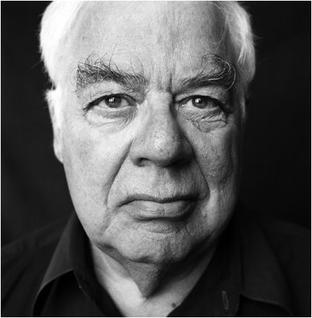
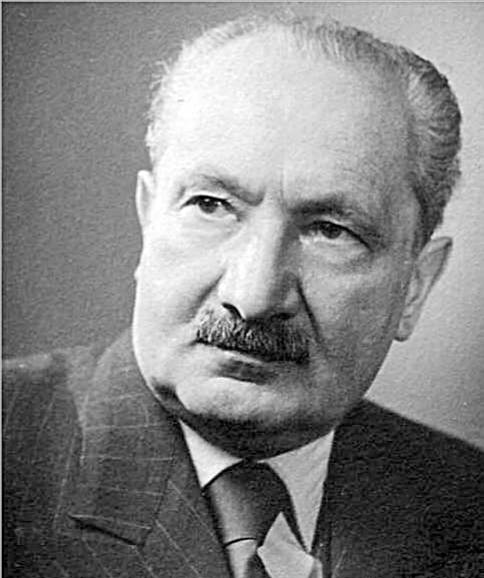
Martin Heidegger in Explaining Postmodernism

Being is nothing. “Nothing,” wrote Martin Heidegger, “not merely provides the conceptual opposite of what-is but is also an original part of essence.” That may not make sense logically, but: “Authentic speaking about nothing always remains extraordinary. It cannot be vulgarized. It dissolves if it is placed in the cheap acid of merely logical intelligence.” […]

Martin Heidegger in Explaining Postmodernism Read More »
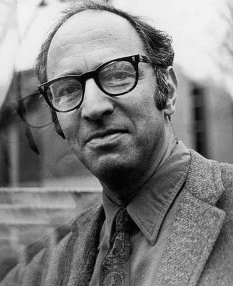
Thomas Kuhn in Explaining Postmodernism

In The Structure of Scientific Revolutions, Thomas Kuhn argues for metaphysical subjective relativism: “the proponents of competing paradigms practice their trades in different worlds.” In part, this is because scientists are not educated so much as brainwashed: “the member of a mature scientific community is, like the typical character in Orwell’s 1984, the victim of

Thomas Kuhn in Explaining Postmodernism Read More »
Thomas Nipperdey in Explaining Postmodernism

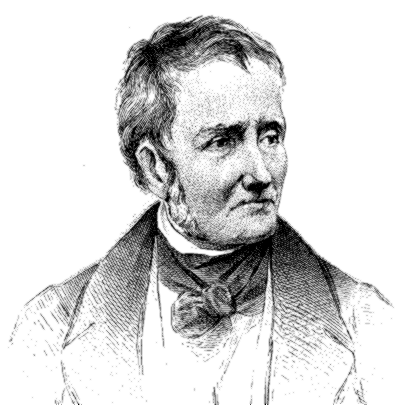
Historian Thomas Nipperdey on one reason why German philosophy came to prominence in American intellectual life: “Until 1830 it was the general rule that talented and curious young minds gravitated to Paris; but from then on they came, in ever-increasing numbers (American students, for example) to Germany, to Berlin.” For more on the meaning and implications

Thomas Nipperdey in Explaining Postmodernism Read More »
Christopher Janaway in Explaining Postmodernism

Philosopher Christopher Janaway said: “One feature uniting many kinds of recent philosophy is an increasing recognition that we are working within the legacy of Kant”. For more on the meaning and implications of Janaway’s remark, see p. 79 of my Explaining Postmodernism: Skepticism from Rousseau to Foucault. Information about other editions and translations is available at this

Christopher Janaway in Explaining Postmodernism Read More »
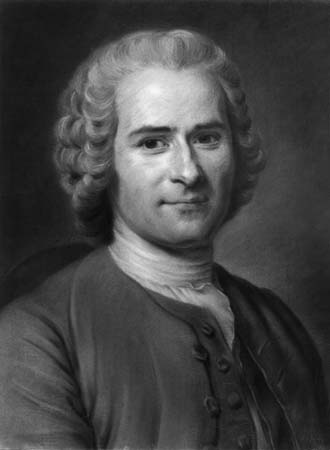
Jean-Jacques Rousseau on compulsory religious behavior [from Explaining Postmodernism]

Jean-Jacques Rousseau said: “While the state can compel no one to believe it can banish not for impiety, but as an antisocial being, incapable of truly loving the laws and justice, and of sacrificing, if needed, his life to his duty. If, after having publicly recognized these dogmas, a person acts as if he does

Jean-Jacques Rousseau on compulsory religious behavior [from Explaining Postmodernism] Read More »

Upcoming seminar in Lisbon, Portugal: “The Enlightenment versus Postmodernism”

On December 6, 2014, I’ll be giving a three-hour seminar for graduate students at the Catholic University of Portugal. My topic is “Two Narratives of Modernity: Enlightenment and Postmodern.” The seminar is hosted by the Institute for Political Studies and is part of its “Governance, Leadership and Democracy Studies” series. Many thanks to Professor João

Upcoming seminar in Lisbon, Portugal: “The Enlightenment versus Postmodernism” Read More »