Philosophy

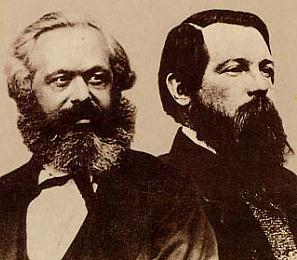
Friedrich Engels against liberal peace

A good example of how political philosophy is driven by ethics. Here is Engels, Karl Marx’s collaborator in writing The Communist Manifesto and other works, criticizing liberals — despite nineteenth-century liberalism’s great accomplishment in reducing war and promoting peace between nations: You have brought about the fraternisation of the peoples – but the fraternity is

Friedrich Engels against liberal peace Read More »

Rousseau: “the Homer of the losers”

Judith Shklar (1928-1992) was Professor of Government at Harvard University, the first woman to receive tenure in that department. Her perfect zinger capturing the essence and the appeal of Rousseau: My discussion of Rousseau is in “The Climate of Collectivism,” which is Chapter Four of Explaining Postmodernism: Skepticism and Socialism from Rousseau to Foucault.

Rousseau: “the Homer of the losers” Read More »

Ellsworth Toohey’s five strategies of altruism [repost]

[I use Ayn Rand’s classic The Fountainhead in my Introduction to Philosophy course, analyzing the five major characters as moral-philosophical types. Here is a digest of the novel’s brilliant-manipulator villain, Ellsworth Toohey.] The ethics of altruism holds that others are the standard of value. One is good to the extent one puts the interests of

Ellsworth Toohey’s five strategies of altruism [repost] Read More »

John Dewey on education as socialization

John Dewey was one of the top two most influential philosophers of education in the twentieth century. Maria Montessori was the other. Dewey’s influence has been most strongly felt in the American public school system. In America, Montessori’s influence has mostly been grassroots and in privately funded schools. Montessori’s approach is highly individualistic and individualized.

John Dewey on education as socialization Read More »

Objectivity for Actual Human Beings | Open College No. 50 | Stephen Hicks

Episode 50 in my Open College with Dr. Stephen Hicks podcast series. Many rejections of objectivity assume from the outset an impossible standard for humans to achieve. Don’t do that. “It’s often said that we live in a ‘post-truth’ age, that nothing can be known with any certainty, and that we must give up notions

Objectivity for Actual Human Beings | Open College No. 50 | Stephen Hicks Read More »

David Kelley new essay on Concepts, Propositions, and Truth

Philosopher David Kelley (Ph.D., Princeton) is author of The Evidence of the Senses, A Realist Theory of Perception (LSU, 1986), a work on foundational issues in epistemology, and The Art of Reasoning: An Introduction to Logic (W.W. Norton, 1st edition 1990, 5th edition 2020), a widely used textbook. He has published a new essay, “Concepts

David Kelley new essay on Concepts, Propositions, and Truth Read More »