Come to the edge
Come to the edge he said. They said: we are afraid. Come to the edge he said. They came. He pushed them … and they flew. (Christopher Logue. Sometimes ascribed to Guillaume Apollinaire.)
One question on the final exam for my Philosophy of Art course asked students to identify the best or worst theorist of art we studied this semester. We devoted significant time to five major philosophers — Plato, Aristotle, Kant, Nietzsche, and Rand — and discussed a few others along the way more briefly. In deciding
The best (and worst) philosophy of art Read More »
My lengthy journal article entitled “Egoism in Nietzsche and Rand” [pdf] is now publicly available for free at the Journal of Ayn Rand Studies‘ site. The abstract: “Philosophers Friedrich Nietzsche and Ayn Rand are often identified as strong critics of altruism and arch advocates of egoism. In this essay, Stephen Hicks argues that Nietzsche and
“Egoism in Nietzsche and Rand” at JARS Read More »
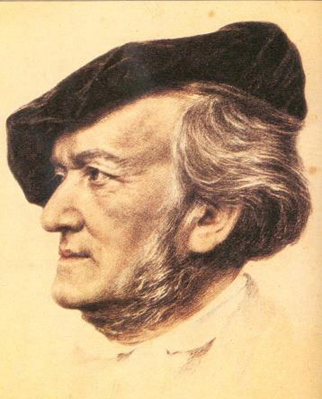
Wagner, in a letter to Franz Liszt: “If I am obliged to plunge once more into the waves of an artist’s imagination in order to find satisfaction in an imaginary world, I must at least help out my imagination and find means of encouraging my imaginative faculties. So I cannot live like a dog, I
Creative geniuses as selfish — Richard Wagner version Read More »
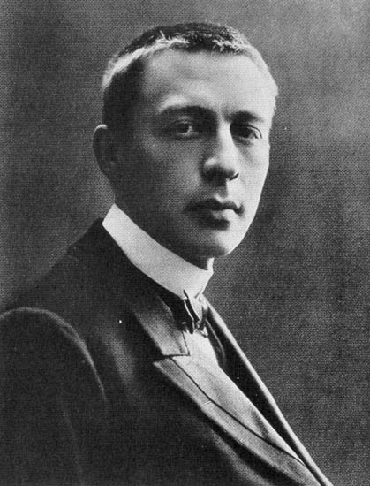
The great Rachmaninoff on what the creator needs and what this implies for others: “A creator is a very limited person. Always he revolves around his own axis. There is nothing for him but his own creative work. I agree that the wife has to forget herself, her own personality. She must take upon herself
Creative geniuses as selfish — Rachmaninoff version Read More »
In my Philosophy of Art course, we are discussing Plato’s philosophy of art, by means of selections from Statesman and Books 3 and 10 of The Republic, along with snippets from Ion, Phaedrus, and Symposium. In The Republic, Plato makes a systematic case for censoring all arts. The task of the Platonic philosopher is to
Plato on censoring artists — a summary Read More »
Forthcoming in January 2012. Profiles in Liberty main page.
Profiles in Liberty — series trailer Read More »
More data showing that culture, not race, is crucial to educational performance: “Africans outperform African-Americans in Seattle schools: Even the children of destitute Somali refugees do better.” From the Seattle Times report: “African-American students whose primary language is English perform significantly worse in math and reading than black students who speak another language at home
Immigrant culture, race, and education Read More »