Stephen Hicks, Ph.D.

Philosopher

Tracking issues

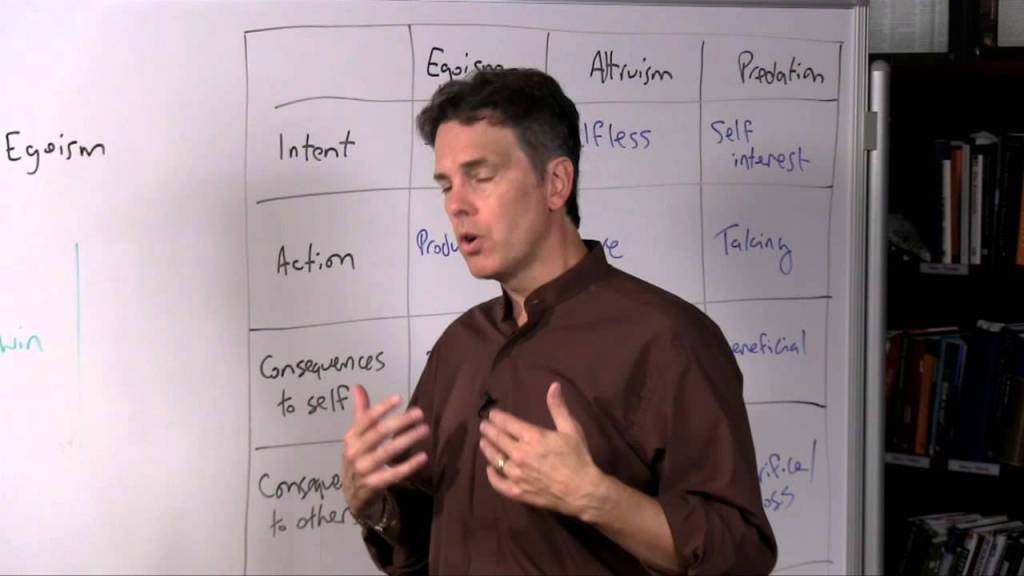
apple-88x50Professor Hicks discusses the Realist approach to tracking in education. This is from Part 8 of his Philosophy of Education course.

1 clip:

Previous: Theory and practice integrated: Example: High-school kids, auto mechanics, and theater.
Next: Character, discipline, and liberty.
Return to the Philosophy of Education page.
Return to the StephenHicks.org main page.

Posted 3 months, 1 week ago at 10:44 am.

Add a comment

John Dewey on education as socialization

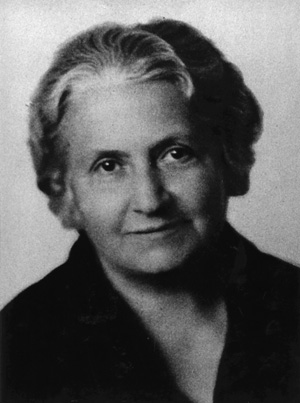
John Dewey was one of the top two most influential philosophers of education in the twentieth century. Maria Montessori was the other.

Dewey’s influence has been most strongly felt in the American public school system. In America, Montessori’s influence has mostly been grassroots and in privately funded schools.

pencils-75x50Montessori’s approach is highly individualistic and individualized. A common question arises, however, about the extent to which Dewey is a collectivist or individualist in his philosophy and his education theory, especially given his distancing himself from some “Progressive” educators who claimed to be following Dewey’s lead in implementing strongly collectivized approaches to education.

So here is some data from a key section of Dewey’s Democracy and Education (1916).

As a pragmatist, Dewey situates education biologically, in terms of life and death and the conditional, action-oriented nature of survival: “Life is a self-renewing process through action upon the environment” (162).

He notes that individuals come and go, as do species, thus the need for living beings to change responsively to changing conditions: “Continuity of life means continual readaptation of the environment to the needs of living organisms” (162).

dewey-john-young-100x100So far Dewey is setting a straightforward evolutionary biological context. Dewey was born in the same year that Charles Darwin’s Origin of Species was published, and he came to intellectual maturity in a world transformed by biological thinking.

Dewey’s next step is to take social groups and not individuals as the operative unit of analysis.

Dewey introduces education in making this step: “Education, in its broadest sense, is the means of this social continuity of life” (162). Note that education is not about equipping individuals for life. It does educate individuals, but its purpose is social continuity.

Individuals do have a role: “Each individual, each unit who is the carrier of the life-experience of the group, in time passes away. Yet the life of the group goes on” (162). Individuals are important — not as individuals — but as “units” who are “carriers” of the “life-experience of the group.” Individuals are vehicles through which the group lives.

Individuals are born with no knowledge or skills, so they must be “initiated into the interests, purposes, information, skill, and practices of the mature members: Otherwise the group will cease its characteristic life” (162). The end goal is the continuing of the group’s “characteristic life,” or avoiding its demise; the goal is not for the individual to find his or her own character and life.

deweyjohn-100x133Dewey next addresses the question of what exactly a group is. If education is about the group, we should know what we mean by “group.”

Dewey notes that group does not come into existence simply as a result of physical proximity, and he lays out a strong set of additional conditions for group existence:

“Individuals do not even compose a social group because they all work for a common end. The parts of a machine work with a maximum of cooperativeness for a common result, but they do not form a community. If, however, they were all cognizant of the common end and all interested in it so that they regulated their specific activity in view of it, then they would form a community” (163).

Unpack that: For a social group to exist, there must be (1) a common end, everyone must be (2) aware of the common end, everyone must be (3) interested in the common end, and everyone must (4) act to achieve the common end.

Deweyan education, then, is centrally about the common, the group, the social. In a remark about the consequent importance of communication skills in education, Dewey states, “Consensus demands communication” (163).

con·sen·sus (kn-snss) n. 1. An opinion or position reached by a group as a whole.

pencil_box-50x52Thus, in my reading, Dewey is extremely un-individualistic and highly collectivistic.
.
.

Notes:

My page references for Dewey are to the seventh edition of Ozmon and Craver’s Philosophical Foundations of Education, the text I use in my Philosophy of Education course.

Posted 9 months, 3 weeks ago at 4:48 pm.

Add a comment

Kirkpatrick on Montessori and Dewey

Professor Jerry Kirkpatrick gave a talk at Rockford College on October 28 on “Montessori and Dewey as Educational Philosophers.” Dr. Kirkpatrick is Professor of International Business at California State Polytechnic University, Pomona.

In the following eleven-minute interview after his talk, I speak with Dr. Kirkpatrick about the two great educational philosophers of the twentieth century, both of whom are exerting great influence in the twenty-first.


CEE Interview: Jerry Kirkpatrick - "Montessori, Dewey, & Capitalism" @ Yahoo! Video

The talk was also based on Dr. Kirpatrick’s fine book Montessori, Dewey, and Capitalism. His talk at Rockford College was sponsored by the Center for Ethics and Entrepreneurship, and this video interview is also available here at the center’s site.

More of my interviews with CEE’s guest speakers are available here.

Posted 10 months ago at 1:40 pm.

5 comments

Fall 2009 guest speakers

2009-fall-speakers The Center for Ethics and Entrepreneurship and the Department of Philosophy have an intellectually-stimulating line-up of guest speakers [pdf] this fall semester:

On September 16, Timothy Sandefur will be speaking on “Market Entrepreneurs and Political Entrepreneurs: Some Legal and Constitutional Issues.” Sandefur is a Senior Staff Attorney at the Pacific Legal Foundation, a public interest law firm based in Sacramento, California.

Jerry Kirkpatrick will be giving two talks: “The Importance of Philosophy to a Successful Business Career” on October 27 and “Montessori and Dewey as Educational Philosophers” on October 28. Kirkpatrick is Professor of International Business & Marketing at California State Polytechnic University

Joshua Hall will also be giving two talks on the theme of “The Dilemma of School Finance Reform,” one on October 13 and one on November 11. Hall is Assistant Professor of Economics at Beloit College and on the Editorial Review Board of the Journal of Economics and Economic Education Research.

For more details, please see the flyer [pdf]. Admission is free and open to the public.

Posted 11 months, 4 weeks ago at 2:18 pm.

Add a comment