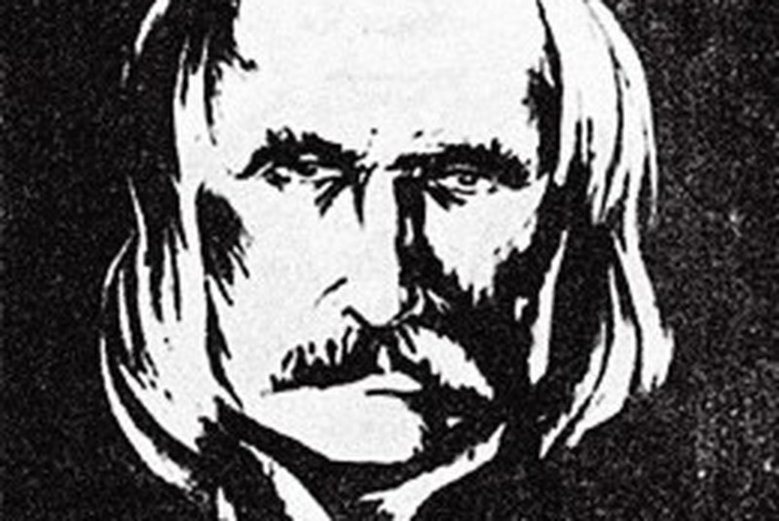
[This excerpt is from Chapter 4 of Explaining Postmodernism: Skepticism and Socialism from Rousseau to Foucault. Previous post: Rousseau’s Counter-Enlightenment.]
Rousseau’s collectivism and statism
Once the corruption is totally swept away, the project of building a moral society can commence. Naturally, the good edifice to be raised must start from a good foundation. The primitive state of nature was good, but unfortunately we cannot return to it. Reason, once awakened, cannot be dulled entirely. But neither can we tolerate anything that would lead us back to contemporary advanced civilization. Fortunately, history provides us with good models, for looking back upon most tribal cultures we find that their societies, maintaining a middle position between the indolence of our primitive state and the petulant activity of our egocentrism, must have been the happiest and most durable epoch. The more one reflects on it, the more one finds that this state was the least subject to upheavals and the best for man.[19]
The best we can do, accordingly, is to try to recreate in modern form a society on that model.
The re-creation must begin from a proper understanding of human nature. Contrary to the claims of the Enlightenment philosophes, man is naturally a passional animal, not a rational one.[20] Man’s deepest passions should set the direction of his life, and reason should always give way before them.
Passions are an appropriate foundation for society, since one of the deepest desires is to believe in religion, and, Rousseau believes, religion is essential to social stability. That desire to believe can and must override all Enlightenment objections. “I believe therefore that the world is governed by a powerful and wise will. I see it or, rather, I sense it.”[21] Rousseau’s feeling that God exists, however, did not provide him with much detailed information about the nature of God. God “is hidden equally from my senses and from my understanding,” so his feeling gave him only the sense that a powerful, intelligent, and good being created the world. The arguments of the philosophers about God not only did not clarify matters, they made things worse: “The more I think about it,” Rousseau wrote, “the more I am confused.”[22] So he resolved to ignore the philosophers—“suffused with the sense of my inadequacy, I shall never reason about the nature of God”[23]—and to let his feelings guide his religious beliefs, holding that feelings are a more reliable guide than reason. “I took another guide, and I said to myself, ‘Let us consult the inner light; it will lead me astray less than they lead me astray.’“[24] Rousseau’s inner light revealed to him an unshakeable feeling that God’s existence is the basis for all explanations, and that feeling was to him immune to revision and counter-argument: “One may very well argue with me about this; but I sense it, and this sentiment that speaks to me is stronger than the reason combating it.”[25]
This feeling was not to be merely one of Rousseau’s personal whims. At the foundation of all civil societies, Rousseau argued, one finds a religious sanction for what its leaders do. The society’s founding leaders may not always genuinely believe in the religious sanctions they invoke, but their invoking them is nonetheless essential. If the people believe that their leaders are acting out the will of the gods, they will obey more freely and “bear with docility the yoke of the public good.”[26] Enlightenment reason, by contrast, leads to disbelief; disbelief leads to disobedience; and disobedience leads to anarchy. This is a further reason why, according to Rousseau, “the state of reflection is a state contrary to nature and the man who meditates is a depraved animal.”[27] Reason, accordingly, is destructive to society, and should be limited and replaced with natural passion.[28]
So important is religion to a society, wrote Rousseau in The Social Contract, that the state cannot be indifferent to religious matters. It cannot pursue a policy of toleration for disbelievers, or even view religion as a matter of individual conscience. It absolutely must, therefore, reject the Enlightenment’s dangerous notions of religious toleration and the separation of church and state. Further: so fundamentally important is religion that the ultimate penalty is appropriate for disbelievers:
“While the state can compel no one to believe it can banish not for impiety, but as an antisocial being, incapable of truly loving the laws and justice, and of sacrificing, if needed, his life to his duty. If, after having publicly recognized these dogmas, a person acts as if he does not believe them, he should be put to death.”[29]
A society properly founded on natural passion and religion will override the self-centered individualism that reason leads to, making it possible for individuals to form a new, collectivized social organism. When individuals come together to form the new society, “the individual particularity of each contracting party is surrendered to a new moral and collective body which has its own self, life, body, and will.” The will of each individual is no longer that individual’s own, but becomes common or general, and under the direction of the spokesmen for the whole. In moral society, one “coalesces with all, [and] in this each of us puts in common his person and his whole power under the supreme direction of society’s leaders.”[30]
In the new society, the leadership expresses the “general will” and enacts policies that are best for the whole, thus enabling all individuals to achieve their true interests and their true freedom. The requirements of the “general will” absolutely override all other considerations, so a “citizen should render to the state all the services he can as soon as the sovereign demands them.”[31]
Yet there is something about human nature, corrupted as it is now by reason and individualism, that militates and always will militate against the general will. Individuals rarely see their individual wills as being in harmony with the general will; consequently “the private will acts constantly against the general will.”[32] And so to counteract these socially destructive individualistic tendencies, the state is justified in using compulsion: “whoever refuses to obey the general will will be forced to do so by the entire body; this means merely that he will be forced to be free.”[33] The power of the general will over the individual will is total. “The state … ought to have a universal compulsory force to move and arrange each part in the manner best suited to the whole.”[34] And if the leaders of the state say to the citizen, “‘it is expedient for the state that you should die,’ he should die.”[35]
We thus find in Rousseau an explicitly Counter-Enlightenment set of themes, attacking the Enlightenment’s themes of reason, the arts and sciences, and ethical and political individualism and liberalism. Rousseau was a contemporary of the American revolutionaries of the 1770s, and there is an instructive contrast between the Lockean themes of life, liberty, and pursuit of happiness in the Americans’ Declaration of Independence and Rousseau’s social contract oath for his projected constitution for Corsica: “I join myself—body, goods, will and all my powers—to the Corsican nation, granting to her the full ownership of me—myself and all that depends upon me.”[36]
Lockean Enlightenment politics and Rousseauian Counter-Enlightenment politics will lead to opposite practical applications.
References
[19] Rousseau 1755, 50.
[20] Rousseau 1755, 14.
[21] Rousseau 1762a, 276.
[22] Rousseau 1762a, 277.
[23] Rousseau 1762a, 277.
[24] Rousseau 1762a, 269.
[25] Rousseau 1762a, 280.
[26] Rousseau 1762b, 2:7.
[27] Rousseau 1755, 22.
[28] Rousseau extended the limiting of reason to limiting its tools of expression: “Considering the awful disorders printing has already caused in Europe, and judging the future by the progress that this evil makes day by day, one can easily predict that sovereigns will not delay in taking as many pains to banish this terrible art from their States as they once took to establish it” (1749, 61). And following the examples of Cato the Elder and Fabricius, Rousseau urged: “hasten to tear down these amphitheatres, break these marble statues, burn these paintings, chase out these slaves who subjugate you and whose fatal arts corrupt you” (1749, 46).
[29] Rousseau 1762b, 4:8.
[30] Rousseau 1762b, 1:6.
[31] Rousseau 1762b, 2:4.
[32] Rousseau 1762b, 3:10.
[33] Rousseau 1762b, 1:7.
[34] Rousseau 1762b, 2:4.
[35] Rousseau 1762b, 2:5.
[36] Rousseau 1765, 297, 350. See also 1762b, 1.9.
[This is an excerpt from Stephen Hicks's Explaining Postmodernism: Skepticism and Socialism from Rousseau to Foucault (Scholargy Publishing, 2004, 2011). The full book is available in hardcover or e-book at Amazon.com. See also the Explaining Postmodernism page.]
Posted 2 years, 1 month ago at 1:23 pm. 2 comments
[This is Section 20 of Nietzsche and the Nazis.]
20. The question of Nazism’s philosophical roots
We do not do ourselves any favors by not understanding Nazism thoroughly or by being satisfied with superficial explanations. It took a world war to stop National Socialism in the twentieth century. War is brute force. Brute force rarely changes anyone’s minds about anything, and it alone does not destroy the underlying causes that motivate conflict. To use a crude analogy: If two neighbors are having an ongoing argument about a series of issues, and one neighbor hits the other and knocks him unconscious—that ends the argument but it does not solve their problems. The source of their argument is still there and it will re-surface.
The same holds for the underlying causes of National Socialism and its differences with the liberal democracies. The liberal democracies were able to knock out the Nazis in World War II, though it was a close call—but the underlying arguments are still with us.
The differences between National Socialism and liberal democracies are profound and involve entirely different philosophies of life. National Socialism was the product of a well-thought-out philosophy of life, the main elements of which were originated, crafted, and argued by philosophers and other intellectuals across many generations.
The Nazi intellectuals were not lightweights, and we run the risk of underestimating our enemy if we dismiss their ideology as attractive only to a few cranky weirdos.[43] If your enemy has a machine gun but you believe he only has a pea shooter, then you are setting yourself up for failure. And if we remind ourselves of the list of very heavyweight intellectuals who supported Nazism—Nobel Prize winners, outstanding philosophers and brilliant legal thinkers—then it is clear that these were no pea-shooters and that we need heavyweight intellectual ammunition to defend ourselves.
In the case of other major historical revolutions, we are more familiar with seeing the significance of philosophy. When we think for example of the causes of the Communist Revolutions in Russia and China, we naturally think back to the philosopher Karl Marx. When we think of the causes of the French Revolution, we think back to Jean-Jacques Rousseau. When we think of the causes of the American Revolution, we naturally think back to the philosopher John Locke. The same holds the causes of National Socialism—although since the Nazi regime went so horribly wrong, there is perhaps some reluctance to name names. Yet naming names is sometimes crucial if we are going to get to the historical heart of the matter. What philosophers can we cite in the case of the Nazis? Several names are candidates: Georg Hegel, Johann Fichte, even elements from Karl Marx.
But in connection with the Nazis, perhaps the biggest and the most controversial name regularly mentioned is that of Friedrich Nietzsche. The Nazis often cited Nietzsche as one of their philosophical precursors, and even though Nietzsche died thirty-three years before the Nazis came to power, references to Nietzsche crop up regularly in Nazi writings and activities. In philosopher Heidegger’s lectures, for example, “Nietzsche was presented as the Nazi philosopher.”[44]
In his study, Adolf Hitler had a bust of Friedrich Nietzsche. In 1935, Hitler attended and participated in the funeral of Nietzsche’s sister Elisabeth. In 1938, the Nazis built a monument to Nietzsche. In 1943, Hitler gave a set of Nietzsche’s writings as a gift to fellow dictator Benito Mussolini.[45]
Hitler’s propaganda minister, Joseph Goebbels, was also a great admirer of Friedrich Nietzsche. In his semi-autobiographical novel, Goebbels has the title character Michael die in a mining accident—afterward three books are found among his belongings: the Bible, Goethe’s Faust, and Nietzsche’s Thus Spake Zarathustra.
So who was Friedrich Nietzsche?
References
[43] Recall Albert Speer on “the event that led me to [Hitler]”—a speech Hitler gave to the College of Engineering in Berlin: Speer expected it to be “a bombastic harangue” but it turned out to be a “reasoned lecture” (quoted in Orlow 1969, p. 199).
[44] Rohkrämer 2005, p. 181.
[45] During WWI, the German government printed 150,000 copies of Nietzsche’s Thus Spake Zarathustra and gave them to soldiers along with a copy of the Bible.
[Bibliography.]
[Return to the Nietzsche and the Nazis page. Go to the StephenHicks.org main page.]
Posted 2 years, 1 month ago at 3:34 pm. Add a comment
The education of children is a highly philosophical enterprise — the project is long-term, of great importance, requires a strategic understanding of human life, and puts our actual values to the test.
In my Philosophy of Education course, we spend much of our time finding where the rubber meets the road — that is, connecting philosophy’s theory to education’s practice.
One pair of contrasts is between John Locke’s and Immanuel Kant’s modern approaches to education. We can see, for example, how their philosophical assumptions about human nature and ethics lead to very different recommendations for education.
Here is Kant, from his lectures on education:
“Above all things, obedience is an essential feature in the character of a child, especially of a school boy or girl” (44).
Note the “above all things.” Obedience is the fundamental for Kant (connecting all the way back to overcoming the sin of Adam and Eve in the Garden of Eden: Disobedience).
How will the students learn obedience? Parents and teachers will impose structure upon them. There must be “a certain plan, and certain rules, in everything, and these must be strictly adhered to. For instance, they must have set times for sleep, for work, and for pleasure, and these times must be neither shortened nor lengthened” (44).
As to the child’s proper motivation: “One often hears is said that we should put everything before children in such a way that they shall do it from inclination. In some cases, it is true, this is all very well, but there is much besides which we must place before them as duty. For in the paying of rates and taxes, in the work of the office, and in many other cases, we must be led, not by inclination, but by duty. Even though a child should not be able to see the reason of a duty, it is nevertheless better that certain things should be prescribed to him in this way …” (45).
Duty is primary: We should do things because we are supposed to, not because we want to. That is the key life lesson.
Of course, kids will be kids and so often disobedient.
“Every transgression in a child is a want of obedience, and this brings punishment with it” (45).
Kant then goes into many paragraphs laying out a taxonomy of disobediences and the corresponding appropriate kinds of punishments.
So we have in Kant’s educational system: Duty, obedience/disobedience, and punishment.
Kant is very much in the Spare the rod and spoil the child tradition that goes back to Plato and much religiously-based education. (On Plato: Consider his allegory of the cave in Book 7 of Republic and note how often he uses the language of compulsion. As for religious education in the West: Recall St. Augustine’s dictum that, given Original Sin, “Per molestias eruditio” [“True education begins with physical abuse.”]) But even Kant recognizes the often harsh strictness of that tradition and, as a modern, softens it:
“Children should sometimes be released from the narrow constraint of school, otherwise their natural joyousness will soon be quenched” (46). Isn’t that a lovely image: School as a place that quenches any joy you might have.
All of this is in marked contrast to the modern Lockean approach

Here is Locke, from his Some Thoughts concerning Education (1692):
“I am very apt to think, that great severity of punishment does but very little good; nay, great harm in education: And I believe it will be found, that, ceteris paribus, those children who have been most chastised, seldom make the best men.”
How then do we teach children appropriate character and behavior?
“Manners, as they call it, about which children are so often perplexed … I think, are rather to be learned by example than rules; and then children, if kept out of ill company, will take a pride to behave themselves prettily, after the fashion of others.”
Children are careful observers of their parents and teachers and want to look up to them and learn from them. Good character is naturally a matter of pride.
“Never trouble yourself about those faults in them, which you know age will cure.” Kids will be kids, so take their unruliness in stride rather than seeing it as the beast of Original Sin that must be beaten down.
And now to motivation in education: “great care is to be taken, that [education] be never made as a business to him, nor he look on it as a task. We naturally, as I said, even from our cradles, love liberty, and have therefore an aversion to many things, for no other reason, but because they are injoined us. I have always had a fancy, that learning might be made a play and recreation to children; and that they might be brought to desire to be taught, if it were proposed to them as a thing of honour, credit, delight, and recreation … .”
So we have in Locke’s education system: Liberty, play, and delight.
In Kant and Locke we have the two poles of modern education on the themes of motivation, discipline, and character.
Education as duty versus as education as delight.
Education for obedience versus education for liberty.
Education via imposed discipline versus education by setting an inspiring example.
In the practice of education we make concretely real our abstract commitments.
Notes:
John Locke, Some Thoughts concerning Education (1692).
Immanuel Kant, On Education. Translated by Annette Churton. University of Michigan Press, 1960. My page references for Kant are to the seventh edition of Ozmon and Craver’s Philosophical Foundations of Education.
Posted 2 years, 3 months ago at 4:25 pm. 3 comments
The Enlightenment of the long 18th century was an era of awesome intellectual and cultural transformation.
My Enlightenment Vision flowchart [pdf] is pitched at a high level of abstraction, showing schematically how the philosophical revolution of the 17th century led to the 18th-century revolutions in science, technology, politics, and economics — which in turn led to the dramatic increase in health, wealth, freedom, and goods in the 19th century.
To put it another way, the chronology shows how the ideas played out as philosophy, then as an intellectual movement, then as activism, then as the working technology of culture.
I use the chart in my classes and published a version of it in my 2004 Explaining Postmodernism. It’s here as a PDF and as an Excel file, in case you’d like to adapt it for your own purposes.
[This is an excerpt from Stephen Hicks's Explaining Postmodernism: Skepticism and Socialism from Rousseau to Foucault (Scholargy Publishing, 2004, 2011). The full book is available in hardcover or e-book at Amazon.com. See also the Explaining Postmodernism page.]
Posted 2 years, 4 months ago at 6:28 pm. Add a comment

My Explaining Postmodernism: Skepticism and Socialism from Rousseau to Foucault has, gratifyingly, had two hardcover printings and eight softcover printings from 2004-2009.
Over the next while I will be making portions of the book available online at this new Explaining Postmodernism page here at my site.
To start, here are the Table of Contents [pdf] and Chapter One: What Postmodernism Is [pdf]. Hope you enjoy.
And, of course, it’s available at Amazon.
[Stephen Hicks's Explaining Postmodernism: Skepticism and Socialism from Rousseau to Foucault (Scholargy Publishing, 2004, 2011). The full book is available in hardcover or e-book at Amazon.com. See also the Explaining Postmodernism page.]
Posted 2 years, 4 months ago at 10:56 am. Add a comment
I’m teaching a graduate-level course on the Philosophical Foundations of Education (EDUC 605) this semester.
We cover several key philosophical issues that bear directly upon education, read the works of several philosophers — Plato, Locke, Kant, Dewey, and others — who have influenced education greatly, and we look at several systems of educational philosophy.
I’ve also invited three guest speakers this semester: Jerry Kirkpatrick, a philosopher of education and professor of business at Cal State Pomona, and Joshua Hall, an economist at Beloit College with expertise in the political economy of education, and Roberto Salinas León, a philosophy Ph.D. and President and CEO of the Mexico Business Forum, Mexico City. Professor Kirkpatrick will be at Rockford College on October 28 and Professor Hall’s and Dr. León’s dates are TBA.
Here are PDF file of the syllabus and schedule for the course and the supplemental 59-page booklet of readings:
Syllabus and Schedule [pdf]
Supplemental readings booklet: Philosophical Foundations of Education [pdf]
.
Posted 2 years, 5 months ago at 9:54 am. 4 comments