Stephen Hicks, Ph.D.

Philosopher

Rousseau’s Counter-Enlightenment

[This excerpt is from Chapter 4 of Explaining Postmodernism: Skepticism and Socialism from Rousseau to Foucault]

Rousseau’s Counter-Enlightenment

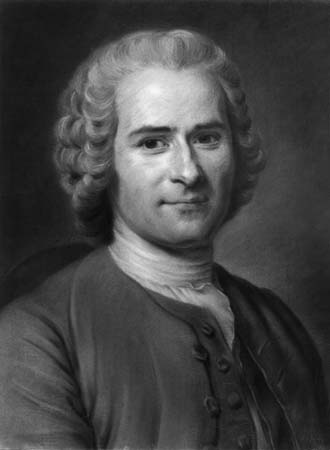
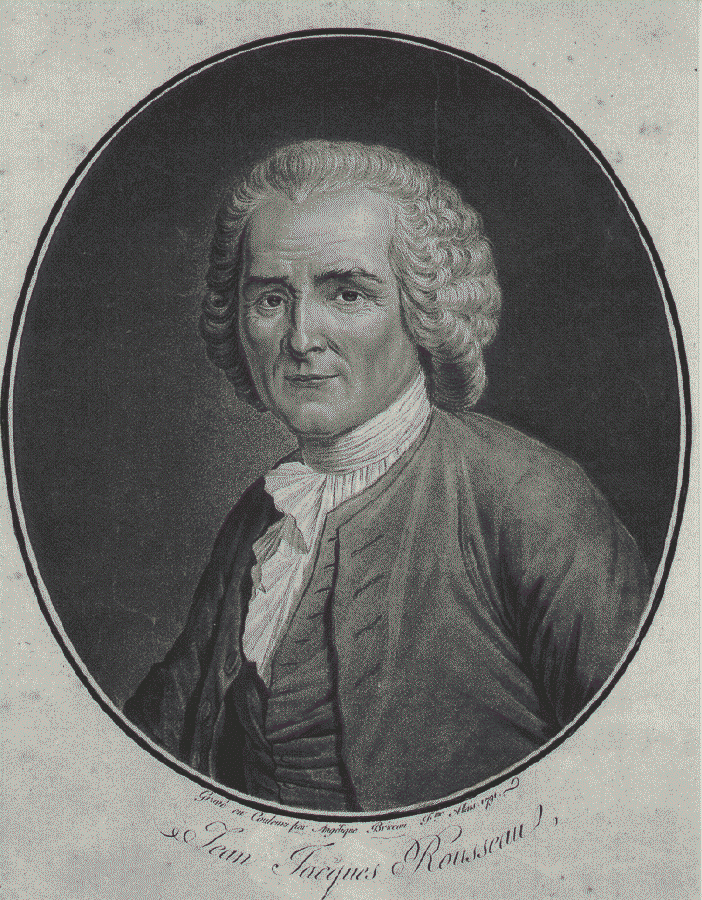
rousseau-rock-100x149The first great frontal assault on the Enlightenment was launched by Jean-Jacques Rousseau (1712-1778). Rousseau has a well-deserved reputation as the bad boy of eighteenth-century French philosophy. In the context of Enlightenment intellectual culture, Rousseau’s was a major dissenting voice. He was an admirer of all things Spartan—the Sparta of militaristic and feudal communalism—and a despiser of all things Athenian—the classical Athens of commerce, cosmopolitanism, and the high arts.

Civilization is thoroughly corrupting, Rousseau argued—not only the oppressive feudal system of eighteenth-century France with its decadent and parasitical aristocracy, but also its Enlightenment alternative with its exaltation of reason, property, the arts and sciences. Name a dominant feature of the Enlightenment, and Rousseau was against it.

In his Discourse on the Origin of Inequality, Rousseau started his attack at the foundation of the Enlightenment project: Reason. The philosophes were exactly right that reason is the foundation of civilization. Civilization’s rational progress, however, is anything but progress, for civilization is achieved at the expense of morality. There is an inverse relationship between cultural and moral development: Culture does generate much learning, luxury, and sophistication—but learning, luxury, and sophistication all cause moral degradation.

The root of our moral degradation is reason, the original sin of humankind.[6] Before their reason was awakened, humans were simple beings, mostly solitary, satisfying their wants easily by gathering from their immediate environment. That happy state was the ideal: “this author should have said that since the state of nature is the state in which the concern for our self-preservation is the least prejudicial to that of others, that state was consequently the most appropriate for peace and the best suited for the human race.”[7]

But by some unexplainable, unfortunate occurrence, reason was awakened[8]; and once awakened it disgorged a Pandora’s Box of problems upon the world, transforming human nature to the point that we can no longer return to our happy, original state. As the philosophes were heralding the triumph of reason in the world, Rousseau wanted to demonstrate that “all the subsequent progress has been in appearance so many steps toward the perfection of the individual, and in fact toward the decay of the species.”[9] Once their reasoning power was awakened, humans realized their primitive condition, and this led them to feel dissatisfied. So they started to make improvements, those improvements culminating most strikingly in the agricultural and metallurgical revolutions. Undeniably, those revolutions improved mankind’s material lot—but that improvement has in fact destroyed the species: “it is iron and wheat that have civilized men and ruined the human race.”[10]

The ruin took many forms. Economically, agriculture and technology led to surplus wealth. Surplus wealth in turn led to the need for property rights.[11] Property, however, made humans competitive and led them to see each other as enemies.

Physically, as humans became wealthier they enjoyed more comforts and luxuries. But those comforts and luxuries caused physical degradation. They began to eat too much food and to eat decadent food, and thus became less healthy. They came increasingly to use tools and technologies, and thus became physically less strong. What was once a physically hardy species thus became dependent upon doctors and gadgets.[12]

Socially, with luxuries came an awakening of aesthetic standards for beauty, and those standards transformed their sex lives. What was once a straightforward act of copulation became tied to love, and love is messy and exclusive and preferential. Love, accordingly, awakened jealousy, envy, and rivalry[13]—more things that set human beings against each other.

Thus reason led to the development of all of civilization’s features—agriculture, technology, property, and aesthetics—and these made mankind soft, lazy, and in economic and social conflict with itself.[14]

But the story gets worse, for the ongoing social conflicts generated a few winners at the top of the social heap and many oppressed losers beneath them. Inequality became a prominent and damning consequence of civilization. Such inequalities are damning because all inequalities “such as being richer, more honored, more powerful” are “privileges enjoyed by some at the expense of others.”[15]

Civilization, accordingly, became a zero-sum game along many social dimensions, the winners gaining and enjoying more and more while the losers suffered and were left increasingly far behind.

But civilization’s pathologies became even worse, for the reason that made civilization’s inequalities possible also made the better-off uncaring about the suffering of the less fortunate. Reason, according to Rousseau, is opposed to compassion: Reason generates civilization, which is the ultimate cause of the sufferings of the victims of inequality, but reason also then creates rationales for ignoring that suffering. “Reason is what engenders egocentrism,” wrote Rousseau, “and reflection strengthens it. Reason is what turns man in upon himself. Reason is what separates him from all that troubles him and afflicts him. Philosophy is what isolates him and what moves him to say in secret, at the sight of a suffering man, ‘Perish if you will; I am safe and sound.’”[16]

In contemporary civilization, this lack of compassion becomes more than a sin of omission. Rousseau argues that, having succeeded in the competitions of civilized life, the winners now have a vested interest in preserving the system. Civilization’s advocates—especially those who are living at the top of the heap and therefore insulated from the worst of the harms—go out of their way to praise civilization’s advances in technology, art, and science. But these advances themselves and the praise heaped upon them serve only to mask the harms civilization does. Foreshadowing Herbert Marcuse and Foucault, Rousseau wrote in the essay that made him famous, the Discourse on the Sciences and the Arts: “Princes always view with pleasure the spread, among their subjects, of the taste for arts of amusement and superfluities.” Such acquired tastes within a people “are so many chains binding it.” “The sciences, letters, and arts”—far from freeing and elevating mankind—“spread garlands of flowers over the iron chains with which men are burdened, stifle in them the sense of that original liberty for which they seem to have been born, make them love their slavery, and turn them into what is called civilized peoples.”[17]

So corrupt, accordingly, is the whole edifice of civilization that no reform is possible. Against the timid moderates who want to achieve the good society in piecemeal fashion, Rousseau called for revolution. “People were continually patching it [the state] up, whereas they should have begun by clearing the air and putting aside all the old materials, as Lycurgus did in Sparta, in order to raise a good edifice later.”[18]

References

[6] Rousseau 1755, 37.

[7] Rousseau 1755, 35.

[8] Rousseau 1755, 28.

[9] Rousseau 1755, 50.

[10] Rousseau 1755, 51.

[11] Rousseau 1755, 44, 52.

[12] Rousseau 1755, 20, 22, 48.

[13] Rousseau 1755, 49.

[14] Rousseau 1755, 54-55.

[15] Rousseau 1755, 16.

[16] Rousseau 1755, 37.

[17] Rousseau 1749, 36.

[18] Rousseau 1755, 58-9.

[Next relevant post: Rousseau's collectivism and statism.]

[This is an excerpt from Stephen Hicks's Explaining Postmodernism: Skepticism and Socialism from Rousseau to Foucault (Scholargy Publishing, 2004, 2011). The full book is available in hardcover or e-book at Amazon.com. See also the Explaining Postmodernism page.]

Posted 2 years, 4 months ago at 3:19 pm.

4 comments

The question of Nazism’s philosophical roots [Section 20 of Nietzsche and the Nazis]

[This is Section 20 of Nietzsche and the Nazis.]

20. The question of Nazism’s philosophical roots

We do not do ourselves any favors by not understanding Nazism thoroughly or by being satisfied with superficial explanations. It took a world war to stop National Socialism in the twentieth century. War is brute force. Brute force rarely changes anyone’s minds about anything, and it alone does not destroy the underlying causes that motivate conflict. To use a crude analogy: If two neighbors are having an ongoing argument about a series of issues, and one neighbor hits the other and knocks him unconscious—that ends the argument but it does not solve their problems. The source of their argument is still there and it will re-surface.

The same holds for the underlying causes of National Socialism and its differences with the liberal democracies. The liberal democracies were able to knock out the Nazis in World War II, though it was a close call—but the underlying arguments are still with us.

The differences between National Socialism and liberal democracies are profound and involve entirely different philosophies of life. National Socialism was the product of a well-thought-out philosophy of life, the main elements of which were originated, crafted, and argued by philosophers and other intellectuals across many generations.

The Nazi intellectuals were not lightweights, and we run the risk of underestimating our enemy if we dismiss their ideology as attractive only to a few cranky weirdos.[43] If your enemy has a machine gun but you believe he only has a pea shooter, then you are setting yourself up for failure. And if we remind ourselves of the list of very heavyweight intellectuals who supported Nazism—Nobel Prize winners, outstanding philosophers and brilliant legal thinkers—then it is clear that these were no pea-shooters and that we need heavyweight intellectual ammunition to defend ourselves.

karl_marx-100pxIn the case of other major historical revolutions, we are more familiar with seeing the significance of philosophy. When we think for example of the causes of the Communist Revolutions in Russia and China, we naturally think back to the philosopher Karl Marx. When we think of the causes of the French Revolution, we think back to Jean-Jacques Rousseau. When we think of the causes of the American Revolution, we naturally think back to the philosopher John Locke. The same holds the causes of National Socialism—although since the Nazi regime went so horribly wrong, there is perhaps some reluctance to name names. Yet naming names is sometimes crucial if we are going to get to the historical heart of the matter. What philosophers can we cite in the case of the Nazis? Several names are candidates: Georg Hegel, Johann Fichte, even elements from Karl Marx.

But in connection with the Nazis, perhaps the biggest and the most controversial name regularly mentioned is that of Friedrich Nietzsche. The Nazis often cited Nietzsche as one of their philosophical precursors, and even though Nietzsche died thirty-three years before the Nazis came to power, references to Nietzsche crop up regularly in Nazi writings and activities. In philosopher Heidegger’s lectures, for example, “Nietzsche was presented as the Nazi philosopher.”[44]

In his study, Adolf Hitler had a bust of Friedrich Nietzsche. In 1935, Hitler attended and participated in the funeral of Nietzsche’s sister Elisabeth. In 1938, the Nazis built a monument to Nietzsche. In 1943, Hitler gave a set of Nietzsche’s writings as a gift to fellow dictator Benito Mussolini.[45]

Hitler’s propaganda minister, Joseph Goebbels, was also a great admirer of Friedrich Nietzsche. In his semi-autobiographical novel, Goebbels has the title character Michael die in a mining accident—afterward three books are found among his belongings: the Bible, Goethe’s Faust, and Nietzsche’s Thus Spake Zarathustra.

So who was Friedrich Nietzsche?

References

[43] Recall Albert Speer on “the event that led me to [Hitler]”—a speech Hitler gave to the College of Engineering in Berlin: Speer expected it to be “a bombastic harangue” but it turned out to be a “reasoned lecture” (quoted in Orlow 1969, p. 199).

[44] Rohkrämer 2005, p. 181.

[45] During WWI, the German government printed 150,000 copies of Nietzsche’s Thus Spake Zarathustra and gave them to soldiers along with a copy of the Bible.

[Bibliography.]

[Return to the Nietzsche and the Nazis page. Go to the StephenHicks.org main page.]

Posted 2 years, 4 months ago at 3:34 pm.

Add a comment

Fichte on education as socialization

[This excerpt is from Chapter 4 of Explaining Postmodernism: Skepticism and Socialism from Rousseau to Foucault]

Fichte on education as socialization

fichte-j-50x63Johann Fichte was a disciple of Kant. Born in 1762, he studied theology and philosophy at Jena, Wittenberg, and Leipzig. In 1788 he read Kant’s Critique of Practical Reason, and that reading changed Fichte’s life. He traveled to Königsberg in order to meet Kant, then the ruling philosopher of Germany. But the great man was initially distant, so Fichte worked as a tutor at Königsberg while writing his moral treatise, Critique of All Revelation. When it was finished, Fichte dedicated it to Kant. Kant read it, admired it, and urged that it be published. It was published anonymously in 1792, and this made Fichte famous in intellectual circles: It was so Kantian in style and content that it was taken by many to have been written by Kant himself and to be his fourth Critique. Kant disclaimed authorship but praised the young author, thus launching Fichte’s academic career.

The major breakthrough, however—the event that launched Fichte permanently onto the German landscape as not only a leading philosopher but also as a cultural leader—came in 1807. A year after Napoleon’s defeat of the Prussians, Fichte stepped onto the public stage and delivered his ringing call to arms, his Addresses to the German Nation.

In the Addresses, Fichte spoke as a philosopher who had descended from abstractions to connect with practical affairs, in order to situate those practical affairs within the context of the most metaphysical.[66] He addressed the defeated Germans, calling for a renewal of their spirit and character. The Germans had lost the physical battle, Fichte argued, but now more was at stake: the real battle now was a battle of character.

Why had Germany come under the dominion of Napoleon? Fichte granted that many factors were responsible, most of them having to do with the infiltration of softening, Enlightenment beliefs—“all the evils which have now brought us to ruin are of foreign origin”[67]—and that many reforms were needed in the military, religion, and the administration of government.

But the fundamental problem was clear: the educational system had failed Germany. Only with a total revision of the method of educating children could Germany hope to become immune from the Napoleons of the future. “In a word, it is a total change of the existing system of education that I propose as the sole means of preserving the existence of the German nation.”[68] In Fichte’s educational philosophy, themes from Rousseau, Hamann, Kant, and Schleiermacher are integrated into a package that would be influential for more than one hundred years.

kant-silhouette-75x134In the Addresses, there is no question in Fichte’s mind about what abstract system is the right one. With Kant, “the problem has been completely solved among us, and philosophy has been perfected.”[69] But Kant’s philosophy had not yet been applied systematically to the education of children.

Fichte started by looking back to see how Germany got into its current sorry state. Germany used to be great. In the Middle Ages, “the German burghers were the civilized people,” and “this period is the only one in German history in which this nation is famous and brilliant.” What was great about the burghers was their “spirit of piety, of honour, of modesty, and of the sense of community.” They were great because they were not individualistic. “Seldom does the name of an individual stand out or distinguish itself, for they were all of like mind and alike in sacrifice for the common weal.”[70]

Fichte was, however, not a conservative apologist for the good old days. In the context of feudal Germany, Fichte was a reformer who believed that it was the corrupt upper classes that had ruined Germany: “its bloom [was] destroyed by the avarice and tyranny of princes.”[71] The Germans had become further corrupted by the modern world, which led to their impotence in the face of Napoleon. What about the modern world, essentially, caused the corruption? Self-seeking: “self-seeking has destroyed itself by its own complete development,” and “[a] people can be completely corrupted, i.e., self-seeking—for self-seeking is the root of all other corruption.”[72]

And this, echoing Rousseau, was because men became rational, under the guise of Enlightenment. This undermined religion and its moral force. “The enlightenment of the understanding, with its purely material calculations, was the force which destroyed the connection established by religion between some future life and the present.” Consequently, government became liberal and morally lax: “the weakness of governments” frequently allowed “neglect of duty to go unpunished.”[73]

So now the German has sold his soul, lost his true self, his identity. “It follows, then, that the means of salvation which I promise to indicate consists in the fashioning of an entirely new self, which may have existed before perhaps in individuals as an exception, but never as a universal and national self, and in the education of the nation.” Echoing Rousseau again: “By means of the new education we want to mould the Germans into a corporate body, which shall be stimulated and animated in all its individual members by the same interest.”[74]

fichte-50x71To start with, education must be egalitarian and universal, unlike previous education, which was feudal and elitist: “So there is nothing left for us but just to apply the new system to every German without exception, so that it is not the education of a single class, but the education of the nation.” Such education will aid in the creation of a classless society: “All distinctions of classes … will be completely removed and vanish. In this way there will grow up among us, not popular education, but real German national education.”[75]

Real education must start by getting to the source of human nature. Education must exert “an influence penetrating to the roots of vital impulse and action.” Here was a great failing of traditional education, for it had relied upon and appealed to the student’s free will. “I should reply that that very recognition of, and reliance upon, free will in the pupil is the first mistake of the old system.” Compulsion, not freedom, is best for students:

On the other hand, the new education must consist essentially in this, that it completely destroys freedom of will in the soil which it undertakes to cultivate, and produces on the contrary strict necessity in the decisions of the will, the opposite being impossible. Such a will can henceforth be relied upon with confidence and certainty.[76]

Unfortunately, it is difficult to do this under contemporary living arrangements, in which children go to school and then return to corrupting influences in their homes and their neighborhoods at the end of the day. “It is essential,” Fichte then urged, “that from the very beginning the pupil should be continuously and completely under the influence of this education, and should be separated altogether from the community, and kept from all contact with it.”[77]

Once the children are separated, educators can turn their attention to internal matters. In his essay on education, Kant had of course argued that “above all things, obedience is an essential feature in the character of a child, especially of a school boy or girl.”[78] However, Fichte pointed out, children are children and as such they do not naturally impose duties upon themselves. So the school’s authorities must firmly impose the duties upon them:

“[T]he legislation should consequently maintain a high standard of severity, and should prohibit the doing of many things. Such prohibitions, which simply must exist and on which the existence of the community depends, are to be enforced in case of necessity by fear of immediate punishment, and this penal law must be administered absolutely without indulgence or exception.”[79]

One of the duties to be inculcated is the obligation of the student who is more able to help the more needy students. Yet “he is to expect neither reward for it, for under this system of government all are quite equal in regard to work and pleasure, nor even praise, for the attitude of mind prevailing in the community is that it is just everyone’s duty to act thus.” Anticipating Marx, Fichte believed that the school should be a microcosm of what the ideal society would be like: “Under this system of government, therefore, the acquirement of greater skill and the effort spent therein will result only in fresh effort and work, and it will be the very pupil who is abler than the rest who must often watch while the others sleep, and reflect while others play.”[80]

More broadly, the new education will eliminate all self interest and inculcate the pure love of duty for its own sake that Rousseau and Kant had prized:

“[I]n place of that love of self, with which nothing for our good can be connected any longer, we must set up and establish in the hearts of all those whom we wish to reckon among our nation that other kind of love, which is concerned directly with the good, simply as such and for its own sake.”[81]

If the system is successful, its fruit will be as follows: “Its pupil goes forth at the proper time as a fixed and unchangeable machine.”[82]

But this moral education is not enough. Drawing upon Hamann and Schleiermacher, Fichte next turned to religion.

“The pupil of this education is not merely a member of human society here on this earth and for the short span of life which is permitted to him. He is also, and is undoubtedly acknowledged by education to be, a link in the eternal chain of spiritual life in a higher social order. A training which has undertaken to include the whole of his being should undoubtedly lead him to a knowledge of this higher order also.”[83]

Despite being seen as soft on religion by the Lutheran orthodoxy, Fichte argued that education must also be intensely religious. “Under proper guidance,” the student will “find at the end that nothing really exists but life, the spiritual life which lives in thought, and that everything else does not really exist, but only appears to exist.” He will find that “Only in immediate contact with God and the direct emanation of his life from him will he find life, light, and happiness, but in any separation from that immediate contact, death, darkness, and misery.” “Education to true religion is, therefore, the final task of the new education.”[84]

So far Fichte’s program of education includes the communal separation of children, severe authoritarian top-down training, strict moral duty and selflessness, and total religious immersion. Not quite the Enlightenment model of liberal education.

But Fichte’s program did not end there. For now we add the importance of ethnicity. Only the German is capable of true education. The German is the best that the world has to offer and is the hope for the future progress of mankind. The German “alone, above all other European nations, [has] the capacity of responding to such an education.”[85] But as goes Germany, so goes the rest of Europe and, ultimately, all of humankind. Either the Germans will respond to Fichte’s call and reform themselves—or they will sink into oblivion. “But, as Germany sinks, the rest of Europe is seen to sink with it.”[86]

Thus Fichte, with his passionate style and force of personality, spurred the Germans to action. The Germans listened admiringly and with approval. In 1810, three years after the delivery of his Addresses, Fichte was appointed dean of the philosophy faculty at the newly-founded University of Berlin. (Schleiermacher was appointed head of the faculty of theology.) In the following year Fichte became rector of the whole university, and so was in a position to put his educational program into practice.

Nor was Fichte a flash in the pan. One spark appears over a century later in 1919, in Friedrich Ebert’s speech at the opening of the National Assembly at Weimar. Germany had once again been defeated by foreign powers, and the nation was demoralized, resentful, and starting over. Elected first president of the German Republic in 1919, Ebert made a point in his opening address of stressing the relevance of Fichte to Germany’s situation:

ebertfriedrich-100x110“In this way we will set to work, our great aim before us: to maintain the right of the German nation, to lay the foundation in Germany for a strong democracy, and to bring it to achievement with the true social spirit and in the socialistic way. Thus shall we realize that which Fichte has given to the German nation as its task.”[87]

References

[66] Fichte once said to Madame de Staël: “Grasp my metaphysics, Madame; you will then understand my ethics.”

[67] Fichte 1807, 84.

[68] Fichte 1807, 13.

[69] Fichte 1807, 101.

[70] Fichte 1807, 104-105.

[71] Fichte 1807, pp. 104-5.

[72] Fichte 1807, 8-9.

[73] Fichte 1807, 11.

[74] Fichte 1807, 12-13, 15.

[75] Fichte 1807, 15.

[76] Fichte 1807, 14, 20.

[77] Fichte 1807, 31.

[78] Kant 1960, 84.

[79] Fichte 1807, 33.

[80] Fichte 1807, 34-5.

[81] Fichte 1807, 23.

[82] Fichte 1807, 36.

[83] Fichte 1807, 37.

[84] Fichte 1807, 37, 38.

[85] Fichte 1807, 52.

[86] Fichte 1807, 105.

[87] In Fichte 1807, xxii.

Bibliography

[This is an excerpt from Stephen Hicks's Explaining Postmodernism: Skepticism and Socialism from Rousseau to Foucault (Scholargy Publishing, 2004, 2011). The full book is available in hardcover or e-book at Amazon.com. See also the Explaining Postmodernism page.]

Posted 2 years, 4 months ago at 1:17 pm.

2 comments

Appendix 2: Quotations on Nazi socialism and fascism [Nietzsche and the Nazis]

[This is Appendix 2 of Nietzsche and the Nazis. Sources for the quotations are at the end of this post.]

Appendix 2: Quotations on Nazi socialism and fascism

Socialism against individualism

“National socialism is the determination to create a new man. There will no longer exist any individual arbitrary will, nor realms in which the individual belongs to himself. The time of happiness as a private matter is over.”
—Adolf Hitler[137]

“The concept of personal liberties of the individual as opposed to the authority of the state had to disappear; it is not to be reconciled with the principle of the nationalistic Reich. There are no personal liberties of the individual which fall outside of the realm of the state and which must be respected by the state. The member of the people, organically connected with the whole community, has replaced the isolated individual; he is included in the totality of the political people and is drawn into the collective action. There can no longer be any question of a private sphere, free of state influence, which is sacred and untouchable before the political unity. The constitution of the nationalistic Reich is therefore not based upon a system of inborn and inalienable rights of the individual.”
—Ernst Rudolf Huber,[138] official spokesman for the National Socialist German Workers’ Party, 1939

“[O]ur German language has a word which in a magnificent way denotes conduct based on this spirit: doing one’s duty [Pflichterfüllung]—which means serving the community instead of contenting oneself. We have a word for the basic disposition which underlies conduct of this kind in contrast to egoism and selfishness—idealism. By ‘idealism’ we mean only the ability of the individual to sacrifice himself for the whole, for his fellow men.”
—Adolf Hitler,[139] 1925

“The State must act as the guardian of a millennial future in the face of which the wishes and the selfishness of the individual must appear as nothing and submit.”
—Adolf Hitler[140]

“[S]ocialism is sacrificing the individual to the whole.”
—Joseph Goebbels[141]

“THE COMMON INTEREST BEFORE SELF-INTEREST.”
—NSDAP Program, Point 24, 1920

“We must rouse in our people the unanimous wish for power in this sense, together with the determination to sacrifice on the altar of patriotism, not only life and property, but also private views and preferences in the interests of the common welfare.”
—Friedrich von Bernhardi,[142] 1912

Socialist economics

“To put it quite clearly: we have an economic programme. Point No. 13 in that programme demands the nationalisation of all public companies, in other words socialisation, or what is known here as socialism. … the basic principle of my Party’s economic programme should be made perfectly clear and that is the principle of authority … the good of the community takes priority over that of the individual. But the State should retain control; every owner should feel himself to be an agent of the State; it is his duty not to misuse his possessions to the detriment of the State or the interests of his fellow countrymen. That is the overriding point. The Third Reich will always retain the right to control property owners. If you say that the bourgeoisie is tearing its hair over the question of private property, that does not affect me in the least. Does the bourgeoisie expect some consideration from me? … The bourgeois press does me damage too and would like to consign me and my movement to the devil. You are, after all a representative of the bourgeoisie … your press thinks it must continuously distort my ideas. … We do not intend to nail every rich Jew to the telegraph poles on the Munich-Berlin road.”
—Adolf Hitler,[143] to R. Breiting, “bourgeois” newspaper editor, 1931

“We are socialists, we are enemies of today’s capitalistic economic system for the exploitation of the economically weak, with its unfair salaries, with its unseemly evaluation of a human being according to wealth and property instead of responsibility and performance, and we are all determined to destroy this system under all conditions.”
—Adolf Hitler,[144] 1927 speech

On “the money pigs of capitalist democracy”: “Money has made slaves of us. “Money is the curse of mankind. It smothers the seed of everything great and good. Every penny is sticky with sweat and blood.”
—Joseph Goebbels,[145] 1929

“The worker in a capitalist state—and that is his deepest misfortune—is no longer a living human being, a creator, a maker. He has become a machine. A number, a cog in the machine without sense or understanding. He is alienated from what he produces.”
—Joseph Goebbels,[146] 1932 pamphlet

“‘Private property’ as conceived under the liberalistic economic order … represented the right of the individual to manage and to speculate with inherited or acquired property as he pleased, without regard for the general interests … German socialism had to overcome this ‘private,’ that is, unrestrained and irresponsible view of property. All property is common property. The owner is bound by the people and the Reich to the responsible management of his goods. His legal position is only justified when he satisfies this responsibility to the community.”
—Ernst Rudolf Huber,[147] official Nazi Party spokesman, 1939

National Socialism, according to some later commentators

“Hitler was never a socialist.”
—Ian Kershaw[148]

“Bastard movements like the National Socialism (Nazism) of twentieth-century Germany and Austria …, save for the bare fact that they enforced central control of social policy, had nothing of socialism in them.”
—Margaret Cole,[149] under “Socialism,” in The Encyclopedia of Philosophy

“Stalinism is a pathology of socialism, Hitlerism being the apposite example for capitalism.”
—Robert Heilbroner,[150] popular socialist author, 1980

“If there is one thing all Fascists and National Socialists agreed on, it was their hostility to capitalism.”
—Eugen Weber,[151] historian of fascism

“[A]nti-Semitism was rife in almost all varieties of socialism.”
—Sidney Hook,[152] socialist philosopher

“It is significant that the most important ancestors of National Socialism—Fichte, Rodbertus, and Lassalle—are at the same time acknowledged fathers of socialism.”
—F. A. Hayek,[153] 1944

Socialism and authoritarianism

“The party is all-embracing. It rules our lives in all their breadth and depth. We must therefore develop branches of the party in which the whole of individual life will be reflected. Each activity and each need of the individual will thereby be regulated by the party as the representative of the general good. There will be no license, no free space, in which the individual belongs to himself. This is Socialism—not such trifles as the private possession of the means of production. Of what importance is that if I range men firmly within a discipline they cannot escape? Let them then own land or factories as much as they please. The decisive factor is that the State, through the party, is supreme over them, regardless whether they are owners or workers. All that, you see, is unessential. Our Socialism goes far deeper.”
—Adolf Hitler[154]

“Our present political world-view, current in Germany, is based in general on the idea that creative, culture-creating force must indeed be attributed to the state.”
—Adolf Hitler,[155] 1925

“The first foundation for the creation of authority is always provided by popularity.”
—Adolf Hitler[156]

“The advantage of … an unwritten constitution over the formal constitution is that the basic principles do not become rigid but remain in a constant, living movement. Not dead institutions but living principles determine the nature of the new constitutional order.”
—Ernst Rudolf Huber,[157] official spokesman for the National Socialist German Workers’ (Nazi) Party, 1939

Against capitalism

“We German National Socialists have recognized that not international solidarity frees the peoples from the ties of international capital, but the organized national force. …The National Socialist German Workers’ Party asks you all to come … to a GIANT DEMONSTRATION against the continued cheating of our people by the Jewish agents of the international world stock-exchange capital.”
—Nazi Poster,[158] 1921

“It is not to save capitalism that we fight in Russia … It is for a revolution of our own. … If Europe were to become once more the Europe of bankers, of fat corrupt bourgeoisies … we should prefer Communism to win and destroy everything. We would rather have it all blow up than see this rottenness resplendent. Europe fights in Russia because it [i.e., Fascist Europe] is Socialist. …what interests us most in the war is the revolution to follow …The war cannot end without the triumph of Socialist revolution.”
—Leon Degrelle,[159] leading National Socialist figure, speaking on behalf of the Nazi SS in occupied Paris, 1943

“[W]e will do what we like with the bourgeoisie. … We give the orders; they do what they are told. Any resistance will be broken ruthlessly.”
—Adolf Hitler,[160] 1931

“The internal and international criminal gang will either be forced to work or simply exterminated.”
—Adolf Hitler,[161] 1931

“Today I will once more be a prophet. If the international Jewish financiers, inside and outside Europe, succeed in plunging the nations once more into a world war, then the result will not be the Bolshevisation of the earth, and thus the victory of Jewry, but the annihilation of the Jewish race in Europe!”
—Adolf Hitler,[162] 1939

Historical roots: Jean-Jacques Rousseau

“Hitler is an outcome of Rousseau.”
—Bertrand Russell,[163] 1945

“Each member of the community gives himself to it at the instant of its constitution, just as he actually is, himself and all his forces, including all goods in his possession.”
—Jean-Jacques Rousseau[164]

“Whoever refuses to obey the general will will be forced to do so by the entire body; this means merely that he will be forced to be free.”
—Jean-Jacques Rousseau[165]

“The political body, therefore, is also a moral being which has a will; and this general will, which tends always to the conservation and well-being of the whole and of each part of it … is, for all members of the state … the rule of what is just or unjust.”
—Jean-Jacques Rousseau[166]

“The State dominates the Nation because it alone represents it.”
—Adolf Hitler[167]

The state “ought to have a universal compulsory force to move and arrange each part in the manner best suited to the whole. Just as nature gives each man an absolute power over all his members, the social compact gives the body politic an absolute power over all its members.” “We grant that each person alienates, by the social compact, only that portion of his power, his goods, and liberty whose use is of consequence to the community; but we must also grant that only the sovereign is the judge of what is of consequence.”
—Jean-Jacques Rousseau[168]

“For us the supreme law of the constitution is: whatever serves the vital interests of the nation is legal.”
—Adolf Hitler,[169] 1931

“A citizen should render to the state all the services he can as soon as the sovereign demands them.”
—Jean-Jacques Rousseau[170]

“I wish to give officials greater discretion. The State’s authority will be increased thereby. I wish to transform the non-political criminal police into a political instrument of the highest State authority.”
—Adolf Hitler,[171] 1931

Historical sources: Karl Marx

“[W]hen I was a worker I busied myself with socialist or, if you like, marxist [sic] literature.”
—Adolf Hitler,[172] 1931

“I have learned a great deal from Marxism, as I do not hesitate to admit. I don’t mean their tiresome social doctrine or the materialist conception of history, or their absurd ‘marginal utility’ theories and so on. But I have learnt from their methods. The difference between them and myself is that I have really put into practice what these peddlers and pen-pushers have timidly begun. The whole of National Socialism is based on it. Look at the workers’ sports clubs, the industrial cells, the mass demonstrations, the propaganda leaflets written specially for the comprehension of masses; all these new methods of political struggle are essentially Marxist in origin. All that I had to do was take over these methods and adapt them to our purpose. I had only to develop logically what Social Democracy repeatedly failed in because of its attempt to realize its evolution within the framework of democracy. National Socialism is what Marxism might have been if it could have broken its absurd and artificial ties with a democratic order.”
— Adolf Hitler[173]

“Besides, there is more that binds us to Bolshevism than separates us from it. There is, above all, genuine, revolutionary feeling, which is alive everywhere in Russia except where there are Jewish Marxists. I have always made allowance for this circumstance, and given orders that former Communists are to be admitted to the party at once. The petit bourgeois Social-Democrat and the trade-union boss will never make a National Socialist, but the Communist always will.”
— Adolf Hitler[174]

“What is the profane basis of Judaism? Practical need, self-interest. What is the worldly cult of the Jew? Huckstering. What is his worldly god? Money. Very well: then in emancipating itself from huckstering and money, and thus from real and practical Judaism, our age would emancipate itself. … We discern in Judaism … a universal antisocial element
“As soon as society succeeds in abolishing the empirical essence of Judaism—huckstering and its conditions—the Jew becomes impossible … The social emancipation of the Jew is the emancipation of society from Judaism.”
—Karl Marx,[175] “On the Jewish Question,” 1843

“[I]t is quite enough that the scientific knowledge of the danger of Judaism is gradually deepened and that every individual on the basis of this knowledge begins to eliminate the Jew within himself, and I am very much afraid that this beautiful thought originates from none other than a Jew [i.e., Marx].”
—Adolf Hitler[176]

“As I listened to Gottfried Feder’s first lecture about the ‘breaking of interest slavery,’ I knew at once that this was a theoretical truth which would inevitably be of immense importance for the German people. … The development of Germany was much too clear in my eyes for me not to know that the hardest battle would have to be fought, not against hostile nations, but against international capital.
“… Thus, it was the conclusions of Gottfried Feder that caused me to delve into the fundamentals of this field with which I had previously not been very familiar. I began to study again, and now for the first time really achieved an understanding of the content of … Karl Marx’s life effort. Only now did his Kapital become really intelligible to me …”
—Adolf Hitler,[177] 1925

“Hitler admired Stalin, quite properly seeing himself as a mere infant in crime compared to his great exemplar.”
—Doris Lessing[178]

“As National Socialists we see our program in our flag. In the red we see the social idea of the movement.”
—Adolf Hitler,[179] Mein Kampf

“The Nazis were not conservatives. They were radicals, they were revolutionaries, and conservatives in Germany understood this.”
—Thomas Childers,[180] American historian of World War II

Comparing Italian Fascism and German National Socialism

“For Fascism, society is the end, individuals the means, and its whole life consists in using individuals as instruments for its social ends.”
—Alfredo Rocco,[181] founder of Fascist theory, 1925

“Liberalism denied the State in the name of the individual; Fascism reasserts the rights of the State as expressing the real essence of the individual.”
—Benito Mussolini[182]

“The State, in fact, as the universal ethical will, is the creator of right.”
—Benito Mussolini,[183] 1932

“In Fascism the State is not a night-watchman, only occupied with the personal safety of the citizens.”
—Benito Mussolini,[184] 1929

“As regards the Liberal doctrines, the attitude of Fascism is one of absolute opposition both in the political and in the economical field.”
—Benito Mussolini,[185] 1932

“Anti-individualistic, the Fascist conception of life stresses the importance of the State and accepts the individual only insofar as his interests as he coincides with those of the State … . It is opposed to classical liberalism which arose as a reaction to absolutism and exhausted its historical function when the State became the expression of the conscience and will of the people. Liberalism denied the State in the name of the individual; Fascism reasserts the rights of the State as expressing the real essence of the individual … Thus understood, Fascism is totalitarian, and the Fascist State—a synthesis and a unit inclusive of all values—interprets, develops, and potentiates the whole life of a people.”
“The Fascist State, as a higher and more powerful expression of personality, is a force, but a spiritual one. It sums up all the manifestations of the moral and intellectual life of man. Its functions cannot therefore be limited to those of enforcing order and keeping the peace, as the liberal doctrine had it.”
—Benito Mussolini,[186] 1932

“We do not, however, accept a bill of rights which tends to make the individual superior to the State and to empower him to act in opposition to society.”
—Alfredo Rocco,[187] 1925

“All for the State; nothing outside the State; nothing against the State.”
—Benito Mussolini[188]

References

[137] Quoted in Joachim C. Fest, Hitler. New York: Harcourt Brace Jovanovich, 1974, p. 533.

[138] Huber, Verfassungsrecht des grossdeutschen Reiches (Hamburg, 1939), in Raymond E. Murphy, et al., ed., National Socialism, reprinted in Readings on Fascism and National Socialism, selected by Department of Philosophy, University of Colorado. Athens, OH: Swallow Press, 1952, p. 90.

[139] Hitler, “On Idealism and Winning the Masses Over,” in Heinz Lubasz, ed., Fascism: Three Major Regimes. John Wiley & Sons: 1973, pp. 81-82.

[140] Hitler, Mein Kampf, translated by Ralph Manheim. Houghton Mifflin: 1971, p. 404.

[141] Goebbels, Michael, in Erich Fromm, Escape from Freedom. New York: Rinehart & Company, 1941, p. 233.

[142] Friedrich von Bernhardi. Germany, the Next War, translated by Allen H. Powles. New York: E. Arnold, 1912, Chapter 5, p. 113.

[143] Hitler, in interview with Richard Breiting, 1931, published in Edouard Calic, ed., “First Interview with Hitler,” Secret Conversations with Hitler: The Two Newly-Discovered 1931 Interviews. New York: John Day Co., 1971, pp. 31-35.

[144] Hitler, May 1, 1927; quoted in Toland 1976, p. 306.

[145] Goebbels, quoted in Orlow 1969, p. 87. And Goebbels 1929, in Mosse ed., 1966, p. 107.

[146] Goebbels 1932, “Those Damned Nazis” pamphlet.

[147] Huber, Verfassungsrecht des grossdeutschen Reiches. (Hamburg, 1939) in Raymond E. Murphy, et al., ed., National Socialism, reprinted in Readings on Fascism and National Socialism, selected by Dept. of Philosophy, University of Colorado. Athens, OH: Swallow Press, 1952, p. 91.

[148] Kershaw, Hitler: 1889-1936 Hubris. New York: Norton, 1999, p. 448.

[149] Cole, “Socialism,” Encyclopedia of Philosophy, ed. Paul Edwards. New York: Macmillan and Free Press, 1967. Vol. 7, pp. 467-70.

[150] Heilbroner, Marxism: For and Against. New York: Norton, 1980, p. 169.

[151] Weber, Varieties of Fascism. D. Van Nostrand, 1964, p. 47.

[152] Hook, “Home Truths About Marx,” Commentary (September 1978), reprinted in Marxism and Beyond. Totowa, NJ: Rowman and Littlefield, 1983, p. 117.

[153] Hayek, The Road to Serfdom. University of Chicago Press, 1944/1994, pp. 184-85.

[154] Hitler, quoted in Hermann Rauschning, The Voice of Destruction. New York: Putnam, 1940, p. 191.

[155] Hitler, Mein Kampf, p. 382.

[156] Hitler, Mein Kampf, p. 518.

[157] Huber, Verfassungsrecht, p. 63.

[158] Nazi poster/handbill, in Mein Kampf. New York: Reynal & Hitchcock, 1941, Appendix, p. 541.

[159] Degrelle, 1943. See Eugen Weber, Varieties of Fascism. D. Van Nostrand, 1964, p. 47. Degrelle was “a leading National Socialist figure, highly regarded by Hitler and by Himmler, speaking for the SS who would later publish and distribute the long speech, with the most revolutionary statements carefully italicized.”

[160] Hitler, interview with Breiting, p. 36.

[161] Hitler, interview with Breiting, p. 86.

[162] Hitler, speaking in the Reichstag on January 30, 1939. http://www.bbc.co.uk/history/worldwars/genocide/hitler_speech_2.shtml

[163] Russell, A History of Western Philosophy. New York: Simon and Schuster, 1945, p. 685.

[164] Rousseau, The Social Contract (1762), translated by Donald Cress. Hackett, 1987. Book 1, Section 9.

[165] Rousseau, The Social Contract , Book 1, Section 7.

[166] Rousseau, A Discourse on Political Economy, in Discourse on Political Economy; and, The Social Contract, translated by Christopher Betts. Oxford University Press, 1994, p. 7.

[167] Hitler, quoted in Albert Jay Nock, Our Enemy the State (1935). Reprinted by Libertarian Review Foundation (New York, 1989), p. 10.

[168] Rousseau, The Social Contract, Book 2, Section 4.

[169] Hitler, interview with Breiting, p. 86.

[170] Rousseau, The Social Contract , Book 2, Section 4.

[171] Hitler, interview with Breiting, p. 86.

[172] Hitler, interview with Breiting, p. 58.

[173] Hitler, quoted Rauschning, p. 186.

[174] Hitler, quoted in Rauschning, p. 131.

[175] Marx, “On the Jewish Question,” in Robert Tucker, The Marx-Engels Reader. Second edition. New York: W. W. Norton & Co., 1978, pp. 48, 52.

[176] Hitler, quoted in Julius Carlebach, Karl Marx and the Radical Critique of Judaism, pp. 355-356; see also Praeger and Telushkin, Why the Jews? New York: Simon and Schuster, 1983, pp. 138-139.

[177] Hitler, Mein Kampf, pp. 213, 215.

[178] Lessing, Walking in Shade. Harper Collins, 1997, p. 262.

[179] Hitler, Main Kampf. New York: Reynal & Hitchcock, 1941, p. 737.

[180] Thomas Childers, “Lecture 5: The Nazi Breakthrough.” A History of Hitler’s Empire, 2nd ed., lecture series published by The Teaching Company, Chantilly, VA, 2001, minutes 5-6.

[181] Rocco, “The Political Doctrine of Fascism” (address delivered at Perugia, August 30, 1925), reprinted in Readings on Fascism and National Socialism, selected by Deptartment of Philosophy, University of Colorado. Athens, OH: Swallow Press, 1952, p. 35.

[182] In Charles F. Delzell, ed., Mediterranean Fascism: 1919-1945. New York: Harper & Row, 1970, p. 94.

[183] Mussolini, “The Doctrine of Fascism: Fundamental Ideas,” Enciclopedia Italiana, 1932. Reprinted in Heinz Lubasz, ed., Fascism: Three Major Regimes. John Wiley & Sons: 1973, p. 41.

[184] Mussolini, “The Doctrine of Fascism: Fundamental Ideas,” p. 21.

[185] Mussolini, “The Doctrine of Fascism: Fundamental Ideas,” Enciclopedia Italiana, 1932. Reprinted in Readings on Fascism and National Socialism, p. 18.

[186] Mussolini, “The Doctrine of Fascism: Fundamental Ideas,” in Delzell, ed., 1970, pp. 93-94, 95.

[187] Rocco, “The Political Doctrine of Fascism,” p. 36.

[188] Mussolini, quoted in Ortega y Gasset, The Revolt of the Masses. New York: W. W. Norton & Company, 1993, p. 122.

[Bibliography.]

[Return to the Nietzsche and the Nazis page. Go to the StephenHicks.org main page.]

Posted 2 years, 5 months ago at 12:36 pm.

4 comments

The Climate of Collectivism: Chapter 4 of Explaining Postmodernism

ep_50x78At the Explaining Postmodernism page, Chapter Four of my book is now available online. This chapter chronicles the rise of Counter-Enlightenment, collectivized social and political thought on the European continent, from Rousseau and Kant in the eighteenth century, through Fichte and Hegel in the nineteenth (Marx is treated separately in Chapter 5), setting the stage for the great battle between Right and Left versions of collectivism early in the twentieth century.

Here are the chapter’s sections and page numbers:

Chapter Four: The Climate of Collectivism [pdf]

From postmodern epistemology to postmodern politics 84
The argument of the next three chapters 86
Responding to socialism’s crisis of theory and evidence 89
Back to Rousseau 91
Rousseau’s Counter-Enlightenment 92
Rousseau’s collectivism and statism 96
Rousseau and the French Revolution 100
Counter-Enlightenment Politics: Right and Left collectivism 104
Kant on collectivism and war 106
Herder on multicultural relativism 110
Fichte on education as socialization 113
Hegel on worshipping the state 120
From Hegel to the twentieth century 124
Right versus Left collectivism in the twentieth century 126
The Rise of National Socialism: Who are the real socialists? 131

[This is an excerpt from Stephen Hicks's Explaining Postmodernism: Skepticism and Socialism from Rousseau to Foucault (Scholargy Publishing, 2004, 2011). The full book is available in hardcover or e-book at Amazon.com. See also the Explaining Postmodernism page.]

Posted 2 years, 7 months ago at 9:53 am.

3 comments

Explaining Postmodernism: Chapter One online

ep_50x78

My Explaining Postmodernism: Skepticism and Socialism from Rousseau to Foucault has, gratifyingly, had two hardcover printings and eight softcover printings from 2004-2009.

Over the next while I will be making portions of the book available online at this new Explaining Postmodernism page here at my site.

To start, here are the Table of Contents [pdf] and Chapter One: What Postmodernism Is [pdf]. Hope you enjoy.

And, of course, it’s available at Amazon.

[Stephen Hicks's Explaining Postmodernism: Skepticism and Socialism from Rousseau to Foucault (Scholargy Publishing, 2004, 2011). The full book is available in hardcover or e-book at Amazon.com. See also the Explaining Postmodernism page.]

Posted 2 years, 8 months ago at 10:56 am.

Add a comment