A Spanish translation of my “Why Art Became Ugly” has been published online. I do not know the translator, but to him or her I say: “Thanks!”
The original piece was published in English in Navigator in 2004 and is now online here and has been translated into German [pdf], and Korean [pdf]. It’s also included as a supplement in the Expanded Edition of my Explaining Postmodernism.
Posted 3 months, 4 weeks ago at 6:39 pm. Add a comment
I’m happy to announce that the Portuguese translation of my Explaining Postmodernism has been published in Brazil by Callis Editora.
Here are links to Callis’s website in Portuguese and English.
I will check into the availability of the book outside Brazil and follow up.
Posted 5 months, 2 weeks ago at 12:56 pm. Add a comment
Alma Causevic has translated the first chapter of my Explaining Postmodernism: Skepticism and Socialism from Rousseau to Foucault.
The Kindle version of the expanded edition came out last month and the hardcover will be out later this month.
Posted 6 months ago at 9:19 am. 1 comment
The Expanded Edition of my Explaining Postmodernism: Skepticism and Socialism from Rousseau to Foucault is scheduled for release mid-August in both hardcover and Kindle versions.
The first edition did well (for a philosophy book), going through two hardcover and nine softcover printings. The expanded edition includes the original text, though with many new footnotes and two additional, previously published essays of mine, Free Speech and Postmodernism and From Modern to Postmodern Art: Why Art Became Ugly.
The scholarly reviews of the first edition were mostly very kind. Excerpts from them can be seen in the book’s brochure, and links to the full reviews can be found toward the bottom of my Explaining Postmodernism page. As well, the Amazon page for the first edition has a lively debate over the book’s merits or demerits. Thanks to all who have posted there.
Posted 7 months, 3 weeks ago at 10:23 pm. 6 comments
The Kindle version of my Explaining Postmodernism: Skepticism and Socialism from Rousseau to Foucault is now available.
The book had a gratifying two hardcover printings and eight softcover printings from 2004-2009, and I am finalizing an expanded edition to be published in hardcover in the spring of 2011.
Here’s the book description:
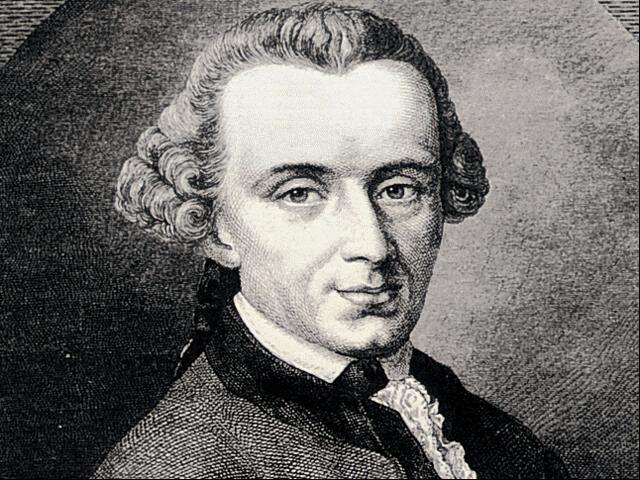
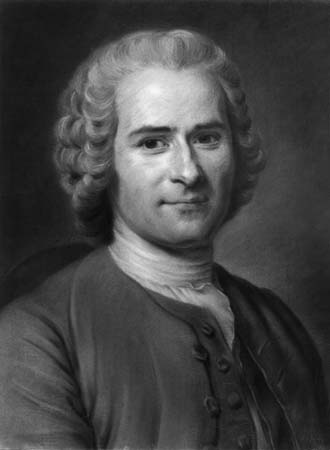
“Tracing postmodernism from its roots in Jean-Jacques Rousseau and Immanuel Kant to their development in thinkers such as Michel Foucault and Richard Rorty, philosopher Stephen Hicks provides a provocative account of why postmodernism has been the most vigorous intellectual movement of the late 20th century. Why do skeptical and relativistic arguments have such power in the contemporary intellectual world? Why do they have that power in the humanities but not in the sciences? Why has a significant portion of the political Left — the same Left that traditionally promoted reason, science, equality for all, and optimism — now switched to themes of anti-reason, anti-science, double standards, and cynicism? Explaining Postmodernism is intellectual history with a polemical twist, providing fresh insights into the debates underlying the furor over political correctness, multiculturalism, and the future of liberal democracy.”
Links to the six scholarly reviews of the book are listed toward the bottom of my site’s Explaining Postmodernism page, and the thirty-one all-over-the-map Amazon reviews can be found here.
Posted 1 year, 3 months ago at 4:26 pm. Add a comment
Yakov Rabinovich’s “The Sleep of Reason” reviews my Explaining Postmodernism.
I like that guy.
Posted 1 year, 11 months ago at 7:42 pm. Add a comment
I’m happy to announce that a Portuguese translation of my Explaining Postmodernism will be published in Brazil by Callis Editora. Here are links to their website in Portuguese and English. The publication date is TBA. Progresso!!
Posted 1 year, 11 months ago at 12:47 pm. Add a comment
Following up on an earlier post contrasting modernism with pre-modernism, I here contrast post-modernism to both.
Postmodernism as a philosophical system is defined by means of its characteristic claims in the five major branches of philosophy: metaphysics, epistemology, human nature, ethics, and politics. Postmodernism as a historical movement is defined by the time of its formulation and most vigorous activity.

[This chart is from Chapter 1 of Stephen Hicks's Explaining Postmodernism: Skepticism and Socialism from Rousseau to Foucault (Scholargy Publishing, 2004, 2011). The full book is available in hardcover or e-book at Amazon.com. See also the Explaining Postmodernism page.]
Posted 2 years, 1 month ago at 1:04 pm. 3 comments