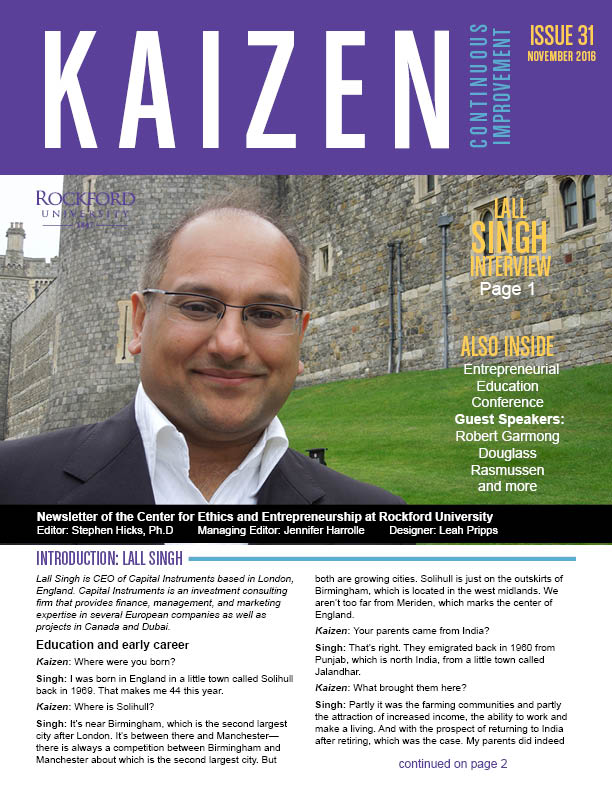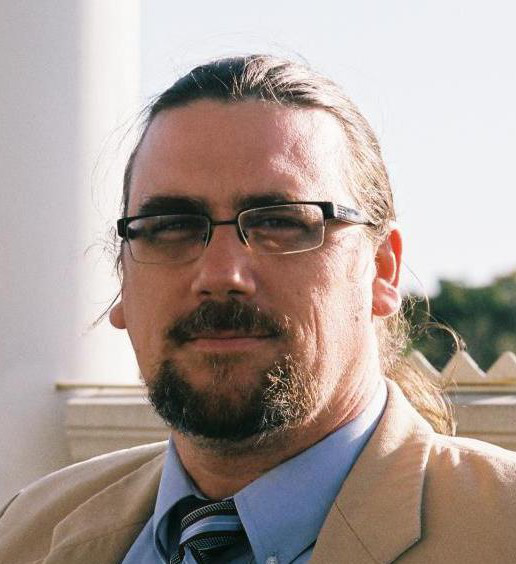
My full interview with Ray Stata is now online at CEE’s site. (An abridged version of the interview was published in the December issue of Kaizen [pdf].)
Ray Stata is Chairman of Analog Devices, Inc., based in Norwood, Massachusetts. Working out of his basement, Mr. Stata co-founded Analog Devices in the 1960s. As of 2009, ADI serves over 60,000 customers, has 9,000 employees and a market capitalization of over $6 billion.
The interview’s theme is Entrepreneurship and Technology Leadership. Two sample excerpts, the first on the best kind of education:
“We’re finding that it is very, very challenging to be at the top of your game as an engineer. First, the technical knowledge required is both deep and broad, often cutting across multiple disciplines. And products are so complex that it often takes large teams of engineers with different specialties working across international borders. That requires human skills and communication skills to encourage collaboration and manage teams with quite varied backgrounds and experiences. And engineers must understand the financial implications of manufacturing and product development cost, as well as customer requirements and where products should be positioned in the market with respect to competition. The most successful engineers truly are ‘Renaissance Men’ and not just technical specialists.”
And the second on trust:
“First, one way or other you’ve got to be good at something, even though that something will no doubt change over time. As you enter your career, strive to achieve excellence at whatever you do.
“Back to some of the things we talked about, you soon find out that you don’t get very much accomplished in life on your own. Now there are exceptions, like musicians, artists and writers who can go off on their own and accomplish remarkable things. But most of us find that we accomplish more by working in concert with others to leverage our combined skills and competencies.
“I’ve found that one of the most important factors in being a leader, or more generally in engaging with people, is to build trustful relationships. What does that mean? Trust is built on honesty, integrity, reliability, sincerity, competence. Conduct yourself so that people can depend on what you say and what you do, on the fact that you’re more often right than wrong, on the fact that you meet your commitments, on the fact that you are straight with people and tell it how it is. If people trust you and you trust them, you can get a lot more out of relationships and out of life.”
More Kaizen interviews with leading entrepreneurs are at my site here or at CEE’s site here.
Posted 1 month ago at 5:59 am. 2 comments
A striking statement on school reform by U.S. Education Secretary, Arne Duncan. Duncan called the 2005 Hurricane Katrina “the best thing that happened to the education system in New Orleans.”
Duncan continued: “That education system was a disaster, and it took Hurricane Katrina to wake up the community to say that ‘we have to do better.’ And the progress that they’ve made in four years since the hurricane is unbelievable. They have a chance to create a phenomenal school district. Long way to go, but that — that city was not serious about its education. Those children were being desperately underserved prior, and the amount of progress and the amount of reform we’ve seen in a short amount of time has been absolutely amazing.”
So a question: Without hoping for more natural disasters, what can we do to emulate New Orleans’s progress in other dysfunctional school districts? The hurricane shocked the system: Katrina (1) made everyone to focus on essentials, (2) disempowered the entrenched advocates for continued dysfunction, and (3) galvanized everyone else to positive action. In my judgment, we are good at (1) and (3), but we are weak at solving (2) through peaceful methods.
Another question: What else has Katrina taught us about disaster preparedness and how to recover? The Mercatus Center has a excellent ongoing project devoted to Entrepreneurship and Disaster Recovery. The project has published a useful series of articles and working papers by scholars studying the aftermath of the hurricane.
Two of Mercatus’s scholars, Professor Emily Chamlee-Wright and Professor Steven Horwitz, spoke last year at Rockford College on post-Katrina disaster response in the private sector. Their talks were sponsored by the Center for Ethics and Entrepreneurship, and my ten-minute video interviews with them following their talks are available at CEE’s site: Chamlee-Wright on social entrepreneurial activity, and Horwitz on for-profit organizations’ response.
Posted 1 month, 1 week ago at 8:43 am. 1 comment
My colleagues in the Department of Philosophy, Shawn Klein and Matthew Flamm, will be leading a reading group on Adam Smith’s The Theory of Moral Sentiments.
Adam Smith is best known as an economist and a critic of mercantilism and as an early advocate of market economies. Less well known is Smith the moral philosopher. His famous On the Wealth of Nations was published in 1776, while his Theory of Moral Sentiments was published seventeen years earlier. Smith’s ethical theories are of interest in their own right, as are their connections to economic views about freer markets.
Concurrently, Professor Klein is teaching our Ethical Theory course, which will include a unit on David Hume. And one our guest speakers this semester, Professor William Kline, will be speaking at Rockford College on Hume. So Scottish Enlightenment moral philosophy is getting a big hearing at Rockford College this semester.
The first meeting will be on Friday, January 22 at 1 p.m. in the Center for Ethics and Entrepreneurship office in the Burpee Center. Here is a Rockford College campus map. A free copy of Smith’s book will be provided to all participants.
The reading group is sponsored by Center for Ethics and Entrepreneurship.
Posted 1 month, 2 weeks ago at 8:54 am. Add a comment
The Center for Ethics and Entrepreneurship has announced its four guest speakers for this semester:
Roberto Salinas Leon, Ph.D., on business, education, and philosophy in the US and Mexico.
William Kline, Ph.D., on David Hume’s ethics.
Jeffrey Orduno, J.D., on property rights and the law.
Douglas Rasmussen, Ph.D., on Aristotle and contemporary ethics.
Above is a jpeg version of the flyer. For the pdf, click here. CEE’s announcement is here. For more information, email Chris at CEE [at] CEE [dot] edu, or stay tuned for posts updating times and places.
Posted 1 month, 3 weeks ago at 12:15 pm. 1 comment
I will be leading a reading group on James Bowman’s Honor: A History, along with my Philosophy Department colleague Shawn Klein.
What is honor? In higher education we promote student honor codes. Police officers speak of honoring the badge. The highest award in the US military is the Medal of Honor. In many Islamic and tribal cultures there is the phenomenon of honor killings. Business professionals place importance on honoring contracts. And there is sometimes “Honor among thieves.” So what role does honor play — and what role should it play — in our individual and social lives?
The first meeting will be on February 9 from 6 to 7 p.m. in Scarborough Hall 204 on the Rockford College campus. A free copy of the book will be provided to all participants.
The reading group is sponsored by the Center for Ethics and Entrepreneurship.
Posted 1 month, 3 weeks ago at 4:34 pm. Add a comment
The Center for Ethics and Entrepreneurship has published the tenth issue of Kaizen [pdf], featuring my interview with Ray Stata. The interview’s theme is Entrepreneurship and Technology Leadership.
Ray Stata is Chairman of Analog Devices, Inc., based in Norwood, Massachusetts. Working out of his basement, Mr. Stata co-founded Analog Devices in the 1960s.
As of 2009, ADI serves over 60,000 customers, has 9,000 employees and a market capitalization of over $6 billion. I met with Mr. Stata in Norwood, and in the interview we explored his thoughts on bootstrapping a start-up, leadership in innovative companies, and the challenges and opportunities of globalization. Make sure you don’t miss the Nova Devices story — what drama.
The issue also features Rockford College’s recent High School Career Day and congratulates five student prize winners: Hannah Mueller, Jennifer LaSarre, Jake Maliszewski, Lisa Voss, and Kelly King.
More Kaizen interviews with leading entrepreneurs are at my site here or at CEE’s site here.
Posted 2 months ago at 12:29 pm. Add a comment
Business education is often good at teaching useful business theories and skills but less often good at teaching ethics. Ethics is often seen as irrelevant or as an obstacle, so business ethics is either not included in the core business curriculum or offered as an elective ornament.
Claim: Ethics is organically central to business success, and should be so built into business education. Two quotations from giants of American business in support.
First, from Georges Doriot, one of America’s trailblazing venture capitalists, as quoted in Jeffrey Young’s Forbes Greatest Technology Stories:
“Doriot spends most of his time talking to people who bring him prospective investments. He says he has considered no less than 5,000 of them since 1946. He is considered by friends and critics alike as a brilliant judge of character. But he has to be, he explains. ‘When someone comes in with an idea that’s never been tried, the only way you can judge is by the kind of man you’re dealing with’” (p. 101).
Second, from financier J. P. Morgan, who was once asked whether money was always loaned out based on one’s assets. Morgan replied, “No, sir, the first thing is character.” And, Morgan continued, if someone he couldn’t trust asked for funding, he wouldn’t make the loan even if he had “all the bonds in Christendom” (quoted in Kaizen, Issue 6 [pdf], featuring my interview with venture capitalist Kevin O’Connor).
For both Doriot and Morgan, character is fundamental. So what is good character? How does one acquire it, develop it, and make it second nature? How does one recognize it in others? How does one build institutions that support, nurture, and reward excellent character? That is a core part of business ethics.
And to make a plug for business and ethics here at Rockford College, the Center for Ethics and Entrepreneurship’s web log has a series of recent posts on patents and innovation, low-cost eye care in India, whether new jobs are most created in new or small businesses, and the psychic benefits of non-profit work.
Posted 2 months, 2 weeks ago at 11:32 am. 1 comment
A lovely picture of our trophy (click the image to enlarge), awarded at the Atlas Economic Research Foundation’s Freedom Dinner and Templeton Award Conference 2009 in Washington, DC.
As a bonus, Alan Charles Kors — the great scholar of the Enlightenment and tireless champion of freedom of speech — gave the keynote address.
Here is the press release announcing the winners and a one-minute video clip of CEE’s award announcement.
Thanks to everyone at the Center for Ethics and Entrepreneurship for helping to make this award possible.
Posted 3 months, 2 weeks ago at 8:18 pm. Add a comment