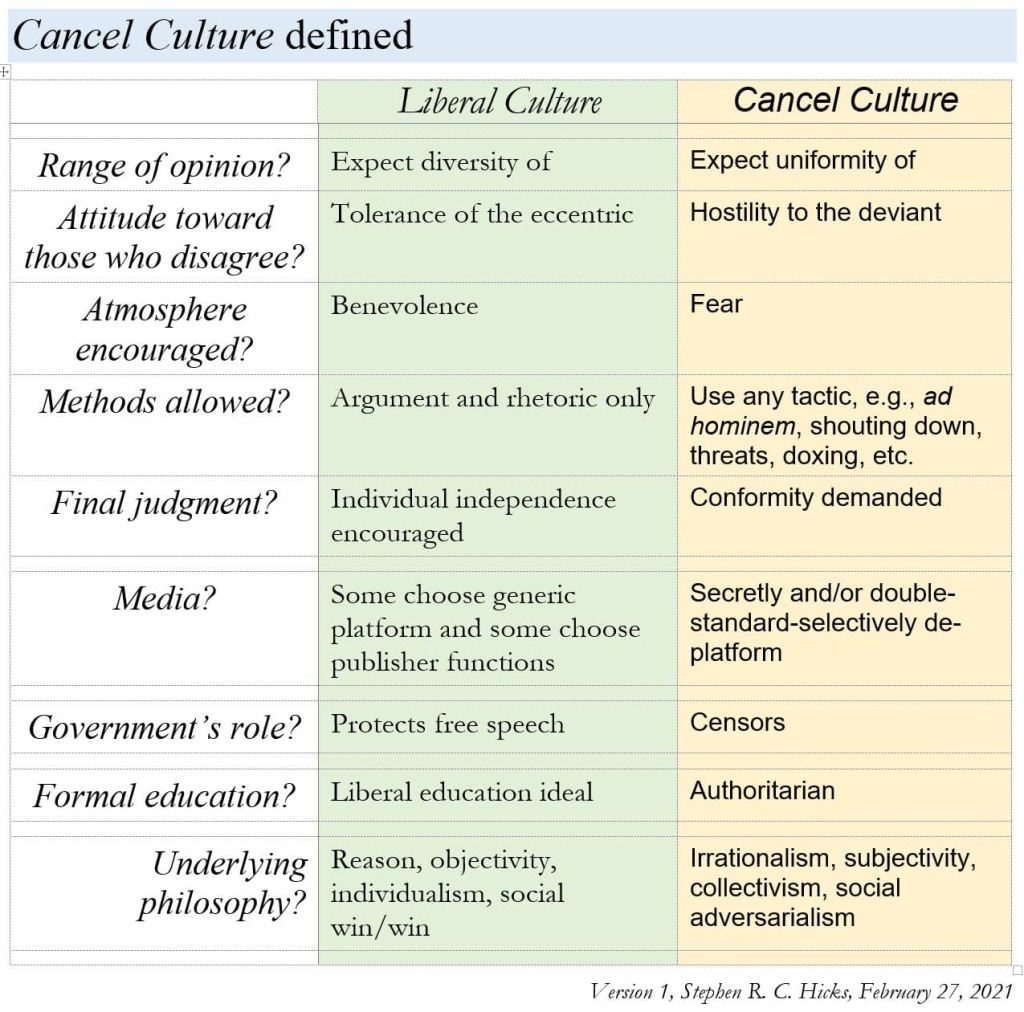
In my Philosophy of Art course, we are discussing Plato’s philosophy of art, by means of selections from Statesman and Books 3
and 10 of The Republic, along with snippets from Ion, Phaedrus, and Symposium.
In The Republic, Plato makes a systematic case for censoring all arts. The task of the Platonic philosopher is to take up the “ancient quarrel between philosophy and poetry” [607b] and to assert the State-enforced dominance of philosophy. To that end, The Republic as a whole is a powerful integration of philosophy, religion, education, and politics, and its argument for the political suppression of most art follows from that integrated system.
Rhetorically, Plato uses Socrates’ discussion with Glaucon and Adeimantus to list a series of grievances against poetry, music, and painting:
* A good portrait of the gods and heroes will show them as worthy and exalted beings — but poets such as Homer and Hesiod often tell tales of the gods and heroes fighting and bickering and acting immorally [e.g., 390b-391e].
* A moral citizen’s soul will be composed and dignified — but many musical modes stir us up inside and make us jangled and unsettled [398e-400d.].
* Good people and gods do not deceive — but painters constantly deceive us by trying to make their fake imitations look real [598c, 602d]. (Meanwhile, Plato allows that politicians (and only politicians) ought to be allowed to lie to their citizens [389b-c].)
* A strong and moral man will not grieve the death of a friend by moaning and wailing like a woman — but poets regularly have their characters issue long, pathetic lamentations [387d-388d].
* Courageous men are willing to die in battle — but the poets tell scary stories about the afterlife and make us fear death [386b-d].
* A proper moral of the story will teach that good people meet good ends and bad men meet bad ends [613d-614a] — but tragic poets have will often have bad men profit and protagonists fail and suffer despite their virtues [392b].
* Decent people respect and strive for worthiness — but comic poets appeal to our basest desires and mock and deride everything [e.g., 395d-e, 606c].
And so on.
The Republic’s overall argument for censorship thus combines a particular conception of morality with religion and authoritarian politics. Formalizing the argument:
1. To have a good society, we must have good citizens.
2. To have good citizens, children must be well educated.
3. To be well educated, children must be exposed to good material and shielded from bad material [386a].
4. So, to have a good society, children must be exposed to good material and shielded from bad material.
5. It is the obligation of the State to educate its citizens.
6. So the State should allow only good material and suppress bad material.
7. The State’s censorship applies also to art.
8. So the State should allow only good art and suppress bad art [401b, 595a].
[Next: Evaluating Plato's argument for censoring the arts. Return to the Intellectual History page.]
Posted 2 weeks, 6 days ago at 8:46 am. 1 comment
[This is Section 15 of Nietzsche and the Nazis.]
15. Censorship
What the Nazis established for the schools and universities they attempted to establish for German society at large, by means of sweeping government regulations on media and outright censorship. The world of schools and education was only an important microcosm of the Nazis’ plans for all of German society.
Joseph Goebbels, Germany’s new propaganda chief, put it this way: Any book or work of art “which acts subversively on our future or strikes at the root of German thought, the German home and the driving forces of our people” should be destroyed.
The great symbolic statement of what was to come occurred early in the Nazi regime—the May 10, 1933 book burnings, just a few months after the Nazis assumed power. In the Unter den Linden, an open square across from the University of Berlin, roughly 20,000 books were burned in a huge bonfire. Goebbels spoke at the event to 40,000 cheering spectators. Some of the authors whose books were destroyed were Thomas Mann, Albert Einstein, Jack London, Helen Keller, H. G. Wells, Sigmund Freud, Émile Zola, and Marcel Proust.
An important and sometimes overlooked fact about the book burnings is that they were not instigated by the Nazi government. Nor were they instigated by non-intellectual thugs. The book burnings were instigated by university students. The Nazi Party’s student organization conceived and carried out book burnings all across the country—book bonfires burned brightly that night in every German university city. The professors had taught their students well.
Goebbels’s official title was Minister of the Reich Chamber of Culture. The Reich Chamber of Culture controlled seven cultural spheres: fine arts, music, theater, literature, the press, radio, and films. This gave him power over all the major media in Germany and enabled him to use his formidable talent for propaganda effectively. He quickly established regulations that anyone working in any of those fields had to become a member of the Nazi party and join the respective chamber. The purpose of the regulations was, as Goebbels put it:
“In order to pursue a policy of German culture, it is necessary to gather together the creative artists in all spheres into a unified organization under the leadership of the Reich. The Reich must not only determine the lines of progress, mental and spiritual, but also lead and organize the professions.”[33]
In the realm of art, Hitler and Goebbels attempted to cleanse Germany of modern art and to replace it with “Germanic” art. Classical plays, music, and operas, as well as Hollywood B-movies were still allowed, but galleries exhibiting modern art were shut down.
Newspapers received close supervision. The Reich Press Law of 1933 prohibited editors of newspapers from marrying Jews, and required that editors meet daily with the Propaganda Ministry to ensure that no misleading stories were published. Essentially, this meant that the government told the newspapers what they could and could not print.
Likewise, radio was taken over in 1933 by another branch of the Propaganda Ministry, the Chamber of Radio.
The Chamber of Films took over the content of the film industry, though it left the production of films up to private firms.
In all areas of arts and culture, uncooperative editors, writers, and performers were ousted, or sent to prison or concentration camps, or sometimes killed. Those editors, writers, and performers who remained knew how they were to behave. German culture thus became an obedient tool of Nazi politics.
References
[33] Quoted in Shirer 1962, p. 241.
[Bibliography.]
[Return to the Nietzsche and the Nazis page. Go to the StephenHicks.org main page.]
Posted 2 years, 1 month ago at 2:39 pm. 2 comments
[This is Section 10 of Nietzsche and the Nazis.]
10. Authoritarianism, not liberal democracy
So far we have three major themes in the Nazi Program: collectivism, socialism, and nationalism. The next question is: How do the Nazis believe this is to be achieved?
As early as 1920 the Nazis are clear that they are no friends of democracy, liberalism, or republicanism. They favor strong authoritarianism and centralized power.
Point 23 calls for censorship and government control of all newspapers.
Point 24 suggests limitations on religions that do not fit the Nazis’ goals.
Point 25 calls for centralization and unconditional power: “we demand the creation of a strong central power in Germany. A central political parliament should possess unconditional authority over the entire Reich, and its organization in general.”
These points in combination with the economically socialist points earlier are to give the government total control over all aspects of society.
Throughout the 1920s the Nazis are unapologetic about wanting to eliminate liberalism, democracy, and republicanism. Goebbels for example put it bluntly and publicly: “Never do the people rule themselves. This madness has been invented by liberalism. Behind its concept of the sovereignty of the people hide the most corrupt rogues, who do not want to be recognized.”[19]
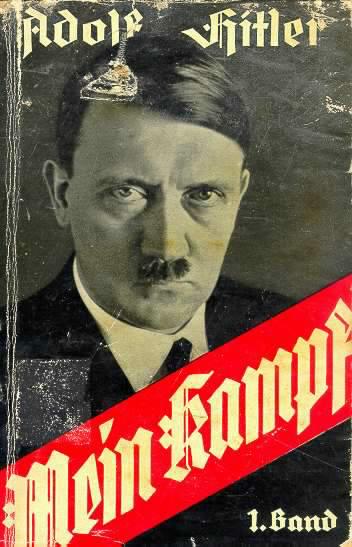
In Mein Kampf, Hitler agreed entirely: “There must be no majority decisions.” Instead, “the decisions will be made by one man.”[20] So, Goebbels continued, “We shall create a power-group with which we can conquer this state. And then ruthlessly and brutally, using the State’s prerogatives, we shall enforce our will and our programme.” Again from Goebbels:
“History has seen repeatedly how a young, determined minority has overthrown the rule of a corrupt and rotten majority, and then used for a time the State and its means of power in order to bring about by dictatorship … and force the conditions necessary to complete the conquest and to impose new ideas.”[21]
The Nazis were very clear from the outset what they were in favor of, what they opposed, and how they planned to exercise power once they achieved it: socialism, nationalism, racial identity and purification—and a strong, centralized power to make it happen.
References
[19] Goebbels 1929, in Mosse ed., 1966, p. 105.
[20] Hitler 1925, p. 449.
[21] Goebbels 1927, quoted in Irving 1999, p. 117.
[Bibliography.]
[Return to the Nietzsche and the Nazis page. Go to the StephenHicks.org main page.]
Posted 2 years, 2 months ago at 9:59 am. Add a comment
[This is Appendix 1 of Nietzsche and the Nazis.]
36. Appendix 1: NSDAP Party Program
Program of the National Socialist German Workers’ Party
The Program of the German Workers’ Party is a limited program. Its leaders have no intention, once its aims have been achieved, of establishing new ones, merely in order to insure the continued existence of the party by the artificial creations of discontent among the cases.
1. We demand, on the basis of the right of national self-determination, the union of all Germans in a Greater Germany.
2. We demand equality for the German nation among other nations, and the revocation of the peace treaties of Versailles and Saint-Germain.
3. We demand land (colonies) to feed our people and to settle our excess population.
4. Only a racial comrade can be a citizen. Only a person of German blood, irrespective of religious denomination, can be a racial comrade. No Jew, therefore, can be a racial comrade.
5. Noncitizens shall be able to live in Germany as guests only, and must be placed under alien legislation.
6. We therefore demand that every public office, no matter of what kind, and no matter whether it be national, state, or local office, be held by none but citizens.
We oppose the corrupting parliamentary custom of making party considerations, and not character and ability, the criterion for appointments to official positions.
7. We demand that the state make it its primary duty to provide a livelihood for its citizens. If it should prove impossible to feed the entire population, the members of foreign nations (noncitizens) are to be expelled from Germany.
8. Any further immigration of non-Germans is to be prevented. We demand that all non-Germans who entered Germany after August 2, 1914, be forced to leave the Reich without delay.
9. All citizens are to possess equal rights and obligations.
10. It must be the first duty of every citizen to perform mental or physical work. Individual activity must not violate the general interest, but must be exercised within the framework of the community, and for the general good.
THEREFORE WE DEMAND
11. The abolition of all income unearned by work and trouble.
BREAK THE SLAVERY OF INTEREST
12. In view of the tremendous sacrifices of life and property imposed by any war on the nation, personal gain from the war must be characterized as a crime against the nation. We therefore demand the total confiscation of all war profits.
13. We demand the nationalization of all business enterprises that have been organized into corporations (trusts).
14. We demand profit-sharing in large industrial enterprises.
15. We demand the generous development of old age insurance.
16. We demand the creation and support of a healthy middle class, and the immediate socialization of the huge department stores and their lease, at low rates, to small tradesmen. We demand that as far as national, state, or municipal purchases are concerned, the utmost consideration be shown to small tradesmen.
17. We demand a land reform suitable to our national needs, and the creation of a law for the expropriation without compensation of land for communal purposes. We demand the abolition of ground rent, and the prohibition of all speculation in land.
18. We demand a ruthless battle against those who, by their activities, injure the general good. Common criminals, usurers, profiteers, etc., are to be punished by death, regardless of faith or race.
19. We demand that Roman law, which serves a materialist world order, be replaced by German law.
20. To open the doors of higher education—and thus to leading positions—to every able and hard-working German, the state must provide for a thorough restructuring of our entire educational system. The curricula of all educational institutions are to be brought into line with the requirements of practical life. As soon as the mind begins to develop, the schools must reach civic thought (citizenship classes). We demand the education, at state expense, of particularly talented children of poor parents, regardless of the latters’ class or occupation.
21. The state must see to it that national health standards are raised. It must do so by protecting mothers and children, by prohibiting child labor, by promoting physical strength through legislation providing for compulsory gymnastic by the greatest possible support for all organizations engaged in the physical training of youth.
22. We demand the abolition of the mercenary army and the creation of a people’s army.
23. We demand legal warfare against intentional political lies and their dissemination through the press. To facilitate the creation of a German press, we demand:
(a) that all editors of, and contributors to, newspapers that appear in the German language be racial comrades;
(b) that no non-German newspaper may appear without the express permission of the government. Such papers may not be printed in the German language;
(c) that non-Germans shall be forbidden by law to hold any financial share in a German newspaper, or to influence it in any way.
We demand that the penalty for violating such a law shall be the closing of the newspapers involved, and the immediate expulsion of the non-Germans involved.
Newspapers which violate the general good are to be banned. We demand legal warfare against those tendencies in art and literature which exert an undermining influence on our national life, and the suppression of cultural events which violate this demand.
24. We demand freedom for all religious denominations, provided they do not endanger the existence of the state, or violate the moral and ethical feelings of the Germanic race.
The party, as such, stands for positive Christianity, without, however, allying itself to any particular denomination. It combats the Jewish-materialistic spirit within and around us, and is convinced that a permanent recovery of our people can be achieved only from within, on the basis of
THE COMMON INTEREST BEFORE SELF-INTEREST
25. To implement all these points, we demand the creation of a strong central power in Germany. A central political parliament should possess unconditional authority over the entire Reich, and its organization in general.
Corporations based on estate and profession should be formed to apply the general legislation passed by that Reich in the various German states.
The leaders of the party promise to do everything that is in their power, and if need be, to risk their very lives, to translate this program into action.
Munich, February 24, 1920.
[Bibliography.]
[Return to the Nietzsche and the Nazis page. Go to the StephenHicks.org main page.]
Posted 2 years, 3 months ago at 8:36 pm. 4 comments